+86-25-8470-5507


Views: 0 Author: Site Editor Publish Time: 2026-06-29 Origin: Site


Buying the wrong oil collection tool usually ends in frustration. You picture a quick maintenance job. Instead, you face spilled hot oil across your garage floor. Basic pans lack adequate capacity for heavy-duty vehicles. They also complicate the disposal process, turning a simple task into a messy hazard. Transitioning from a cheap drip pan to a specialized collection system changes your entire maintenance routine. However, you must carefully evaluate your specific workspace limits. You also need to consider your vehicle types and your ultimate disposal workflows. A one-size-fits-all approach simply does not work in fluid management. The right decision depends on matching fluid volume precisely to your container. You must also align vehicle clearance and evacuation methods to your specific garage or shop environment. By making the correct choice, you ensure a cleaner, safer, and much faster oil change process.
You cannot effectively manage waste fluids without first understanding volume. Standard passenger cars require completely different tooling compared to heavy-duty equipment. A compact sedan might drop five quarts of oil. Conversely, heavy-duty diesel trucks often expel massive amounts. For example, a 6.7L Cummins engine holds over three gallons of oil. If your catch pan is too small, you will experience an immediate overflow. You must frame your problem around the largest vehicle you plan to service.
Clearance realities dictate the physical shape of your equipment. Working conditions vary wildly between home garages and professional bays. You need to map your exact physical constraints before making a purchase.
We always recommend following the 1.5x Capacity Rule. Buyers must select a unit significantly larger than their engine’s maximum crankcase volume. Hot oil behaves unpredictably. When you try to move a container filled to the brim, it sloshes. A slight bump on the floor guarantees a spill. By building in a 50% buffer, you allow for safe movement. You keep the hazardous liquid safely contained during transport.
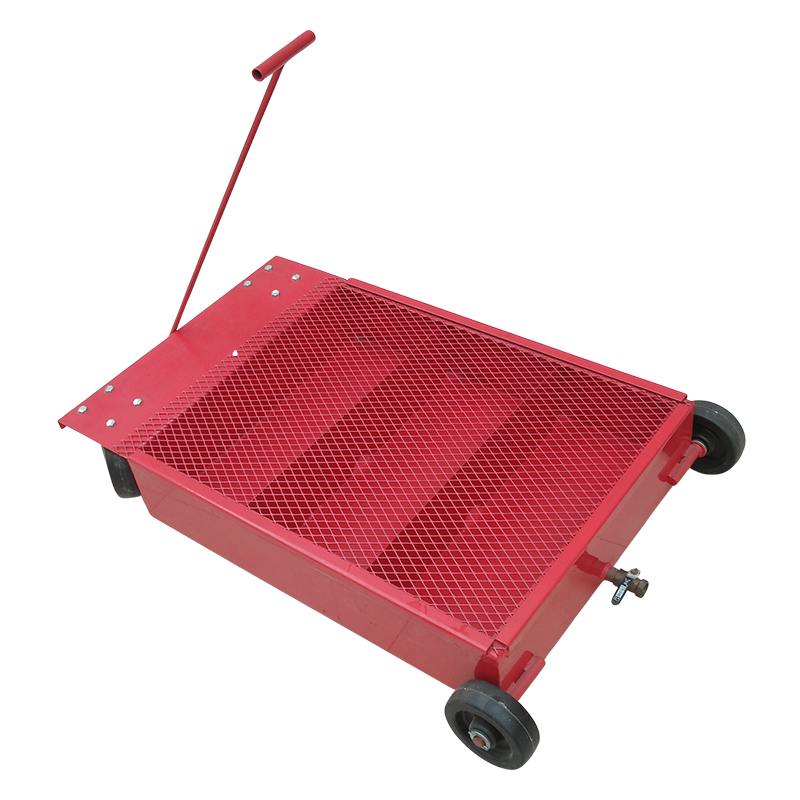
Different structures serve entirely different maintenance ecosystems. You must break down the structural differences to find your ideal match. Selecting the wrong category leads to constant physical strain.
Low-profile drainers sit flat on the ground. They slide effortlessly beneath tight spaces. These models are best for home garages, ATVs, and motorcycles. When shopping for this category, you should look for specific structural upgrades. Broad catch areas capture unpredictable splatters. Internal baffles are absolutely essential. They act as walls inside the tank to prevent wave action when you pull the unit. Secure sealing caps ensure you do not leak fluid during the drive to a recycling center.
Upright or telescopic drain tanks operate vertically. These tall units catch fluid from vehicles suspended on lifts. They are best for professional shops and continuous daily use. Key features matter greatly in this category. You want wide funnel diameters to catch wide sprays. Mesh screens inside the funnel are mandatory. They catch dropped drain plugs and slipped washers, saving you from fishing them out of hot sludge. You also need a stable, wide wheelbase to prevent top-heavy tipping.
| Feature | Low-Profile Pans | Upright / Telescopic Tanks |
|---|---|---|
| Ideal Environment | Floor jacks, driveways, flat ground | Two-post lifts, four-post lifts, pit bays |
| Core Advantage | High clearance compatibility, easy storage | Ergonomic for standing mechanics, high volume |
| Common Risk | Sloshing during floor transport | Top-heavy tipping if wheelbase is narrow |
You must carefully consider overhead risks. We strongly warn against using overly tall uprights in low-ceiling garages. If your ceiling height restricts how high you can lift a truck, a tall upright funnel might not fit underneath the chassis. Always measure your maximum lift height before buying a standing unit.
Implementation realities often hit mechanics hard. Ten gallons of used engine fluid weighs over 70 pounds. Moving this kind of dead weight safely across a shop is difficult. It becomes a primary point of failure for cheap equipment. If your container lacks proper mobility features, you risk back injuries and catastrophic spills.
Caster and wheel quality determine how smoothly the unit travels. Cheap hollow plastic wheels deform under heavy loads. They also drag across concrete seams. You should look for polyurethane wheels instead. Steel ball-bearing casters offer even better maneuverability. Uneven shop floors present another hidden danger. A heavy tank can easily roll away on a slight incline. Therefore, locking casters are an absolute necessity for workplace safety.
Handle ergonomics directly impact user control. Pushing or pulling 70 pounds requires serious leverage. Flimsy handles will snap off when you try to maneuver a fully loaded tank over an expansion joint. Push and pull handles must be integrated into the tank mold itself. If you choose a steel unit, ensure the handles are welded directly to the main body. A high-quality Portable Oil Drainer will feature industrial-grade grips to distribute the pulling force safely.
How the fluid leaves your container is just as critical as how it enters. Many people focus purely on the collection phase. They completely forget about the disposal workflow. Transferring waste to a bulk recycling bin remains the messiest part of the job.
To clarify these capabilities, review this workflow capacity chart:
| Disposal Method | Volume Suitability | Physical Effort Required | Required Shop Infrastructure |
|---|---|---|---|
| Gravity / Manual Pour | Low (Under 5 Gallons) | High (Requires lifting) | None |
| Rotary Pump | Medium (5 to 15 Gallons) | Moderate (Hand-cranking) | None |
| Pneumatic / Pressurized | High (15+ Gallons) | Low (Valve operation only) | Air Compressor System |
Manual pouring relies entirely on gravity. This works fine for low-volume DIYers. However, it requires heavy lifting. You must physically hoist the container over a recycling drum. If you choose this route, the unit must feature robust, leak-proof pour spouts. It also needs dedicated breather valves. Breather valves let air in, ensuring a smooth flow instead of a violent, splashing chug.
Rotary pumps handle medium volumes effectively. These utilize hand-crank mechanisms to siphon fluid upward through a hose. When evaluating rotary pumps, you must assess gear durability. The internal gears face constant friction. You also need to verify seal compatibility. Warm engine fluids can degrade cheap rubber seals quickly, causing the hand pump to lose its vacuum over time.
Pneumatic evacuation represents the gold standard for high-volume environments. A pressurized system connects directly to your shop air. It pushes waste fluid through a hose into your bulk storage drums. You simply attach an air chuck and open a ball valve. However, safety compliance checks are vital here. You must look for preset pressure relief valves (PRVs). Compressed air expands powerfully inside steel tanks. A PRV bleeds off excess pressure to prevent tank rupture. This remains a non-negotiable safety feature for any pressurized equipment.
Modern mechanics often debate alternative approaches to fluid maintenance. You can briefly contrast bottom-plug draining against vacuum-based extractors. Top-side extractors use suction to pull fluid up through the dipstick tube. They keep you off the floor entirely. They seem incredibly convenient at first glance.
However, extractors fail in several key scenarios. They rely on narrow tubes inserted blindly into the engine block. Extractors often leave heavy sludge sitting in the bottom of the pan. Because they only pull from the top layer of the sump, heavy metal shavings stay behind. Furthermore, many modern vehicles do not have dipstick access anymore. If a manufacturer seals the transmission or engine, an extractor becomes completely useless.
This is exactly when a traditional setup proves superior. Gravity pulls the heaviest debris down to the lowest point. Removing the bottom plug allows this sludge to flush out completely. Using a reliable Oil Drainer remains the only verifiable way to clear heavy particulates. Bottom draining also forces you to remove and inspect the magnetic drain plug. This plug captures metallic wear. Inspecting it serves as an early warning system for internal engine failure. You cannot perform this vital diagnostic check from the top side.
Choosing the correct equipment removes the stress and mess from routine maintenance. You should base your final shortlist on three sequential questions. First, are you working on the floor or under a suspended lift? Second, what is the maximum fluid capacity of your largest vehicle? Third, how will you transfer the collected waste to your final recycling containers?
Answering these questions clarifies your exact needs. As a next-step action, measure the specific physical clearance of your lowest vehicle. Grab a tape measure and check the gap under your driveway jack points. Furthermore, verify your local shop's air compressor PSI compatibility if you opt for pneumatic models. By matching your tools to your physical environment, you guarantee a seamless, clean workflow.
A: The ideal material depends on your specific usage. High-density polyethylene (HDPE) provides excellent dent resistance, lightweight mobility, and immunity to rust. Steel is mandatory for pressurized pneumatic evacuation models because it safely tolerates internal air pressure. For home use, HDPE is generally superior.
A: You should never mix these fluids. Cross-contamination creates a hazardous sludge. Furthermore, recycling centers maintain strict rejection policies. They will refuse to accept engine lubricants mixed with antifreeze. You must dedicate separate collection containers for different automotive chemicals.
A: Empty the tank completely while the fluid is still warm to maximize flow. Use a mild citrus-based degreaser and warm water to break down remaining residue. Agitate it gently and rinse thoroughly. We strongly warn against using highly volatile solvents like brake cleaner inside enclosed tanks, as fumes can become explosive.


