+86-25-8470-5507


Views: 0 Author: Site Editor Publish Time: 2026-06-23 Origin: Site


While air-driven systems are industry standards for volatile environments and difficult fluids, treating them as universal solutions often limits system efficiency. Operators frequently deploy these units without evaluating their mechanical profiles carefully. This oversight inflates utility demands and accelerates equipment wear across the facility. Selecting the correct unit requires balancing fluid characteristics, like viscosity and abrasiveness, against actual compressed air availability. You must closely assess your site infrastructure before finalizing any installation project.
For procurement and engineering teams at the decision stage, understanding these distinct operational profiles proves critical. You will learn how to match equipment precisely to your process requirements. We will explore core design variations, practical evaluation dimensions, and real-world maintenance factors. You will discover actionable strategies for mitigating common risks like air motor icing and pulsation damage. This comprehensive guide ensures you select the right asset confidently without over-engineering your plant solutions.
Electric pumps often require complex variable frequency drives, external bypass loops, and expensive explosion-proof housings. These additions complicate installations in hazardous zones significantly. An air-driven solution makes sense when operational safety and system simplicity outweigh utility demands. We see extremely high adoption rates in chemical processing, paint manufacturing, and underground mining facilities. These environments demand reliable performance under volatile conditions.
Primary drivers for adoption include intrinsic safety, stall tolerance, and dry-running capabilities. The lack of electrical components inherently meets strict compliance standards globally. This makes them ideal for ATEX-rated flammable environments. You eliminate the risk of sparking entirely. Stall tolerance provides another massive operational advantage for plant managers. You can safely "dead-head" these units on the production line. They simply stop pumping when a downstream discharge valve closes. They do this without heat buildup, motor damage, or requiring complex pressure relief valves. Finally, they feature robust dry-running capabilities. They can run dry safely during initial priming or unexpected fluid depletion. You will not face immediate mechanical seal failure. This forgives common operator errors during routine batch transfers.
AODD units utilize alternating air pressure applied directly to flexible diaphragms. An internal air distribution valve shifts compressed air from one chamber to the other. This continuous mechanical action draws and pushes fluid reliably. They excel as a versatile Pneumatic Transfer Pump for bulk fluid movement tasks. They handle abrasive slurries and shear-sensitive fluids easily. You can also move solids-laden liquids without clogging internal passages. However, they possess distinct operational limitations. The flow pulsates significantly due to the alternating diaphragm strokes. You will often need active dampeners for smooth fluid delivery. They also offer lower maximum discharge pressures compared to piston types. They generally top out around 125 PSI.
These units use a reciprocating air motor to drive a connecting piston. This mechanism displaces fluid in a highly concentrated area. They are ideal for high-pressure extrusion and long-distance fluid transfer. We often see them moving highly viscous materials. Common applications include dispensing heavy greases, thick oils, and industrial sealants. Their primary strength is massive pressure amplification. Some heavy-duty units achieve 60:1 pressure ratios easily. This pushes thick fluids through incredibly long pipe runs. But they also carry structural limitations. You will experience higher wear on packing rings and dynamic seals. They remain largely unsuitable for abrasive solids. Abrasive grit easily scores the piston shaft, causing rapid pressure loss.
These represent precision-engineered drive systems. They handle micro-dosing or extreme high-pressure testing reliably. They are best used for microfluidic applications and rigorous hydrostatic pipe testing. You can also use them for precise chemical dosing directly into process pipelines. Their application strengths include exceptional repeatability over long periods. They hold extreme pressure seamlessly without continuous energy consumption. Once they reach the target pressure, they simply stall and maintain it. They consume zero air while holding this pressure state. This makes them incredibly efficient for specific static-pressure testing scenarios.
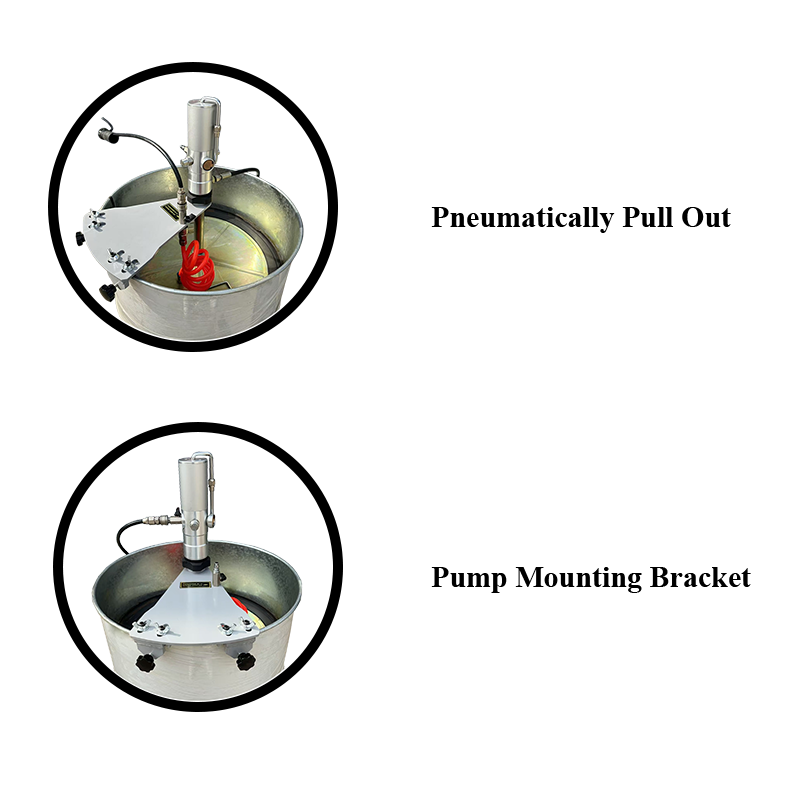
Evaluating manufacturer curves requires a strict focus on available site air pressure. Look closely at your actual CFM and PSI availability. Do not rely on absolute maximums listed in marketing brochures. A unit might advertise 100 GPM capacity. However, your facility might only supply enough air to achieve 50 GPM safely.
Assessing fluid-to-material compatibility is equally crucial. You must match wetted parts carefully to avoid rapid degradation. Options like PTFE, Santoprene, Stainless Steel, or Hastelloy react differently to media. Consider chemical aggressiveness, temperature limits, and abrasiveness. PTFE resists harsh chemicals beautifully but lacks mechanical flex life. Santoprene offers excellent flex life for pumping highly abrasive slurries.
Next, calculate the expected SCFM (Standard Cubic Feet per Minute) accurately. This ensures your existing facility compressors can support the new load. You do not want to starve other critical plant processes during peak pumping cycles. Finally, verify compliance and certifications. Check for FDA, ATEX, or specific hygienic standards required by your operational environment. Sanitary environments require polished stainless steel and tri-clamp connections to prevent bacterial growth.
| Evaluation Dimension | Key Metric to Verify | Common Selection Pitfall |
|---|---|---|
| Flow Rate & Pressure | Available SCFM and dynamic PSI | Sizing based on peak theoretical output rather than actual air supply. |
| Material Compatibility | Chemical resistance of wetted parts | Overlooking the maximum temperature limits of internal elastomers. |
| Air Consumption | Compressor capacity overhead | Starving plant air systems during peak production usage. |
| Compliance | ATEX / FDA / Sanitary ratings | Using non-groundable plastic models in hazardous flammable zones. |
Air-driven units cost significantly less to purchase and install initially. However, compressed air remains an expensive utility to generate in most manufacturing plants. We must rely on transparent assumptions when comparing these distinct fluid handling technologies.
Electric models offer superior operational energy efficiency over their lifespan. They provide a smoother, pulse-free flow naturally. They also integrate easily with modern IoT and SCADA monitoring networks. For high-volume, continuous duty applications, electric models often present better long-term financial viability. They consume precisely the electricity needed to move the fluid.
Conversely, air-driven models require vastly lower initial capital expenditure. They boast lower maintenance complexity overall. You do not need specialized electrical technicians to service them on the factory floor. They also deliver superior handling of varying fluid properties. You can dead-head them safely without causing sudden system damage or motor burnout.
Claims of "free energy" from existing air lines are completely false. Generating compressed air requires substantial electrical power. High-volume continuous applications should lean electric. However, if hazardous safety ratings or strict fluid restrictions demand it, a Pneumatic Pump remains the safest and most reliable choice for your operation.
| System Feature | Air-Driven Systems | Electric Systems |
|---|---|---|
| Initial Capital Investment | Generally Low | Generally High |
| Energy Efficiency | Lower | Higher |
| Installation Complexity | Simple (Requires air lines only) | Complex (Requires VFDs and specialized wiring) |
| Dead-Head Safety | Excellent (Stalls safely without damage) | Poor (Requires bypass loops to prevent rupture) |
Expanding compressed air causes rapid internal cooling within the motor. This leads directly to ice buildup and stalling in humid environments. To mitigate this frustrating air motor icing, ensure clean, dry plant air. You might also consider installing specialty anti-freeze air valves or localized air heaters.
Diaphragms and seals face continuous, repetitive fatigue during operation. Wear components have finite lifespans based strictly on stroke count, not chronological time. This creates a high risk of unplanned facility downtime. Implement stroke-counter monitoring to solve this issue effectively. Establish proactive replacement schedules before a catastrophic rupture occurs.
Unmitigated pulsation presents another significant mechanical risk. Pulsing flow can easily damage downstream pipework, loosen joints, or destroy sensitive filters. Sizing and installing active pulsation dampeners mitigates this issue effectively. They absorb the hydraulic shock and smooth the fluid delivery output.
Best Practices for Routine Maintenance:
Follow a systematic approach when specifying your fluid handling equipment. Avoid guessing operational parameters. Let us break down the procurement logic clearly.
Compile these three metrics into a formal specification sheet. Request customized performance curves and material compatibility guarantees from your shortlisted manufacturers. Never accept a quote without a verified performance curve matching your specific facility parameters.
Matching the specific design—whether AODD, piston, or injection—directly dictates your ongoing system reliability. Successful deployment always hinges on treating compressed air as a valuable utility. You must size equipment accurately against strict fluid constraints and facility limitations. Do not assume older sizing methods still apply to modern processing demands.
Action-oriented next steps include mapping your exact fluid envelope and auditing your facility air capacity thoroughly. Compile this critical data before making purchasing decisions. Contact application engineers directly. Provide them your viscosity, flow, and available pressure data for a verified system recommendation. This proactive approach guarantees optimal performance.
A: Yes, most types can run dry indefinitely. AODD designs excel here. They will not damage internal components or overheat. This contrasts sharply with many electric rotary pumps that fail quickly without fluid lubrication.
A: Flow rate control is highly straightforward. You simply adjust the air inlet pressure. Use a standard pressure regulator to achieve this. Alternatively, you can restrict the air exhaust to slow the stroke rate effectively.
A: Yes, they pull a strong initial vacuum. This draws fluid safely from a source below the unit, creating a suction lift. The exact lift capacity depends entirely on the pump size, internal check valve design, and the fluid's viscosity.


