+86-25-8470-5507


Views: 0 Author: Site Editor Publish Time: 2026-06-27 Origin: Site


Every maintenance bay runs on fluids. However, managing waste often becomes a neglected afterthought. Choosing the wrong equipment creates instant bottlenecks on your shop floor. It slows down service times significantly. Selecting an undersized container leads directly to stalled workflows. It also creates serious environmental compliance risks like heavy EPA fines.
Whether you outfit a commercial garage or manage an active fleet, equipment sizing matters. Maintaining personal heavy-duty RVs requires the same careful planning. Your disposal capacity dictates your daily operational efficiency. You cannot afford hazardous spills from overflowing catch pans. Technicians need reliable tools to keep their workspaces safe and clean.
In this guide, we provide an evidence-based framework. You will learn how to calculate your exact volume requirements. We also evaluate critical design features ensuring safe fluid management. We will help you select the exact equipment necessary. You will keep your service bays clean, compliant, and highly productive.
Shops often underestimate their daily fluid output. They purchase equipment based on a single vehicle's sump size. This oversight triggers a cascade of operational failures. Using an undersized Oil Drainer creates severe workflow disruption. Technicians lose valuable time during busy shifts. They must stop their work to empty a full container manually. This halts shop operations completely.
Frequent disposal trips ruin bay efficiency. A mechanic might drain three standard sedans before realizing the pan is full. They then have to drag a heavy, sloshing container across the shop. This manual transport introduces massive environmental and safety compliance risks. Carrying liquid to bulk recycling tanks requires immense physical effort. Spill hazards increase exponentially when containers lack proper overhead clearance. They often lack protective baffle plates inside the pan.
Spilled motor oil creates slick, hazardous floors instantly. It violates OSHA workplace safety protocols. It also invites strict EPA fines for improper chemical management. Cleaning up a five-gallon spill wastes at least an hour of billable time.
Another major issue is the multi-fluid reality of automotive repair. Managers assume an extraction unit will only hold motor oil. This assumption is rarely true. Technicians often use the same capacity buffer for transmission fluid. They use it for engine coolant or thick gear oil. Draining multiple fluid types accelerates fill rates drastically. A container meant to last all day might fill up before lunch.
Guessing your equipment size leads to messy shop floors. You need a mathematical approach to determine exact volume needs. Different environments demand entirely different calculation methods.
The single-vehicle or advanced DIY formula is straightforward. It relies on a simple rule of thumb. You must multiply the vehicle sump capacity by two. For example, a heavy-duty truck takes 12 quarts of motor oil. You need at least a 24-quart pan. This equals a 6-gallon capacity minimum. This buffer logic is critical for clean operations. It accounts for initial high-pressure flow surges when removing the drain plug. It also prevents violent splash-out during transport.
Commercial shops and fleet managers require a different formula. Daily volume dictates their baseline needs.
Professional standards dictate specific rules for high-volume bays. They generally require 18-gallon to 27-gallon upright models. This ensures emptying only occurs once per shift. In some shops, it happens once every other day. Frequent trips to the bulk tank destroy technician productivity.
Advanced setups often utilize a multi-container strategy. This system uses a primary receiver under the vehicle. It includes a temporary storage buffer. Finally, it uses a dedicated transport container. You must calculate the entire system capacity. Do not just measure the single catch pan.
| User Profile | Average Sump Size | Jobs Per Day | Recommended Minimum Capacity |
|---|---|---|---|
| DIY Single Sedan | 5 Quarts | 1 | 10 Quarts (2.5 Gallons) |
| DIY Truck / RV | 12 - 15 Quarts | 1 | 6 - 8 Gallons |
| Small Auto Shop | 6 Quarts | 5 - 8 | 15 Gallons |
| Fleet Maintenance | 15 - 40 Quarts | 3 - 5 | 20+ Gallons |
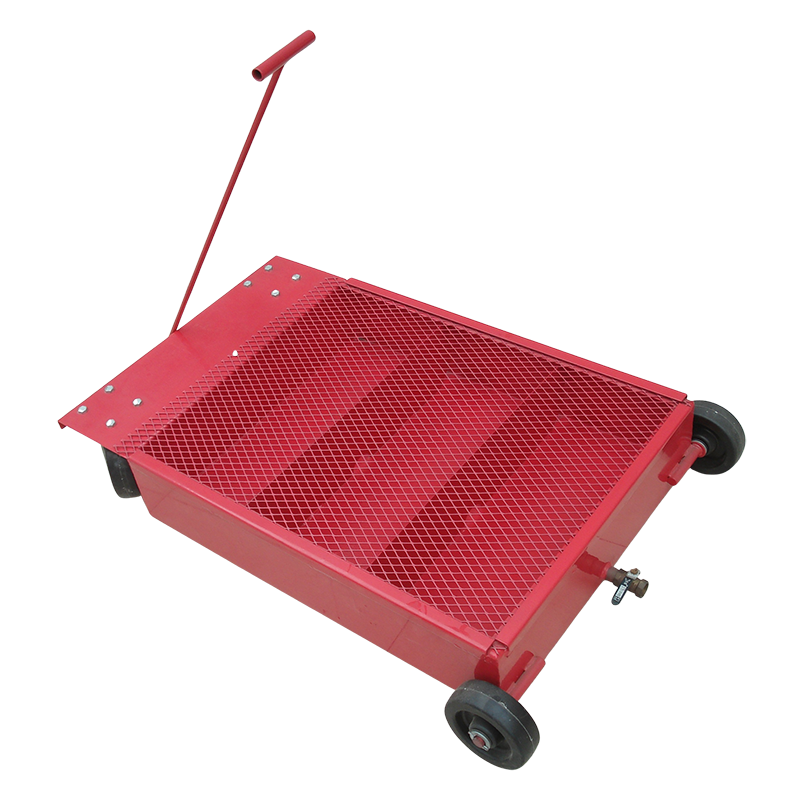
Market options vary wildly in size and application. You must match the equipment profile to your physical workspace. Small mistakes here cause endless frustration later.
Standard low-profile pans hold between two and five gallons. Their target user is strictly the single-vehicle maintenance enthusiast. They work well for low-clearance vehicles lacking a hydraulic lift. However, they carry severe limitations. They are highly inefficient for multi-car households. They are highly susceptible to sloshing during the manual pour. Transferring waste into recycling jugs often results in stained driveways.
Medium receivers hold between eight and fifteen gallons. Their target user includes independent DIYers managing trucks or RVs. Small automotive repair shops also utilize this size. The success criteria for medium units are very specific. They must fit under an RV chassis comfortably. They must also offer secure, sealed transport wheels. Unsealed medium units slosh dangerous chemicals onto shop boots.
Finally, we look at the heavy-duty solutions. A Large Capacity Oil Drainer holds 18 to 27 gallons or more. Their primary target user is the high-volume commercial bay. Fleet management centers and heavy machinery operators rely on them exclusively. Their success criteria revolve around system integration. They must integrate seamlessly into bulk fluid handling systems. They use pneumatic evacuation or cam-lock connections. This completely eliminates manual lifting for the technician.
Evaluate your highest vehicle volume day. Buy a unit capable of handling 120% of that volume. Ensure low-profile models have extended T-handles. This allows technicians to push them deep under large axles safely.
Raw volume is only one part of the equation. Design features determine how easily a technician interacts with the equipment. Evacuation mechanisms define the emptying phase of the job.
Gravity or manual pour systems require high physical strain. A user must lift the entire filled container. This is acceptable only for sub-5-gallon units. Anything heavier risks severe lower back injuries.
Rotary hand pumps provide mid-tier efficiency. A technician cranks a handle to move fluid upward. They are good for medium capacity units. They work well where compressed air lines aren't accessible.
Pneumatic air-pressurized evacuation remains non-negotiable for high-capacity models. This method uses shop air to push waste securely. It moves dirty liquids into bulk tanks safely and rapidly. Mechanics attach an air hose and open a valve. The machine does all the heavy lifting automatically.
Structural and material integrity also matter immensely. Manufacturers build these units using UV-stabilized high-density polyethylene (HDPE) or heavy-gauge steel. HDPE resists denting and is much lighter. Steel offers superior durability in aggressive industrial environments. Both provide excellent corrosion resistance against diverse automotive fluids. They survive harsh brake cleaners, synthetic oils, and acidic coolants.
| Evacuation Type | Speed | Physical Effort | Best Application |
|---|---|---|---|
| Manual Pour | Slow | Very High | DIY / Driveway Use |
| Rotary Hand Pump | Medium | Moderate | Mobile Mechanics |
| Pneumatic (Air) | Very Fast | None | Commercial Shops |
Mobility and capture dynamics directly affect daily use. Heavy-duty locking casters are mandatory. They must support 150 pounds of fluid weight safely. Flimsy plastic wheels snap under maximum loads. Catch funnels need a wide diameter. They should include integrated splash screens. These screens catch dropped drain plugs instantly. They catch slippery oil filters. More importantly, the mesh breaks surface tension. This stops hot fluid from bouncing out of the funnel.
Buying expensive equipment does not guarantee a flawless workflow. Hidden implementation risks often catch shop managers off guard. The ground clearance trap is a very common issue. You might buy a massive low-profile drainer for your fleet. However, it might be too wide to maneuver easily. It gets stuck between service bay lifts. It bangs into heavy garage shelving. Always measure your narrowest shop walkway before purchasing wide carts.
Sealing and evaporation risks demand serious attention. Open-top catch pans pose distinct fire risks. They constantly emit noxious chemical vapors into enclosed garages. They also attract shop debris, dust, and dropped rags. Commercial solutions require secure ball valves. They need tight-sealing funnels to lock vapors inside the tank. Closed-loop systems protect the respiratory health of your employees.
Recycling logistics often complicate disposal efforts. Local municipal centers have strict intake rules. Commercial recycling depots enforce similar regulations. They often enforce strict daily intake limits for bulk waste. Many require specific closed-loop transfer methods. Ensure your output mechanism matches your recycler's intake requirements. If a recycler requires a cam-lock hose fitting, gravity spouts will fail. You will spill gallons of waste trying to transfer it manually.
Properly labeling your containers prevents chemical cross-contamination. Mixing solvents into engine waste ruins the batch. Recyclers reject contaminated batches immediately. They will charge you exorbitant hazardous disposal fees instead.
Choosing the correct equipment streamlines your entire maintenance operation. Base your baseline capacity on maximum single-day fluid output. Always measure the heaviest service bay or your largest vehicle first. Never compromise on structural integrity or mobility features.
Audit your current fluid disposal workflow today. Watch your technicians handle waste transfer during a busy shift. Upgrade your equipment if they spend more than 10 minutes managing disposal. Switch to a pressurized large capacity unit immediately. Review specific models prioritizing heavy-duty casters and wide funnel widths. Prioritize safe pneumatic evacuation styles over raw capacity alone. Your shop will operate safer, cleaner, and faster.
A: Not always, but manual evacuation of anything over 15 gallons is ergonomically hazardous. Pneumatic models push fluid rapidly and require only a standard shop air compressor. They typically run perfectly on 10 to 15 PSI. Hand-crank pumps serve as an alternative, but they require physical effort.
A: Upright drainers require a vehicle lift. They feature adjustable funnels typically ranging from 45 to 70 inches in height. Low-profile large-capacity drainers slide directly under heavy-duty trucks or RVs. They usually require 8 to 10 inches of bare ground clearance.
A: While structurally possible, mixing oil with coolant or brake fluid contaminates the batch completely. Recycling centers will reject the waste outright. They often charge massive hazardous disposal fees for mixed chemicals. You should always use separate, clearly labeled drainers for oil and coolant.


