+86-25-8470-5507


Views: 0 Author: Site Editor Publish Time: 2026-06-25 Origin: Site


Manual fluid transfer remains a critical fail-safe across numerous industrial sectors today. Off-grid environments and high-pressure setups rely entirely on these mechanical systems. They keep operations running seamlessly when primary power grids fail. Unreliable performance quickly causes severe operational downtime, unexpected safety risks, and immense operator fatigue. Selecting a Hand Pump based only on advertised maximums is a dangerous mistake. Ignoring application-specific physics often results in premature seal failure. It also guarantees terribly inefficient flow rates during critical moments.
You need a better way to assess equipment before making a purchase. This article provides a transparent, engineering-based framework to evaluate mechanical capabilities accurately. We will guide you through the core mechanical principles governing fluid dynamics. You will learn exactly how to match the right specification to your specific operational requirements.
Evaluating mechanical transfer requires understanding the difference between pushing fluid and pulling fluid. Pulling fluid relies entirely on atmospheric pressure. A vacuum forms inside the empty cylinder during an upstroke. The surrounding atmosphere then pushes the liquid up the suction pipe. Standard atmospheric pressure at sea level measures roughly 14.7 psi. This physical constant limits theoretical suction lift to exactly 33.9 feet for water.
However, you can never achieve this perfect theoretical vacuum in field applications. Several real-world factors degrade suction capabilities:
Because of these factors, practical suction limits hover around 22 to 25 feet.
Next, we must evaluate static discharge head. Discharge head defines the vertical distance fluid must travel upward after leaving the discharge port. Pushing fluid upward creates immediate backpressure. Every vertical foot adds resistance against the main cylinder. The operator must overcome this static head weight physically during every downstroke.
These principles carry a massive decision impact. If your fluid source sits deeper than 25 feet, surface-mounted suction devices will fail. The manufacturer brand does not matter. Physics always wins. Buyers must pivot to deep-well configurations. Deep-well systems use submerged cylinders located below the water line. They push the fluid upward rather than relying on atmospheric suction.
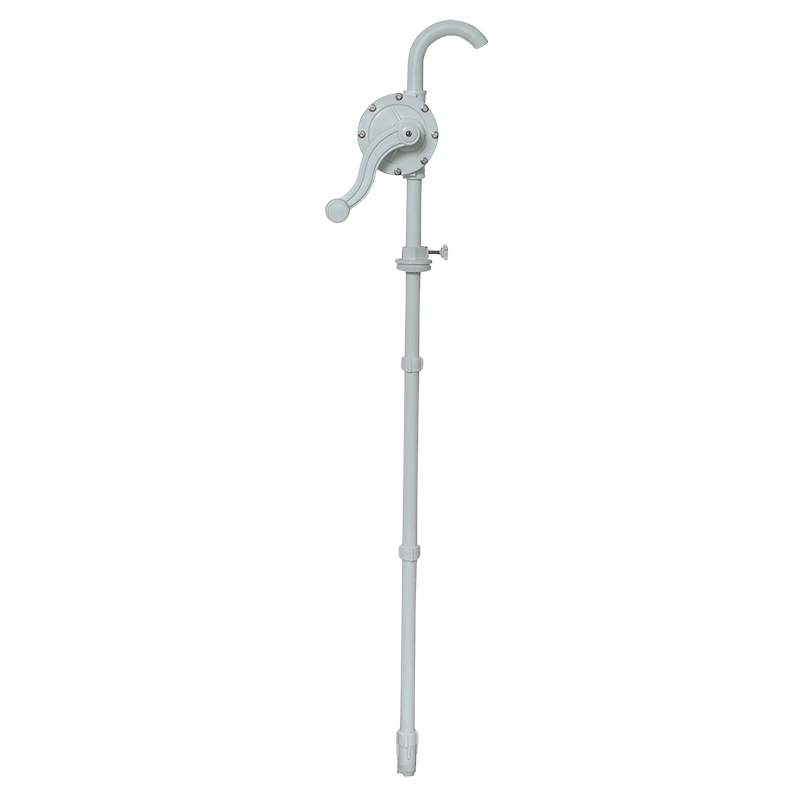
Performance fundamentally relies on the relationship between handle length, cylinder diameter, and physical exertion. Longer handles increase your mechanical advantage significantly. They multiply operator input force. This leverage reduces operator fatigue during extended use. However, a longer handle requires a longer physical range of motion. Operators must swing the lever through a wider arc.
You must understand the pressure versus flow dynamic. High pressure and high volume operate inversely. You cannot achieve both simultaneously without external electrical power. High-pressure applications demand specialized micro-cylinders. For example, hydrostatic pipe testing at 4000psi requires moving tiny fluid amounts per stroke. A larger cylinder bore would generate too much surface area resistance. The lever would lock up completely under the immense backpressure.
Evaluating a High Flow Hand Pump requires knowing its exact operational parameters. High flow is only achievable under highly specific conditions. You need exceptionally low suction lift. You must have minimal discharge head. The fluid itself must possess low viscosity.
Furthermore, a true high-volume design must feature reinforced internal linkage. Larger cylinder bores generate massive physical resistance. The internal linkage must handle this intense opposing force without bending. Standard linkages will warp or snap under the extreme leverage loads created by moving bulk liquid volumes.
Kinematic viscosity impacts flow rates dramatically. Thicker fluids like heavy oils, resins, or molasses create internal friction. This severe resistance drastically reduces your natural stroke speed. Operators must slow down significantly to prevent cavitation. Cavitation occurs when empty vacuum pockets form inside the cylinder because fluid cannot enter fast enough. You need heavier-duty internal valves to handle viscous liquids effectively.
Specific gravity measures fluid density compared directly to fresh water. Fluid weight directly impacts the physical force required by the operator. Pumping brine or heavy industrial chemicals demands much more effort per stroke. Water feels light by comparison.
Temperature fluctuations change fluid viscosity rapidly in field environments. Freezing ambient conditions turn moderate hydraulic oils into thick sludge. A system rated perfectly for summer use might become completely inoperable in winter. You must account for seasonal temperature shifts during your initial specification phase.
Below is a summary chart outlining how viscosity affects performance parameters:
| Fluid Type | Approx. Viscosity (cSt) | Required Valve Type | Stroke Speed Limit |
|---|---|---|---|
| Fresh Water | 1 | Standard Flapper/Poppet | Fast (No Restriction) |
| SAE 30 Motor Oil | 100 - 200 | Heavy-Duty Spring Poppet | Moderate |
| Heavy Gear Oil / Resins | 1000+ | Weighted Ball Valves | Slow (High Risk of Cavitation) |
Volumetric efficiency defines real-world performance quality over time. It measures actual fluid delivery against the theoretical cylinder volume. Cheap equipment suffers heavily from internal slip. Slip occurs when fluid bypasses the internal plunger seal during an active stroke. This internal leak wastes physical effort and reduces overall output exponentially. Long-term efficiency relies entirely on tight machining tolerances. A gap as small as 0.005 inches destroys performance.
Material selection determines field longevity. Manufacturers build bodies from various materials to suit different environments. Cast iron handles rugged physical abuse but rusts quickly in damp areas. Stainless steel resists harsh corrosion but costs significantly more upfront. PVC bodies offer excellent chemical resistance for lighter duties but lack extreme impact strength.
You must match O-rings and internal seal materials to your specific fluid. Correct compatibility prevents swelling, degradation, or sudden mechanical failure. Consider these common seal options:
Valve design matters just as much as material selection. Simple flapper valves handle debris and suspended solids exceptionally well. However, they close somewhat slowly. Spring-loaded poppet valves seat much faster at the end of a stroke. They improve overall pumping efficiency by stopping reverse flow instantly. Be cautious, though. Strong valve springs may restrict forward flow when you move highly viscous fluids.
Selecting proper equipment requires a systematic approach. Guesswork leads directly to field failures. Follow a structured logic to shortlist your best options effectively.
Common Mistake: Many buyers purchase equipment based entirely on the maximum GPM listed on the box. They ignore their site's extreme suction lift. The equipment inevitably fails to deliver the promised volume. Always baseline your expectations against site-specific physics.
Hand pump performance is never a subjective metric. It requires an exact calculation blending mechanical leverage, fluid dynamics, and component integrity. Understanding the strict boundaries of atmospheric pressure and specific gravity empowers you to make informed decisions.
Prioritize manufacturers who provide transparent performance curves. Choose verifiable material specifications over exaggerated, universal capabilities. Real engineering data always outperforms basic marketing claims.
Take immediate action before making your final selection. Gather your precise field metrics. Map out your lift depths and fluid types. Consult technical specification sheets closely to match the exact mechanics to your operational reality.
A: Prime loss typically occurs due to worn check valves or minor air leaks. Inspect your suction line connections carefully. Exceeding practical suction lift limits also causes the liquid column to drop. Ensure your fluid source always remains within 25 vertical feet of the mechanism.
A: Yes. Larger internal cylinders move much more volume per stroke. This extra volume equates to greater total fluid weight. The increased mass creates significant resistance against the handle. Operators will feel this added strain immediately during extended use.
A: Thicker fluids increase internal mechanical drag significantly. Moving viscous liquids through narrow valves requires much more applied torque. Operators must utilize slower stroke speeds. Pumping too fast creates a vacuum lock or causes damaging cavitation inside the main cylinder.
A: Atmospheric pressure strictly governs all pulling capacity. The absolute theoretical maximum sits at exactly 33.9 feet at sea level. However, real-world practical limits hover around 25 feet. Friction and imperfect internal seals prevent surface devices from pulling fluid any deeper.


