+86-25-8470-5507


Views: 0 Author: Site Editor Publish Time: 2026-09-09 Origin: Site


Picture this: an unannounced OSHA inspector walks onto your facility floor, or a sudden downpour hits your outdoor storage yard over the weekend. Are unexpected environmental fines and spill remediation costs silently eating into your maintenance budget? I have seen countless facilities get slapped with five-figure penalties simply because a basic piece of transfer equipment was missing a lid. In many heavy-duty industrial settings, standard open funnels continuously expose bulk fluids to airborne dirt, rainwater ingress, and rapid evaporation.
Transitioning to a closed-system transfer method solves this costly, yet entirely preventable, issue. It does more than just protect your expensive raw materials; it fundamentally safeguards your workforce from hazardous exposure. In this comprehensive engineering guide, we will break down exactly when you need to upgrade your current setup and how to specify the right engineered solution for your plant's unique demands.
Contamination Prevention: A lidded unit acts as a robust physical shield against shop dirt, rainwater, and metallic debris, preserving fluid purity and preventing material rejection.
Regulatory Compliance: These specialized tools assist facilities in passing strict EPA and OSHA "closed container" audits for hazardous waste and volatile liquids.
Enhanced Safety: Closed covers trap toxic vapors at the source, significantly mitigating the risk of workplace flash fires and chronic respiratory hazards.
Versatile Application: From waste oil processing stations to aggressive chemical storage, covered systems are essential for both indoor and outdoor bulk fluid handling.
In modern industrial fluid management, precision and safety dictate the equipment allowed on the shop floor. A covered funnel is a specialized liquid transfer device engineered to channel bulk liquids into storage drums while maintaining a sealable top barrier. By contrast to flimsy, standard open cones used for quick top-offs, these units are specifically designed for long-term, semi-permanent installation on standard fluid receptacles.
A standard barrel funnel is meticulously designed to interface seamlessly with industrial storage containers. The physical structure begins with a high-capacity, wide-mouth basin. Typically measuring between 18 to 22 inches in diameter, this broad catchment area allows operators to aggressively dump liquids from heavy, awkward 5-gallon pails without splashing hazardous materials onto their boots.
At the base, the unit features a precision-molded threaded spout. Most industrial models utilize a 2-inch NPS (National Pipe Straight) or NPT fitting. This allows the tool to screw directly and securely into the standard bung hole of a 30-gallon or 55-gallon tight-head drum, creating a stable pouring platform.
Furthermore, the defining feature is the hinged or lockable lid. Attached directly to the basin rim, this cover lets operators snap the system shut the exact moment a fluid transfer is complete. Regarding construction materials, these tools are primarily manufactured from 100% virgin high-density polyethylene (HDPE) for broad spectrum chemical resistance, or heavy-gauge galvanized steel when critical grounding capabilities are required for flammable solvents.
The primary operational difference between open and covered styles lies in their intended duration of use. Open funnels are suitable for rapid, immediate, and strictly indoor fluid transfers where the tool is removed and cleaned immediately after the job is done.
However, they fail miserably when left installed on a drum for extended periods. A covered model, conversely, is designed to remain stationed on the drum continuously. It serves a dual purpose: acting as both a high-volume transfer tool and a temporary structural seal to keep the elements out.
| Feature | Standard Open Funnel | Engineered Covered Funnel |
|---|---|---|
| Primary Use Case | Quick, immediate liquid transfers | Continuous bulk collection and storage |
| Debris Protection | None | High (when lid is secured) |
| Vapor Control | Zero | High (traps volatile compounds) |
| EPA Compliance | Non-compliant for hazardous storage | Compliant (meets closed-container rules) |
| Outdoor Suitability | Poor (acts as a rain gutter) | Excellent (sheds precipitation outward) |
Relying on standard, uncovered funnels for continuous bulk fluid transfer introduces severe operational vulnerabilities to your plant. These hidden dangers compromise product integrity, endanger personnel on the floor, and expose facilities to crippling regulatory penalties during surprise audits.
In the manufacturing and heavy automotive sectors, fluid purity is paramount. When an open funnel is left resting on a drum, it acts as a passive collection basin for ambient shop dust, flying metal shavings, and general facility debris.
Consequently, the financial impact of this contamination is substantial. If raw chemical precursors become tainted with particulate matter, entire production batches may be ruined. Similarly, waste oil recyclers frequently reject drums that contain high levels of water or solid sludge. Using an uncovered industrial fluid funnel allows ambient moisture and airborne particulates to degrade the stored fluid, rapidly turning a recyclable asset into a highly expensive hazardous waste disposal nightmare.
The fundamental physics of evaporation dictate that volatile liquids will constantly transition into a gaseous state when exposed to ambient air. Open funnels provide a continuous, unrestricted ventilation path for these vapors to escape from the drum into the workspace.
This creates two distinct operational problems. First, product loss occurs steadily. Facilities literally lose expensive solvents or chemical precursors into thin air. Second, and more critically, these escaping volatile organic compounds (VOCs) severely degrade indoor air quality. Without a lid to trap the distinct, sharp odor of escaping solvents, workers are continuously exposed to respiratory hazards. Over time, the facility risks exceeding OSHA Permissible Exposure Limits (PELs), leading to worker fatigue, illness, and potential legal action.
Environmental hazards multiply exponentially when open funnels are utilized in areas exposed to the elements or positioned under leaky overhead pipes. If a drum equipped with an open funnel is subjected to heavy rain, the funnel acts as a gutter, channeling water directly into the container.
Because oil and many industrial chemicals possess a lower specific gravity than water, the entering rainwater sinks directly to the bottom of the drum. This action displaces the hazardous fluids upward. Eventually, the chemical or waste oil will overflow out of the funnel and onto the concrete, resulting in a severe environmental spill that demands expensive remediation and mandatory reporting to local environmental agencies.
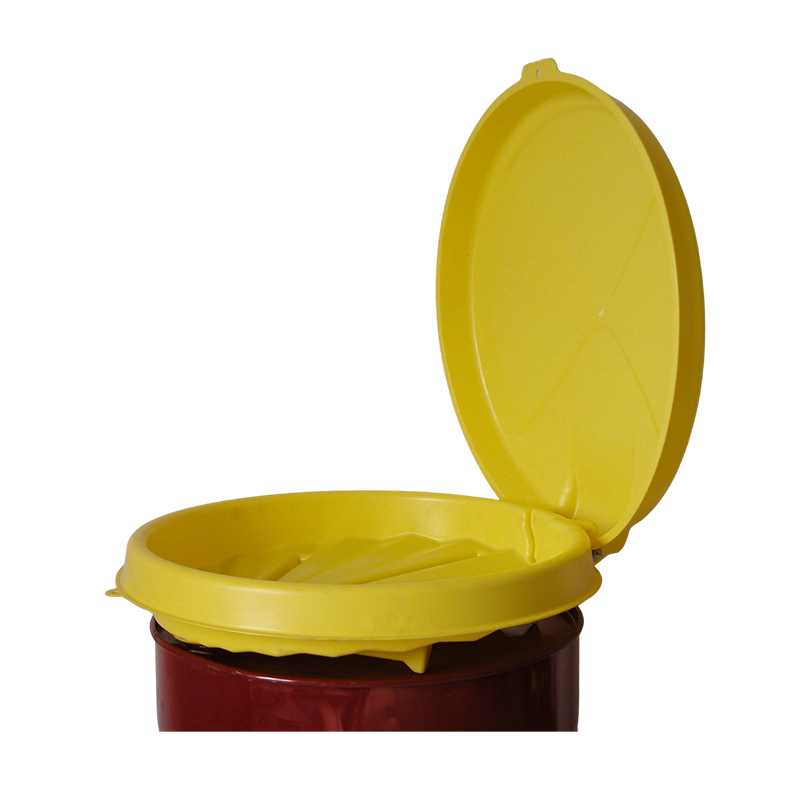
Recent shifts in industrial fluid management highlight a growing zero-tolerance policy for open-pour systems. Driven by aggressive Corporate ESG (Environmental, Social, and Governance) initiatives and heightened EPA scrutiny on stormwater runoff, modern facility managers are rapidly phasing out makeshift methods. The industry focus is now firmly on "zero-spill" mandates, making engineered transfer equipment a baseline requirement rather than an optional upgrade. Identifying the specific scenarios where a lidded design outperforms an open one helps safety officers allocate equipment budgets effectively.
Automotive repair shops, fleet maintenance yards, and heavy manufacturing plants generate massive, continuous volumes of used lubricants. In these dirty, fast-paced environments, a dedicated covered oil funnel is an absolute necessity.
Mechanics often pour small amounts of waste oil from drip pans into a central 55-gallon drum multiple times a day. Removing and replacing a standard, tight-fitting bung cap for every single pour is highly inefficient and almost always ignored by busy workers. A lidded unit allows for rapid, one-handed access while ensuring that shop dust, stray bolts, and ambient moisture do not contaminate the waste oil, keeping it pure enough to be sold to recycling contractors.
Space constraints frequently force facilities to store bulk fluid drums outdoors along fence lines or behind maintenance buildings. Any drum stationed outside must utilize a closed-system funnel if continuous daily access is required.
Specifically, the lid acts as a primary weather shield. It prevents rain, snow, and ice from accumulating in the basin and draining into the drum. By shedding precipitation outwardly over the edges, the cover entirely eliminates the risk of water displacement spills, ensuring that the facility remains compliant with local Stormwater Pollution Prevention Plans (SWPPP).
When transferring solvents, thinners, or aggressive acids, vapor management becomes a critical safety protocol. Utilizing high-quality equipment with a secure, gasketed lid mitigates these severe airborne risks.
Once the operator finishes pouring the chemical, closing the lid immediately traps the dangerous vapors inside the steel drum. This proactive containment protects nearby workers from inhalation exposure. In addition, it prevents the accumulation of flammable gas concentrations in the immediate workspace, thereby drastically reducing the risk of catastrophic flash fires caused by stray static sparks from nearby machinery.
Transitioning from outdated, open fluid transfer methods to covered systems yields measurable, immediate benefits. The advantages extend far beyond basic shop cleanliness, directly impacting legal compliance, workplace safety culture, and the company's financial bottom line.
Regulatory compliance remains the most compelling reason to upgrade your equipment. The Environmental Protection Agency (EPA) heavily enforces the Resource Conservation and Recovery Act (RCRA). Under 40 CFR 262.15, the "Closed Container Rule" explicitly mandates that any container holding hazardous waste must be closed at all times, except when actively adding or removing waste.
An open funnel left in a drum directly violates this federal regulation. However, a funnel equipped with a latched cover fully satisfies this strict requirement. By simply training staff to keep the lid shut between pours, facilities easily avoid severe, five-figure financial penalties during unannounced environmental audits.
A safer workplace is inherently a more productive workplace. By utilizing closed systems, facilities drastically improve localized odor control. Trapping noxious, headache-inducing smells inside the drum prevents worker fatigue and nausea associated with constant chemical exposure.
Furthermore, the lid prevents accidental splashing. If a drum is bumped by a passing pallet jack or moved roughly by a forklift, a closed cover ensures the liquid does not slosh out onto the concrete floor. This proactive containment eliminates slip-and-fall hazards, which consistently rank among the most common and costly workplace injuries recorded by OSHA.
Selecting the appropriate fluid transfer equipment requires a careful evaluation of your facility’s specific operational requirements, the chemical properties of the fluids being handled, and the physical environment of the workspace. A standard funnel may suffice for basic, low-risk tasks, but when dealing with bulk transfer into 55-gallon drums, engineering specifications truly matter. Procurement managers must analyze several critical variables to ensure the selected large drum funnel meets both operational demands and regulatory standards.
The fundamental building block of any reliable fluid handling system is the material from which it is constructed. Using an incompatible material can lead to rapid equipment degradation, chemical leaching, or catastrophic structural failure.
Polyethylene (HDPE): HDPE is a thermoplastic polymer known for its high strength-to-density ratio and exceptional chemical resistance. It is structurally inert to a wide variety of industrial chemicals, making it the optimal choice for handling corrosive liquids, strong acids, alkaline solutions, and general aqueous fluids. Because it does not spark when struck by metal tools, an HDPE unit is generally safer in environments where mechanical sparks are a concern, though standard HDPE is not inherently conductive for grounding purposes.
Steel and Metal Alloys: For facilities managing highly flammable solvents, aviation fuels, or volatile organic compounds (VOCs), steel is the mandatory standard. The primary advantage of a steel funnel is its ability to be integrated into a facility's grounding and bonding system. When transferring flammable liquids, the friction of the fluid moving generates static electricity. A metal funnel allows for the attachment of grounding cables, safely dissipating static charges and neutralizing the risk of a spark igniting the chemical vapors.
Industrial drums follow standardized sizing, primarily categorized into 55-gallon (208-liter) and 30-gallon capacities. The efficiency of a fluid transfer operation is heavily dependent on how well the equipment interfaces with these standard containers. Most tight-head drums feature a standard 2-inch bung opening. Therefore, a properly engineered tool must feature a corresponding 2-inch threaded base to ensure a secure, leak-proof connection.
Beyond the base thread, the top diameter dictates the speed and safety of the transfer. A wide-mouth diameter is critical when operators are pouring from heavy pails or utilizing secondary transfer hoses. A wider catchment area significantly reduces the probability of splashing, mitigating slip hazards and minimizing the loss of expensive raw materials.
The distinction between a basic plastic cone and a true engineered fluid management tool lies in the integrated safety components.
Flame Arrestors: A flame arrestor is a critical safety device required when handling flammable liquids. It typically consists of a cylindrical brass or stainless-steel mesh tube positioned within the spout. If a spark or external fire occurs near the drum, the dense metal mesh absorbs and rapidly dissipates the heat of the flame, lowering the temperature below the ignition point before it can reach the volatile vapors inside. This prevents catastrophic drum explosions.
Debris Screens and Filters: High-quality covers incorporate a removable debris screen positioned at the base of the basin. This screen acts as the first line of defense, capturing dropped tools, nuts, bolts, and environmental debris before they can contaminate the drum's contents.
Lockable Latches: To comply with strict environmental regulations, many industrial-grade models feature a hinged lid equipped with a lockable hasp. This mechanism allows safety officers to apply a padlock, ensuring that unauthorized personnel cannot tamper with hazardous waste or accidentally mix incompatible chemicals.
Procuring the correct equipment is only the first step in optimizing bulk fluid transfer. To maximize the return on investment and maintain strict safety standards, facilities must implement standardized operating procedures for the installation, daily use, and maintenance of their systems.
The physical connection between the funnel and the drum is the most vulnerable point for potential leaks and vapor emissions. Installation must be executed methodically. First, the operator must inspect the 2-inch bung opening of the drum to ensure the steel threads are free of rust, dried chemicals, or gummy debris.
Next, carefully align the unit perfectly vertical to the bung. Cross-threading is a rookie mistake that destroys plastic threads, resulting in an imperfect seal. The operator should gently turn the drum filling funnel clockwise by hand until resistance is met. Many high-quality models feature a nitrile rubber O-ring at the base of the threads; the unit must be tightened sufficiently to compress this O-ring against the drum lid, creating a hermetic seal that locks out rainwater and traps fumes.
Because these tools are subjected to harsh chemical environments and heavy mechanical use, establishing a routine inspection schedule is vital.
Operators must be highly vigilant regarding cross-contamination. Using the same unit to transfer waste coolant and then subsequently using it for waste oil can render the fluids unrecyclable. If a facility cannot dedicate a specific funnel to a single fluid type, the unit must be thoroughly cleaned with an appropriate, non-reactive solvent between uses.
In addition, monthly mechanical inspections should be mandated. Maintenance teams should evaluate the integrity of the hinge pin to ensure the lid opens smoothly. The perimeter rubber seal on the inside of the lid must be checked for cracking or chemical degradation. If the lid seal is compromised, the system will fail to trap dangerous fumes, necessitating immediate replacement of the gasket.
Standard open funnels serve a basic, temporary purpose in the shop. However, when it comes to continuous, bulk fluid transfer into industrial storage drums, a covered system is undeniably the superior engineering choice.
It ensures uncompromised safety, stringent regulatory compliance, and absolute fluid purity. This incredibly simple equipment upgrade prevents highly expensive industrial disasters. By trapping vapors, shedding rainwater, and blocking debris, you actively avoid EPA regulatory fines, dangerous floor spills, and ruined product batches.
Protect your facility, your financial bottom line, and your workers today. Take the time to evaluate your current fluid handling processes. If you are ready to upgrade your bulk fluid handling equipment to a secure, covered system, explore the engineered solutions available at Jinlin Industrial to find the perfect fit for your operational needs.
Most industrial drum funnels are engineered with a standard 2-inch National Pipe Thread (NPT) or National Pipe Straight (NPS) fitting at the base of the pouring spout. This standardized sizing allows the funnel to screw directly and securely into the primary bung openings of standard 30-gallon and 55-gallon tight-head steel or poly drums. While adapters exist for smaller containers, the 2-inch interface remains the universal industry standard.
In many jurisdictions and under specific federal guidelines, yes. The Environmental Protection Agency (EPA) enforces strict regulations regarding hazardous waste management, specifically the "Closed Container Rule" (40 CFR 262.15). This rule mandates that any container holding hazardous waste, including waste oil, must remain closed at all times except when an operator is actively adding or removing fluid. A funnel equipped with a securely latched cover satisfies this legal requirement perfectly.
Yes, facilitating safe outdoor storage is one of the primary functional advantages of a covered funnel. When drums are stored in exterior environments, they are exposed to precipitation. If an open funnel is left on a drum, rainwater will channel directly into the container, displacing the oil and causing a severe environmental spill. A durable, UV-resistant cover creates a physical barrier that sheds rainwater, protecting the internal contents.
A flame arrestor is a specialized safety component, typically constructed from a densely woven metallic mesh, located inside the funnel's spout. Its purpose is to allow liquids to flow into the drum while preventing external ignition sources (such as sparks from grinding or open flames) from igniting the highly combustible vapors trapped inside. If you are transferring flammable liquids or volatile solvents, a flame arrestor is highly recommended and frequently mandated by OSHA standards.
From a safety and quality control perspective, it is highly discouraged to use a single funnel for multiple, distinct fluid types. Mixing incompatible chemicals can trigger dangerous exothermic reactions or toxic gas releases. Furthermore, introducing coolant residue into a drum of waste oil can ruin the batch for recycling. The optimal industrial practice is to color-code and dedicate specific funnels to specific fluids to eliminate cross-contamination.
Yes, when properly installed and maintained. A high-quality covered funnel equipped with a rubber or nitrile gasket creates a seal over the basin. By keeping the lid latched shut between active pours, the system traps VOCs inside the drum, preventing them from evaporating into the workspace. This is crucial for maintaining indoor air quality and complying with OSHA Permissible Exposure Limits.
To safely ground a funnel, you must use a metal funnel (usually galvanized or stainless steel) rather than plastic, as standard plastic is an insulator. The metal funnel should be screwed tightly into a metal drum. You then attach an anti-static grounding wire equipped with alligator clips from the drum to a verified earth ground (like a grounding busbar or a driven ground rod). This creates a continuous path for static electricity to safely dissipate, preventing sparks.


