+86-25-8470-5507


Views: 0 Author: Site Editor Publish Time: 2026-09-08 Origin: Site


Did you know poor lubrication causes nearly 80% of all machinery failures? The transfer process often acts as the primary gateway for abrasive dirt and incompatible oils to enter sensitive systems. This daily cross-contamination actively destroys internal equipment components. It halts production lines and bleeds facility budgets. In this comprehensive guide, we break down exactly how upgrading to a modern visual management system stops these costly operational errors dead in their tracks.
Visual Error Prevention: Standardized visual cues ensure the correct lubricant enters the corresponding machine. This mitigates the severe risk of chemical incompatibility.
Closed-Loop Protection: Modern dispensing units actively block airborne particulates and ambient moisture from degrading industrial fluids during the critical transfer phase.
Extended Equipment Life: Strict contamination control preserves both the optimal physical properties of the lubricant and the mechanical integrity of the machinery.
Standardized Workflows: A systematic approach to fluid handling simplifies technician training, bypasses language barriers, and establishes a baseline for operational reliability.
In industrial maintenance, the brief journey of lubricating oil from a bulk storage drum to a machine component is fraught with invisible risks. Statistically, this transit period is the most common point for external contaminants to breach the fluid stream. Grasping the severe mechanical and financial consequences of these errors is the vital first step toward effective mitigation.
Lubricant cross-contamination strikes when two distinct types of oils are inadvertently blended. This even applies to differing brands of the same viscosity. Industrial lubricants are highly engineered formulations. They consist of base oils (mineral or synthetic) and meticulously balanced chemical additive packages.
What happens when incompatible fluids mix? The resulting chemical reactions are immediate and destructive. Imagine a high-pressure shift change. A rushed technician mistakenly tops off a polyglycol-based gear oil with a polyalphaolefin (PAO) synthetic. This chemical clash triggers additive precipitation, stripping the oil of its crucial anti-wear properties. Furthermore, this type of mixing often causes severe foaming, a drastic reduction in film strength, and a sudden loss of viscosity. Once viscosity drops, devastating metal-to-metal contact occurs within bearings and gearboxes. Rapid, irreversible wear is the inevitable result.
Chemical clashes are just one part of the problem. The physical transfer process itself is highly vulnerable to environmental ingress. Outdated maintenance practices often rely on unsealed vessels, such as repurposed milk jugs, open buckets, or galvanized watering cans.
In a typical manufacturing environment, the ambient air is thick with silica dust, metallic shavings, and humidity. When an open container is utilized, microscopic particles naturally settle into the oil. Keep in mind that internal machine clearances often measure between 3 to 5 microns. Dirt acts as a relentless lapping compound, grinding away these clearances and drastically slashing the operational lifespan of the equipment. Crucially, even microscopic water ingress—sometimes as low as 500 parts per million—can exponentially accelerate oil oxidation and induce rust on internal surfaces.
The true cost of poor fluid transfer practices extends exponentially beyond the price of a few gallons of wasted oil. Empirical data gathered by reliability engineers consistently demonstrates that unplanned downtime is the single largest financial drain on a manufacturing facility.
When a critical bearing seizes due to particulate contamination or additive depletion, the facility absorbs heavy costs. You pay for replacement parts, emergency overtime labor, and entirely lost production schedules. Investing in proper transfer equipment is not merely a maintenance upgrade. It is a proactive measure that directly safeguards the facility's bottom line.
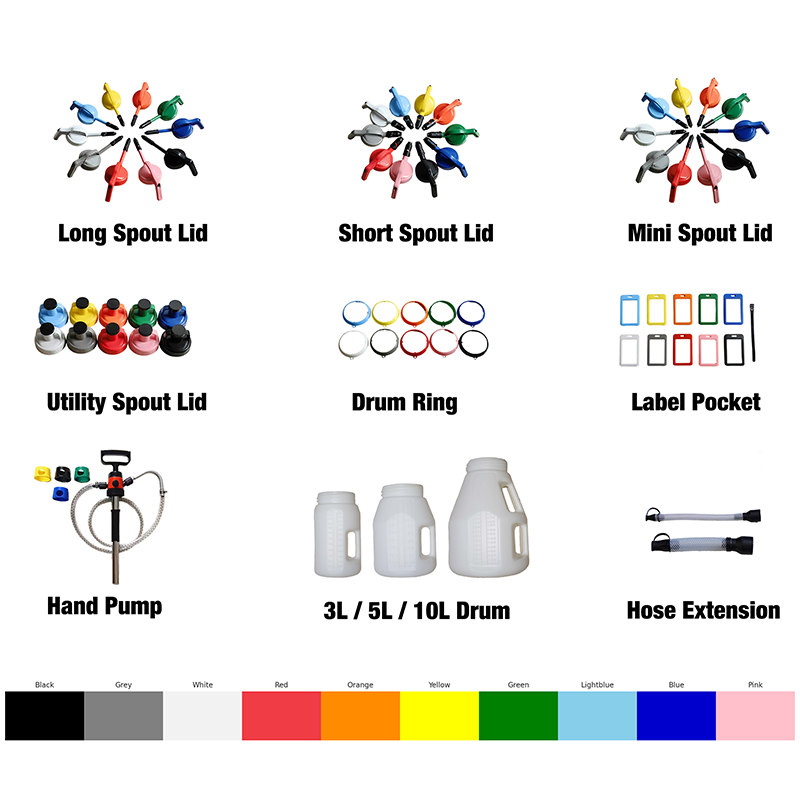
To actively combat the persistent risks of fluid degradation, proactive industrial facilities are abandoning improvised transfer methods. Instead, they are adopting highly engineered, purpose-built solutions designed for the lube room.
The outdated "open bucket" method relies far too heavily on human memory. It unnecessarily exposes pristine fluids to the open atmosphere. In stark contrast, a modern fluid management vessel is designed as a precision instrument. It functions as a temporary, highly secure isolation chamber for the oil as it moves from bulk storage to the machine's fill port. This ensures the fluid's baseline ISO cleanliness code remains perfectly intact.
A standard industrial fluid dispenser is far more than a simple plastic jug. It operates as a multi-component system engineered specifically for chemical resistance and environmental sealing.
The primary vessel is typically molded from High-Density Polyethylene (HDPE). This material is selected for its structural durability and inert nature, guaranteeing it will not react with aggressive synthetic lubricants. To ensure maximum protection, a professional lubricant transfer container features interchangeable lids equipped with premium O-rings—usually crafted from Nitrile or Viton—to establish a hermetic seal. Additionally, these systems utilize specialized dispensing nozzles and manual pump mechanisms. This empowers technicians to control the flow rate precisely, preventing hazardous spills and equipment overfilling.
Human error remains inevitable in fast-paced manufacturing sectors. This is especially true when maintenance teams are tasked with managing dozens of different fluid types simultaneously. Color-coding brilliantly leverages visual management psychology to bypass cognitive fatigue and language barriers.
By permanently matching a specific color (such as a red lid) to a specific fluid type (like ISO 46 hydraulic oil), and placing a corresponding red tag directly on the machine's fill port, the facility establishes a foolproof visual match. If an operator approaches a red fill port holding a blue container, the glaring visual mismatch immediately flags the error. The mistake is caught before a single drop of incompatible oil is poured.
Understanding the precise mechanical and operational mechanisms by which these systems protect fluid integrity is crucial. It justifies their widespread implementation on the plant floor.
Routine machinery top-offs are statistically the most common source of accidental fluid mixing. An operator might grab a generic, unmarked jug assuming it contains standard hydraulic fluid, when it actually holds a specialized gear oil. A color-coded system entirely eliminates this dangerous guesswork. By enforcing a rigid rule that a specific color only ever holds one specific chemical formulation, the risk of pouring the wrong fluid during routine maintenance drops to near zero.
A primary objective of modern reliability engineering is maintaining an unbroken, closed loop. Advanced transfer systems seal the fluid entirely from its environment. The oil is pumped directly from the bulk drum into the sealed container. From there, the container's specialized spout seals flush against the machine's fill port. At no point during this entire journey is the oil exposed to the ambient plant atmosphere.
| Feature | Traditional Open Transfer | Modern Color-Coded System | Reliability Impact |
|---|---|---|---|
| Fluid Identification | Memory-based or handwritten labels | Standardized color lids & machine tags | Eliminates chemical additive clashing |
| Environmental Seal | Open to ambient dust and humidity | Hermetic Nitrile/Viton O-ring seals | Maintains baseline ISO cleanliness codes |
| Dispensing Control | Uncontrolled pouring, requires funnels | Twist-lock nozzles (stumpy/stretch spouts) | Prevents spills and particle ingress from dirty funnels |
Traditional funnels are notorious culprits for collecting ambient dust while sitting idle on workbenches. This accumulated dirt is then washed directly into the machine's core during the next oil change. Modern dispensing units utilize advanced nozzle designs. By selecting interchangeable lids with stumpy, stretch, or mini spouts, technicians can match the nozzle directly to the fill port. These specialized nozzles feature integrated twist-locks or sealing caps that keep dirt out when not in active use, rendering dirty, open funnels obsolete.
Industrial environments demand unyielding, engineered solutions. A standard plastic jug or a repurposed bucket is entirely insufficient for rigorous fluid management. When evaluating equipment for your facility, specific engineering and material features dictate whether a vessel truly belongs on the plant floor.
The primary body of the unit must be molded from industrial-grade High-Density Polyethylene (HDPE). This material is the established industry standard because it offers exceptional chemical resistance. Unlike traditional galvanized or steel containers, HDPE is completely impervious to rust and corrosion.
To accommodate various maintenance tasks, facilities should standardize on versatile volume capacities. Having 2L, 5L, and 10L jugs readily available ensures operators have the right size for everything from minor bearing top-offs to complete gearbox flushes. Many high-quality containers are also semi-transparent and feature molded volume scales, allowing personnel to visually verify fluid levels without ever opening the container.
The overall effectiveness of a closed-loop system relies entirely on the integrity of its sealing mechanisms. High-quality O-rings, typically manufactured from durable Nitrile (Buna-N) or Viton, are embedded within the lid assemblies and spout connections. These industrial seals create a strict airtight and watertight barrier. When a safe oil container is properly secured with these components, the lubricant remains in its pristine baseline state.
Operator fatigue and awkward handling angles frequently trigger accidental spills and safety hazards. Premium containers feature highly ergonomic designs, including textured carrying handles and balanced weight distribution to easily accommodate heavy, viscous fluids. Advanced dispensing mechanisms, such as hand-operated piston pumps and quick-twist spouts, allow maintenance personnel to dictate fluid flow with absolute precision.
Transitioning to a structured fluid management protocol requires more than simply purchasing colored lids. It demands a systematic approach to inventory management, workflow standardization, and cultural shifts within the maintenance department.
Before introducing any new hardware to the floor, conduct a rigorous audit of all lubricants currently in use. Plants often discover redundant products supplying the exact same viscosity grade. Consolidate your lubricant list to the absolute essential minimum. Identify each unique oil, its ISO Viscosity Grade (VG), its additive package, and its specific application.
Once your inventory is thoroughly consolidated, assign a highly specific color to each lubricant category. While there is no universal regulatory standard mandated by OSHA, industry best practices suggest a logical palette. For example, Red is universally recognized for hydraulic fluids, Yellow for gear oils, Blue for compressor oils, and Green for turbine oils. Consistency is the most critical factor here.
A visual management system only succeeds if it perfectly matches its source to its destination. Implement a closed-loop tagging system based on the 5S methodology. The bulk storage drum must feature a colored tag matching the designated fluid. The transfer container lid must be the exact same color. Finally, the machine's fill port must be fitted with a corresponding colored tag. By implementing a comprehensive oil handling system, you mechanically prevent cross-contamination.
To maintain strict reliability standards, the tools used for fluid transfer must be subjected to rigorous maintenance protocols. Neglecting the physical condition of the containers introduces the very contamination risks they were originally designed to eliminate.
From a strict reliability engineering perspective, repurposing a container for a completely different type of lubricant is highly discouraged. Even after an intensive cleaning, microscopic additive residues remain embedded deep in the pores of the plastic.
If a container previously holding a heavy gear oil with aggressive sulfur-phosphorus additives is repurposed for a sensitive turbine oil, the residual chemicals can cause immediate additive clashing. The fundamental, unbreakable rule of a reliable transfer system is: One container, one color, one specific oil. The labor cost and risk associated with aggressive solvent cleaning almost always exceed the price of simply dedicating a new container to the task.
Routine physical inspections are mandatory to guarantee the vessel remains a secure environment. Technicians must check O-rings and gaskets for cracking, flattening, or chemical swelling, replacing them immediately if the seal is compromised. Nozzle threads should be inspected for cross-threading or wear that could allow particulate ingress during dispensing.
Analyzing recent developments in the manufacturing sector reveals a massive shift toward proactive contamination control. Driven by stringent ISO 4406 cleanliness standards, facilities are aggressively moving away from reactive breakdown repairs. Industry data shows a growing emphasis on protecting specialized synthetic lubricants, which are becoming increasingly expensive. Plant managers now view the fluid transfer phase not as a basic chore, but as a critical reliability checkpoint. Consequently, the widespread adoption of structured, visually identifiable fluid transfer equipment has surged. It is now widely recognized as one of the highest ROI investments for modern plants integrating IIoT sensors and precision maintenance programs.
Selecting the right manufacturing supplier is a critical decision in your broader reliability journey. The industrial market offers various fluid handling solutions, but not all are engineered to meet the stringent requirements of heavy-duty manufacturing environments.
When evaluating manufacturers, prioritize those who provide comprehensive material data for their products. A reputable supplier will readily confirm that their HDPE is chemically inert to standard petroleum and synthetic bases. Look for vendors that offer a truly modular system. This includes a comprehensive range of capacities (2L to 10L), interchangeable lids, matching pump accessories, and integrated tagging solutions.
For facilities actively seeking robust, engineered solutions, partnering with established industrial manufacturers is non-negotiable. Products designed specifically for rigorous environments ensure that fluid transfer is both maximally secure and highly efficient. By upgrading to a professional-grade color coded oil container from a trusted manufacturer like Jinlin-ind, maintenance teams can systematically eliminate human error. Explore reliable, purpose-built tools from Jinlin-ind today to streamline your daily workflow and protect critical machinery from premature wear.
An oil transfer container serves as a vital contamination control tool, actively stopping abrasive dirt and incompatible fluids from destroying critical machinery. Ultimately, the upfront investment in a visually managed, color-coded system is minuscule compared to the catastrophic costs of replacing a blown gearbox or dealing with unexpected plant downtime. Take the time to audit your current fluid transfer methods today, and upgrade your facility to ensure long-term operational success and unyielding equipment reliability.
High-Density Polyethylene (HDPE) is universally recognized as the industry standard for industrial fluid management. HDPE is highly durable, chemically inert, and will not react with complex lubricant additives. Unlike traditional galvanized or steel cans, HDPE will never rust, which eliminates a major source of particulate contamination. Furthermore, it is lightweight and can be specially treated for UV resistance to prevent degradation in harsh industrial environments.
A standardized visual system directly prevents the accidental mixing of incompatible chemicals. Mixing certain synthetic and mineral oils can lead to hazardous chemical reactions, extreme foaming, or even severe fire risks in high-temperature applications. Additionally, purpose-built containers feature ergonomic handles and precise dispensing nozzles that eliminate the need for open funnels, drastically reducing the risk of slip-and-fall hazards caused by accidental fluid spills on the plant floor.
Reliability engineers highly discourage this practice. Even after a thorough, aggressive solvent wash, microscopic traces of chemical additives can remain trapped in the container's components and plastic pores. If incompatible additives mix, they can neutralize each other or form damaging sludge that destroys machinery. The most secure and cost-effective best practice is to assign one dedicated container, with one specific color, to one specific type of lubricant permanently.
While there is no single universal law or OSHA mandate dictating specific colors, most industries follow a recognized best-practice framework to maintain order. Common standards include Red for hydraulic fluids, Yellow for gear oils, Blue for compressor oils, and Green for turbine oils. The most important rule is internal consistency; whatever color standard your facility chooses must be applied uniformly across all bulk tanks, transfer containers, and machine fill points.
Closed systems utilize airtight lids, specialized O-ring seals, and precision spouts to completely isolate the lubricant from the outside environment. During the transfer process, these precise engineering features prevent ambient dust, airborne dirt, and atmospheric moisture from coming into contact with the fluid. By maintaining a sealed loop from the bulk storage room directly to the equipment, closed systems ensure the oil remains at its required cleanliness level, extending both lubricant and machinery lifespan.
The ISO 4406 cleanliness code is a global standard used to quantify particulate contamination levels per milliliter of fluid at three sizes (4µm, 6µm, and 14µm). Using open buckets or dirty funnels immediately degrades the oil's ISO code by introducing airborne silica and metal dust. A sealed, color-coded transfer container acts as an isolation chamber, ensuring the oil delivered to the machine maintains the exact same ISO cleanliness level it had when it left the bulk storage drum.
While industrial-grade HDPE containers are highly durable, they are not infinite. A best practice is to replace containers every 3 to 5 years, depending on environmental harshness. However, components like Nitrile or Viton O-rings and dispensing nozzles should be inspected quarterly and replaced immediately if they show signs of flattening, cracking, or chemical swelling to maintain a strict hermetic seal.


