+86-25-8470-5507


Views: 0 Author: Site Editor Publish Time: 2026-08-15 Origin: Site


Small batch fluid handling traps facility managers between two flawed extremes. On one side sits inaccurate manual pouring. On the other stands the prohibitive expense of automated pumping systems. Frequent changeovers demand agility on the production floor. Strict cross-contamination limits require impeccable cleanliness between batches. High-value fluid waste drains profitability directly from the bottom line. Stringent workplace safety regulations mandate minimal chemical exposure for operators. You need a practical, reliable solution. The industrial-grade Hand Pump serves as the pragmatic middle ground. It delivers mechanical precision and safety. It avoids the heavy infrastructure, maintenance overhead, and dead-volume waste of motorized, gas-pressure, or complex motion-control pumps. We see this constantly on the shop floor. Operators struggle with 55-gallon drums, risking spills and injuries. Implementing a manual transfer system solves these immediate physical challenges while keeping the line moving.
Precision and Yield: Purpose-built hand pumps eliminate the "glug effect" of manual pouring, directly reducing high-value fluid waste and improving batch consistency without requiring electronic motion control.
Risk Mitigation: Closed-loop hand pumping systems drastically reduce operator exposure to volatile organic compounds (VOCs), corrosive chemicals, and ergonomic strain.
Agility vs. Automation: A portable hand pump offers superior ROI for multi-station, low-volume processes where the setup and cleaning times of automated gear, syringe, or peristaltic pumps negate their efficiency.
Material Compatibility is Non-Negotiable: Successful implementation requires matching pump construction (e.g., PTFE, advanced composites, 316 Stainless Steel) precisely to the fluid’s chemical profile and viscosity.
Ready-to-Deploy Kits: Utilizing complete pump kits (pump, hose, and nozzle) accelerates deployment for barrel and IBC emptying across agile manufacturing floors.
Efficient small batch fluid handling requires meeting strict operational benchmarks. Zero cross-contamination stands as the primary goal. Operators must transition between different chemicals or ingredients without carrying residue over. Exact volumetric dispensing is equally critical. Formulations rely on precise ratios, meaning every milliliter counts. Minimal setup time ensures production lines remain active rather than waiting for equipment preparation. Achieving these three criteria simultaneously proves difficult with traditional methods. Facilities must balance speed with accuracy. They must also maintain a sterile or chemically neutral environment during transfer processes. Success means moving fluids quickly, safely, and exactly to specification without excessive downtime.
| Operational Metric | Manual Pouring | Automated Pumping | Manual Pumping |
|---|---|---|---|
| Setup Time | Instant | High (Wiring/Programming) | Low (Under 5 minutes) |
| Volumetric Accuracy | Poor | Excellent | High (Metered strokes) |
| Cross-Contamination Risk | High (Open containers) | Medium (Hard to clean lines) | Low (Dedicated/Easy clean) |
| Mobility | High | Low (Fixed infrastructure) | High |
Manual decanting from drums or Intermediate Bulk Containers (IBCs) introduces severe operational risks. Gravity feeding often results in the "glug effect." Air struggles to displace the exiting liquid, causing erratic flow and sudden splashes. This leads directly to high spill rates. Spilled raw materials represent immediate financial loss. Inaccurate measurements plague manual pouring. Operators cannot easily stop the flow of a heavy drum at a precise volume mark. Furthermore, regulatory compliance risks multiply. Open pouring releases volatile organic compounds (VOCs) into the workspace. It exposes workers to splash hazards. OSHA and environmental agencies heavily penalize facilities that fail to control hazardous fluid transfers. Relying on sheer physical strength to tip drums also guarantees ergonomic injuries over time.
Loss of high-value raw materials through erratic splashing.
Increased labor hours spent cleaning up hazardous spills.
Higher insurance premiums due to frequent ergonomic lifting injuries.
Potential regulatory fines for improper handling of volatile chemicals.
Motorized pumps often seem like the logical upgrade. However, gear, diaphragm, or syringe pumps frequently fail in small batch environments. They introduce extensive cleaning validation requirements. Tearing down a motorized gear pump to clean every crevice takes hours. This downtime destroys the agility needed for frequent changeovers. High dead volume presents another massive drawback. Automated systems leave significant amounts of fluid trapped inside long hoses and pump housings. When handling expensive specialty chemicals or pharmaceutical ingredients, this wasted product destroys profit margins. Finally, motorized systems rely on fixed power or pneumatic infrastructure. You cannot easily move a hardwired diaphragm pump across a facility to service a remote workstation. They lock your process into a rigid footprint.
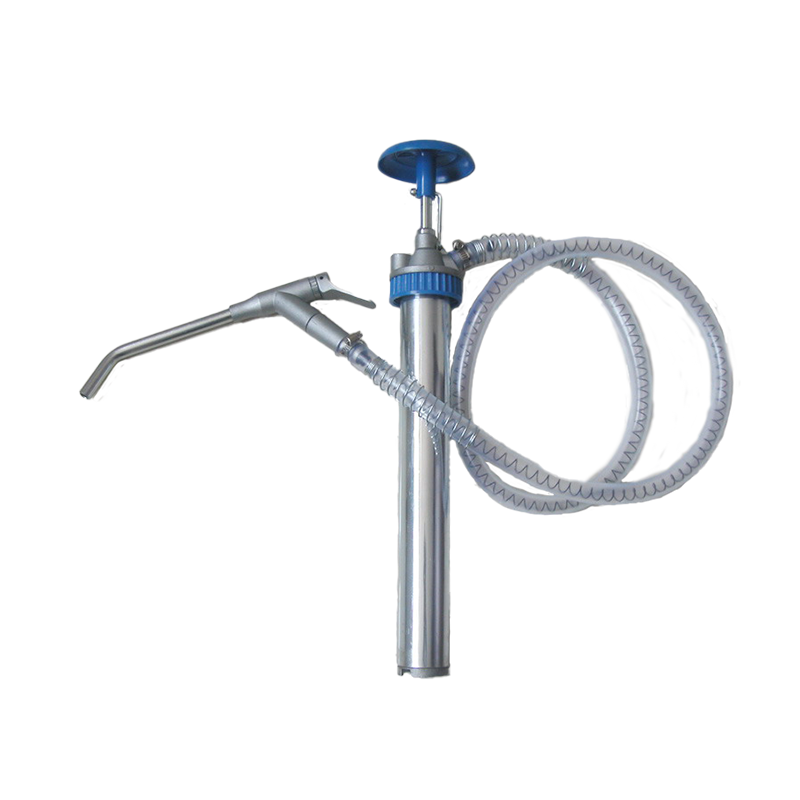
Piston and rotary manual pumps provide metered, predictable dispensing. Every stroke or rotation moves a specific, known volume of liquid. This mechanical consistency is vital for high-value ingredients in pharmaceuticals, cosmetics, or specialty chemicals. Operators can count strokes to achieve exact batch requirements. This eliminates the guesswork inherent in tipping a drum. Waste reduction occurs immediately. You stop over-pouring. You eliminate splash spills. The fluid goes exactly where it belongs. By controlling the flow rate manually, operators can slow down as they approach the target volume. This precision protects the integrity of the final product formulation and maximizes the yield from every bulk container.
Utilizing manual pumping equipment fundamentally changes workplace safety dynamics. It entirely mitigates manual lifting injuries. Workers no longer need to hoist 55-gallon drums onto tipping stands. The drum remains safely upright on the floor. Closed-loop pumping systems prevent splash-back. The fluid travels through a sealed hose directly into the receiving vessel. For hazardous environments, advanced manual pumps integrate with vapor-return lines. These lines capture toxic fumes and route them back into the source drum. This prevents VOCs from entering the operator's breathing zone. Ergonomically designed pump handles reduce wrist and shoulder strain. They utilize leverage to move heavy fluids, requiring minimal physical exertion from the operator.
Agile manufacturing demands rapid equipment turnaround. Complex automated pumps require specialized tools and extensive time for teardown. In contrast, a sanitary manual pump offers rapid disassembly. Operators can strip a manual pump down to its core components in minutes. There are no complex electronics or delicate sensors to protect during washdown. You simply flush the pump, remove a few sanitary clamps, and sterilize the wetted parts. This simplicity drastically reduces changeover times. Facilities can process multiple different batches in a single shift. The minimal internal geometry of a manual pump also ensures no hidden pockets harbor bacteria or residual chemicals. Visual inspection for cleanliness becomes straightforward and reliable.
Flush the pump housing with a compatible neutral solvent.
Release the sanitary clamps to separate the pump tube from the motor block.
Remove the internal piston or rotary vanes for direct visual inspection.
Sterilize all wetted components in an autoclave or chemical bath.
Reassemble the unit in under five minutes for the next batch.
Choosing the correct pump mechanism depends entirely on fluid viscosity. Piston pumps excel with higher viscosity and thicker fluids. Their linear stroke creates a strong vacuum, pulling heavy oils, resins, or syrups up the suction tube. Rotary and siphon pumps are ideal for low-viscosity, water-like fluids. The continuous cranking motion provides a smooth, steady flow for thin solvents or coolants. You must understand the upper centipoise (cP) limits. Manual pumping becomes ergonomically unviable above certain thresholds. Most heavy-duty piston pumps max out around 2,000 to 4,000 cP. Beyond this point, the physical force required to lift the fluid causes severe operator fatigue. Always match the mechanical advantage of the pump to the thickness of the liquid.
| Fluid Type | Approximate Viscosity (cP) | Recommended Manual Pump Type |
|---|---|---|
| Water / Light Solvents | 1 - 10 | Rotary or Siphon Pump |
| Light Oils / Glycol | 10 - 100 | Rotary or Light Piston Pump |
| Motor Oil / Light Resins | 100 - 1,000 | Standard Piston Pump |
| Heavy Syrups / Thick Resins | 1,000 - 4,000 | Heavy-Duty Lever Piston Pump |
| Pastes / Greases | 4,000+ | Not recommended for manual transfer |
Material compatibility dictates pump survival. You must evaluate the wetted parts against the fluid’s chemical profile. Specify Polypropylene for handling acids and alkalis. It resists corrosive attacks from standard industrial cleaners and base chemicals. Choose Ryton (PPS) for aggressive solvents. It maintains structural integrity when exposed to harsh hydrocarbons. Select 316 Stainless Steel for flammables and sanitary applications. Stainless steel allows for proper grounding to prevent static sparks. Processing highly corrosive liquids, such as sulfuric acid, requires advanced composites and specialized alloys. Standard plastics will melt, and basic metals will dissolve. Matching the material science to the Safety Data Sheet (SDS) prevents catastrophic pump failure and chemical leaks.
Pumping fluids with suspended solids introduces severe wear-and-tear. Abrasives act like sandpaper against internal pump components. Standard rubber seals and plastic vanes will degrade rapidly. This leads to loss of suction and eventual leakage. Certain manual pump designs fail prematurely under these conditions. Tight-tolerance gear or rotary mechanisms jam when particulates enter the housing. When handling abrasive slurries, composite-lined pumps or specialized diaphragm manual pumps become necessary. These designs isolate the moving friction parts from the abrasive fluid. You must select pumps with hardened wear plates and durable PTFE seals. Understanding the particulate size and hardness ensures you specify a pump capable of surviving the application.
Modern manufacturing often requires fluid transfer across multiple, unconnected workstations. Centralized pumping stations force operators to bring the work to the pump. This creates traffic jams and slows down production. Decentralizing fluid transfer provides a massive strategic advantage. Equipping each zone with its own fluid handling tools eliminates bottlenecks. Operators can draw materials exactly when and where they need them. This approach supports lean manufacturing principles. It reduces unnecessary motion and transportation of materials. Cleanrooms particularly benefit from decentralized setups. Keeping dedicated transfer equipment inside the cleanroom prevents external contamination from entering the sterile environment.
Mobility transforms fluid handling efficiency. Integrating a Portable Hand Pump with mobile drum trolleys creates a highly flexible system. Operators can safely port equipment between processes. They bring the fluid directly to the application rather than hauling smaller, open buckets across the floor. All-in-one pump kits maximize this efficiency. These kits include the pump, chemical-resistant hoses, dispensing nozzles, and grounding wires. Buying a complete kit ensures all components are compatible and rated for the same pressures and chemicals. It provides a ready-to-deploy solution. Operators simply roll the IBC or drum to the mixing tank, attach the kit, and begin dispensing immediately.
Automated pumps require power cords or compressed air lines. This infrastructure limits where you can operate. Portable manual systems offer complete infrastructure independence. This value becomes obvious in explosion-proof (ATEX) zones. Running electrical lines into volatile environments requires expensive conduit and specialized safety barriers. A fully grounded, stainless steel manual pump operates safely in these zones without any electrical risk. Remote areas of a facility or outdoor storage yards also lack power access. Manual pumps allow workers to transfer fluids from bulk storage tanks in the yard without running hundreds of feet of pneumatic hose. This independence guarantees you can move fluids anywhere on your property.
The upfront costs of fluid handling equipment vary wildly. Industrial manual pumps require a fraction of the capital expenditure compared to entry-level motorized kits. A high-quality stainless steel manual pump represents a minor tooling expense. A motorized gear pump requires purchasing the pump head, the electric motor, the variable frequency drive (VFD) for speed control, and the associated wiring. For facilities managing dozens of different chemicals, outfitting every drum with a motorized system drains capital budgets rapidly. Manual pumps allow facilities to scale their fluid handling capabilities cost-effectively. You can equip every necessary station for the cost of a single automated skid.
Evaluating equipment requires looking past the initial purchase price. Motorized pumps consume electricity or compressed air every time they run. They also require complex maintenance. Stators, rotors, and electronic sensors fail over time and demand expensive replacements. Manual pumps operate entirely on human energy, dropping utility consumption to zero. The maintenance requirements remain incredibly low. Replacing a worn PTFE seal or a basic bearing costs very little and takes minutes. By eliminating electrical components and complex drive shafts, manual pumps drastically reduce the long-term financial burden of keeping your fluid transfer systems operational.
The true financial value of manual dispensing lies in yield improvement. High-value raw materials dictate product profitability. Spilling just a few ounces of a specialty pharmaceutical ingredient or a rare essential oil costs significant money. Manual pumps eliminate the spillage and over-pouring associated with gravity feeding. The return on investment (ROI) occurs rapidly. You can calculate this by tracking the volume of fluid saved per batch. If a pump prevents the loss of one cup of expensive resin per day, the equipment pays for itself within weeks. Consistent, precise dispensing ensures you utilize 100% of the purchased raw material, maximizing the revenue generated from every drum.
| Cost Factor | Industrial Hand Pump | Motorized Pump System |
|---|---|---|
| Initial Equipment Cost | Low | High |
| Installation Expense | Zero | High (Electrician/Piping) |
| Energy Consumption | Zero | Continuous during operation |
| Maintenance Parts | Inexpensive (Seals/O-rings) | Expensive (Motors/VFDs/Stators) |
| Yield Improvement ROI | Rapid (Weeks) | Moderate (Months to Years) |
Manual pumping relies entirely on human energy. High-frequency dispensing introduces the physical limitation of operator fatigue. Pumping heavy fluids continuously over an 8-hour shift causes severe ergonomic strain. Facility managers must calculate daily throughput requirements. If a station requires moving hundreds of gallons per day, a manual pump is the wrong choice. Manual systems excel in low-volume, intermittent transfers. To mitigate fatigue, ensure the pump's mechanical advantage matches the fluid viscosity. Use longer pump handles to increase leverage. Rotate operators if frequent batch transfers are required. Recognizing the physical limits of manual equipment prevents workplace injuries and maintains steady production rates.
Inconsistent operation leads to inconsistent dispensing. Operators must receive training on proper pumping techniques. Standardizing Operating Procedures (SOPs) ensures everyone uses the equipment correctly. Training should focus on consistent stroke rates. Yanking a piston pump too quickly causes cavitation. Cavitation introduces air bubbles into the fluid line, ruining volumetric accuracy and potentially damaging the pump seals. Operators must learn the optimal rhythm for different fluid viscosities. SOPs must also dictate the exact sequence for attaching grounding wires before pumping flammables. Clear, documented procedures guarantee that the manual pump delivers the precision and safety it was designed to provide.
Mechanical friction eventually wears down moving parts. Unexpected leaks and seal degradation pose significant risks to fluid handling systems. Abrasive fluids or harsh chemicals accelerate this wear. Preventative maintenance schedules are mandatory. You must routinely inspect PTFE seals and O-rings for swelling or cracking. Changing the bearings in a rotary pump restores smooth operation and prevents metal-on-metal grinding. Facilities should stock critical rebuild kits for every pump model in use. Having spare seals and vanes on hand prevents production downtime. Routine maintenance improves the operations of the entire fluid processing system, ensuring the pump remains leak-free and accurate for years.
Inspect external housings weekly for signs of chemical weeping.
Lubricate handle pivot points monthly to maintain mechanical leverage.
Replace internal PTFE seals annually or immediately upon loss of suction.
Verify grounding wire continuity before every shift when handling flammables.
Audit your current manual pouring stations to quantify daily fluid waste and spill frequency.
Review the Safety Data Sheets (SDS) for all transferred chemicals to identify required pump housing materials.
Implement a pilot program using a single complete pump kit on your most frequent small-batch changeover station.
Consult with a fluid handling specialist to specify the exact pump configuration for your most viscous materials.
A: Most heavy-duty piston pumps handle fluids up to 2,000 to 4,000 centipoise (cP). Rotary pumps max out around 1,000 cP. Exceeding these limits causes severe operator fatigue and potential pump cavitation. Always verify the manufacturer's specific viscosity rating before deployment.
A: Assign dedicated pump kits to specific chemicals or IBCs to eliminate cross-contact. Alternatively, utilize sanitary manual pumps designed for quick dismantling. These allow operators to completely strip, flush, and sterilize the wetted components in an autoclave between different batch runs.
A: Yes, if properly specified. Flammable liquids require ATEX-certified, 316 stainless steel pumps with dedicated grounding wires to prevent static sparks. Highly corrosive liquids, like sulfuric acid, require pumps built from advanced composites, PTFE, or specialized alloys that resist chemical degradation.
A: A rotary pump uses a continuous cranking motion to spin internal vanes, providing a steady flow ideal for thin, low-viscosity liquids. A piston pump uses a linear push-pull stroke to create high suction, making it necessary for lifting thicker, higher-viscosity fluids.
A: It can replace them for intermittent, low-volume batch transfers where automated setup and cleaning times create bottlenecks. However, manual pumps cannot replace automated systems for continuous, high-pressure, in-line processing that requires electronic motion control.
A: Flush the pump thoroughly with a compatible solvent or cleaning agent. Dismantle the wetted components to inspect for residue. Routinely check bearings for wear and replace consumable seals or O-rings using a manufacturer rebuild kit to prevent unexpected leaks.


