+86-25-8470-5507


Views: 0 Author: Site Editor Publish Time: 2026-08-06 Origin: Site


Powder flow failures cause significant operational friction across manufacturing and laboratory environments. Material bridging, clinging, and ratholing in standard transfer equipment lead to inaccurate dosing, cross-contamination, and costly process downtime. Operators often struggle to maintain consistent throughput when cohesive solids refuse to discharge smoothly from transfer vessels.
The core problem lies in the fundamental difference between fluid dynamics and bulk solid mechanics. Liquids conform perfectly to the shape of their container and flow under gravity without resistance. Fine powders behave entirely differently. They exhibit shear strength, cohesiveness, and static charge. These physical properties cause them to fail completely when processed through standard liquid transfer equipment. Pouring a cohesive solid into a narrow-stemmed vessel almost guarantees an immediate blockage.
Solving these flow issues requires specialized engineering principles. By understanding bulk solid mechanics, facilities can implement targeted solutions. This article serves as a technical evaluation guide for selecting the right geometry, material, and flow aids to ensure consistent, blockage-free solid transfer.
Geometry Dictates Flow: Standard 60-degree liquid funnels cause powder arching; specialized powder handling funnels require steeper angles and wider, parallel stems to achieve mass flow.
Material Selection Impacts Static and Friction: Unmodified plastics generate triboelectric charges that cause fine powders to cling. Anti-static polymers, borosilicate glass, or polished stainless steel are required for cohesive materials.
Matching Equipment to Powder Rheology: Evaluating a funnel requires understanding the specific powder's bulk density, moisture sensitivity (hygroscopy), and particle size distribution.
Scale Determines Complexity: Laboratory applications rely on passive design (geometry and material), while pilot or production-scale transfers may necessitate active flow aids (vibration or agitation).
Bridging occurs when powder particles interlock over the discharge outlet. This forms a stable structural arch that completely halts material flow. The particles bond together, supporting the weight of the material above them. Ratholing is a different failure mode. In this scenario, flow is restricted to a narrow central channel. The material directly above the outlet discharges, while the surrounding powder stagnates against the vessel walls.
The physics behind these failures involve cohesive arch strength competing against gravitational forces. Every powder mass possesses internal shear strength. When the cohesive strength of the arch exceeds the downward force of gravity, the material stops moving. Overcoming this requires altering the discharge diameter or modifying the hopper angle to break the structural integrity of the arch. Field engineers often observe that simply increasing the outlet diameter by a few millimeters can completely eliminate bridging in marginal powders.
Particle-to-particle cohesion increases significantly due to van der Waals forces and moisture content. Fine powders have a massive surface-area-to-volume ratio. This amplifies intermolecular forces, causing particles to clump together. Even minor ambient humidity can create liquid bridges between particles, drastically increasing cohesive strength and flow resistance.
Triboelectric charging further complicates powder transfer. As particles rub against each other and the vessel walls, they generate static electricity. Standard plastic transfer equipment exacerbates wall adhesion. The non-conductive plastic traps the static charge, creating a strong electromagnetic pull. Fine powders will cling stubbornly to the walls, preventing total evacuation and causing severe dose inaccuracies. Grounding the equipment is a standard field practice to mitigate this issue.
Fine powders frequently disperse into the air during rapid pours. When solid material enters a receiving vessel, it displaces an equal volume of air. This displaced air must escape upward. If the transfer equipment lacks proper venting, the escaping air rushes back through the descending powder stream. This upward draft carries fine particles with it, creating a dense dust cloud.
Uncontained powder dusting presents serious occupational health risks. Operators may inhale hazardous airborne particulates. Additionally, aerosolization leads to unacceptable material loss. High-value active pharmaceutical ingredients or rare chemical compounds vanish into the atmosphere. Proper equipment design must account for air displacement to maintain containment and protect both personnel and product yield.
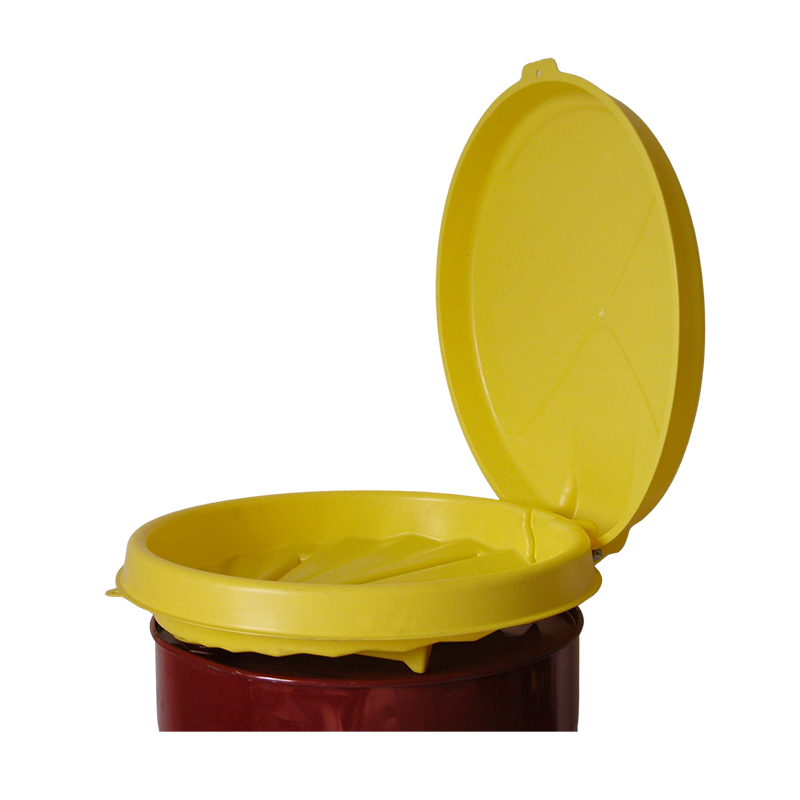
A dedicated Powder Handling Funnel differs drastically from standard filtration equipment. Filtration vessels are engineered specifically for liquid processing. They feature long, narrow stems designed to hold filter paper securely. This narrow geometry generates capillary action and liquid suction, which accelerates fluid transfer.
These filtration designs are fundamentally incompatible with cohesive solid transfer. The narrow stem acts as an immediate choke point. Powders cannot compress and flow through tight restrictions like liquids do. Attempting to force bulk solids through a filtration stem guarantees immediate bridging and complete flow failure. We see this mistake constantly in poorly equipped labs.
Understanding flow dynamics requires comparing funnel flow with mass flow. Funnel flow operates on a first-in, last-out basis. Material moves only through the center, leaving stagnant zones on the walls. Mass flow operates on a first-in, first-out basis. The entire powder bed moves downward uniformly. Achieving mass flow is necessary for preventing segregation and ensuring consistent discharge.
To facilitate mass flow, powder transfer equipment features significantly wider and shorter stems. The stem is often parallel to prevent bottlenecking at the discharge point. A wide outlet ensures the opening exceeds the critical arching diameter of the specific solid. Furthermore, the total evacuation design concept dictates smooth, zero-shoulder transitions. Any sharp angles or internal ledges will trap material. Seamless internal geometry ensures complete powder discharge upon inversion.
| Flow Type | Discharge Pattern | Wall Stagnation | Best Application |
|---|---|---|---|
| Funnel Flow | First-in, Last-out | High (Material sticks to walls) | Free-flowing, non-degrading solids |
| Mass Flow | First-in, First-out | None (Entire bed moves) | Cohesive, degradable, or mixed powders |
The critical hopper half-angle determines whether a powder will achieve mass flow. This angle is measured from the vertical axis to the vessel wall. If the angle is too shallow, the powder will rest on the walls, leading to ratholing. The required angle depends entirely on the specific friction characteristics of the solid being transferred.
Steeper angles are mandatory for overcoming the wall friction angle of fine, cohesive powders. Many industrial designs utilize angles of 70 degrees or more. This steep incline ensures that gravitational pull overpowers the friction between the particles and the internal surface. When the wall angle is steep enough, the entire powder mass slides downward simultaneously.
Selecting the correct construction material directly impacts flow performance. Different materials offer unique advantages for specific operational environments. Below is an evaluation of common materials used in solid transfer applications.
| Material Type | Key Advantages | Primary Limitations | Ideal Application |
|---|---|---|---|
| Borosilicate Glass | High chemical resistance, low static generation, visual monitoring. | Fragile, risk of breakage in industrial environments. | Laboratory scale, highly reactive chemicals. |
| Conductive Plastics | Cost-effective, durable, lightweight. | Requires verification of static-dissipative properties. | General manufacturing, non-hazardous powders. |
| 316L Stainless Steel | Industry standard for cGMP, highly durable, grounding capable. | Heavier, requires specialized surface polishing. | Pharmaceuticals, cleanrooms, explosive environments. |
For 316L stainless steel, surface roughness (Ra) is a major metric. Electropolishing reduces microscopic peaks and valleys on the metal surface. A lower Ra value significantly reduces wall friction, allowing cohesive powders to slide effortlessly toward the discharge outlet.
Handling fine, cohesive powders requires strict adherence to specific success criteria. Operations demand zero-residue transfer, complete evacuation, and absolute dose accuracy. Even a fraction of a gram left behind can ruin a pharmaceutical batch formulation.
Equipment for these materials must feature ultra-smooth surface finishes. Steep discharge angles are non-negotiable to prevent arching. Additionally, grounding capabilities are required to mitigate static cling. By connecting the metal transfer vessel to an earth ground, static charges dissipate instantly, preventing particles from adhering to the walls.
Granular solids present different handling challenges. The primary success criteria here are high throughput without particle degradation, attrition, or segregation. You want to move large volumes quickly without crushing the granules into fine dust.
These materials require wider discharge diameters to accommodate high flow rates. Standard angles are often sufficient because free-flowing solids have a low angle of repose. However, abrasion resistance becomes a primary evaluation metric. Heavy, coarse granules can quickly wear down soft plastics or unpolished metals over time.
Hygroscopic materials absorb moisture rapidly from the surrounding air. The success criteria involve preventing moisture absorption during transfer, which leads to instant caking and rock-hard blockages.
Handling these materials requires integration with enclosed transfer systems. Equipment should feature purge ports for inert gas, typically nitrogen. Flooding the transfer zone with nitrogen displaces humid air. For extreme cases, the transfer equipment must be fully compatible with environmentally controlled gloveboxes to maintain a strictly anhydrous atmosphere.
Passive design relies entirely on geometry and material selection to ensure flow. This approach is highly effective for lab-scale operations or when handling highly free-flowing powders. When the critical arching dimension and wall friction angles are calculated correctly, gravity alone does the work.
Specialized low-friction coatings, such as PTFE, can enhance passive flow. These coatings create an exceptionally slick surface. However, operators must evaluate wear-and-tear trade-offs over time. PTFE coatings can degrade, flake off, and potentially contaminate the product stream if subjected to abrasive granular solids.
Operators frequently intervene when flow slows down. Correct manual handling involves using gentle physical rotation. Rotating the vessel slightly shifts the powder's shear plane. This promotes discharge without causing internal compaction. Gentle movement breaks minor bridges without forcing particles closer together.
Handling errors are common and highly destructive. Aggressive tapping or striking the vessel walls causes severe compaction, turning a minor bridge into a solid block. Using rigid scraping tools damages highly polished inner surfaces. Scratches increase the surface roughness (Ra) and exacerbate static-charge buildup, permanently degrading the equipment's flow performance.
When passive and manual methods fail, active flow aids become necessary. Pneumatic or electric vibrators attached to the exterior can effectively break stubborn arches. The high-frequency vibration shatters the inter-particle bonds. However, vibration must be applied carefully; excessive vibration can cause severe compaction and caking in certain cohesive powders.
For larger-scale process equipment, mechanical agitators or fluidization pads are highly effective. Fluidization pads inject localized bursts of dry air along the vessel walls. This aerates the powder bed, reducing bulk density and instantly eliminating wall friction. Agitators physically sweep the internal walls to force material downward.
Cross-contamination is a severe risk in multi-product facilities. Crevices at the neck-to-stem joint are notorious for harboring residual powder. Even rigorous manual cleaning often fails to remove microscopic particles trapped in threaded joints or sharp internal corners.
Mitigation requires specifying seamless, single-piece construction. Welds must be ground flush and polished. Furthermore, equipment must be evaluated for compatibility with Clean-In-Place (CIP) or Sterilize-In-Place (SIP) protocols. Ensuring the geometry allows for complete drainage of cleaning solvents is mandatory for passing strict cleaning validation audits.
Transferring dry powders generates significant static electricity. The primary risk is a static discharge igniting a suspended powder cloud during transfer. Combustible dust explosions are catastrophic events that destroy facilities and endanger lives.
Mitigation involves the mandatory use of grounded, conductive transfer equipment in hazardous areas. Plastics must be strictly avoided unless certified as static-dissipative. Facilities must ensure strict adherence to ATEX directives and OSHA standards for any equipment utilized within potentially explosive atmospheres.
Improper sizing leads to immediate operational failures. Risks include spillage, unstable neck mismatches, or displaced air blowing powder back out of the receiving container. If the stem diameter is too large, it will not seat securely. If it is too tight, it seals the opening and prevents air displacement.
Mitigation requires precisely sizing the stem outer diameter to match the receiver inner diameter while allowing for venting. Implement fluted stems, double-walled venting, or integrated venting ports. These design features allow displaced air to escape safely without aerosolizing the powder into the workspace.
Standard liquid transfer vessels are a distinct liability for solid transfer operations. Reliable powder handling requires specific geometric and material interventions to overcome internal friction and wall cohesion. Ignoring bulk solid mechanics guarantees process bottlenecks, inaccurate dosing, and material waste. Using proper Funnels designed for solids is non-negotiable for efficient production.
Selecting the right equipment follows a clear logic. Use anti-static polypropylene for general, non-hazardous laboratory use. Specify seamless, electropolished 316L stainless steel for regulated pharmaceutical manufacturing. Deploy active flow aids like fluidization pads for bulk cohesive powders that resist passive discharge.
To optimize your operations, take the following next steps:
Audit your current powder transfer processes to identify recurring blockage points.
Request comprehensive material flow testing to determine the exact bulk density and friction angles of your specific solids.
Contact an engineering representative for a custom sizing consultation to ensure your equipment matches your process requirements perfectly.
A: Liquid transfer vessels feature narrow stems for controlled fluid flow. Powder handling designs utilize wider stems, parallel sides, and steeper internal angles. This specific geometry prevents bridging and ensures mass flow for cohesive solids.
A: No. Filtering designs are engineered to hold filter papers and utilize long, narrow stems to create liquid suction. These narrow choke points will immediately block and fail when exposed to dry bulk solids.
A: Powder sticks due to static electricity and moisture. To prevent this, utilize anti-static or conductive plastics. Ensure the equipment is properly grounded, or switch to borosilicate glass or polished stainless steel to eliminate static cling.
A: The ideal angle depends entirely on the powder's angle of repose and wall friction. Generally, angles steeper than 60 to 70 degrees are required for cohesive powders to overcome friction and achieve consistent mass flow.
A: While glass naturally reduces static generation, standard glass designs possess narrow stems that cause powder to arch and block. You must use a specialized glass powder design featuring a wide, short stem.
A: Bridging occurs when the cohesive strength of the particles forms a stable structural arch over the outlet. This is typically caused by an outlet diameter that is too small or an internal wall angle that is too shallow.


