+86-25-8470-5507


Views: 0 Author: Site Editor Publish Time: 2026-07-31 Origin: Site


High-speed automated packaging lines are only as fast as their most restrictive material transfer points. Manufacturers often overlook this reality on the plant floor, focusing instead on the primary fillers or cappers. Inefficient material transfer causes severe operational bottlenecks that ripple down the entire production line. Product spillage, compromised container seals, inconsistent fill weights, and cross-contamination risks plague poorly designed systems. These issues extend downtime during batch changeovers and erode profit margins through wasted product and rejected batches. Engineering and strategically selecting industrial Funnels serve as a critical intervention point. Proper equipment stabilizes flow rates and protects packaging aesthetics from the start of the run to the finish. It ensures regulatory compliance and maximizes the return on investment for automated filling equipment by keeping the line moving at its rated speed without constant operator intervention.
Throughput Optimization: Precision-engineered funnels eliminate flow bottlenecks, directly increasing cycles-per-minute in both automated and semi-automated lines.
Waste Reduction & Seal Integrity: Proper funnel geometry and material selection drastically reduce product loss, spillage, and neck-ring splashing, ensuring perfect hermetic seals and professional package appearance.
Contamination Control: Sanitary funnel designs (including single-use and CIP/SIP compatible stainless steel) mitigate cross-contamination and reduce cleaning downtime.
Labor & Operational Efficiency: Tool-less assembly and ergonomically optimized layouts reduce labor overhead and accelerate changeover speeds.
System Integration: The right filling funnel acts as a seamless, future-proof bridge between bulk material handling and primary packaging, requiring exact alignment with existing automated machinery.
Transfer equipment must move bulk liquids, powders, or granules into primary packaging efficiently. This process must not degrade the product, shear sensitive liquids, or contaminate container rims. It must never slow the production line below its target output. Evaluating transfer efficiency requires strict success criteria based on real-world plant conditions. Flow consistency, dose accuracy, and seal area cleanliness are paramount metrics. Changeover speed and minimal operator intervention also dictate overall line success, as every minute spent unclogging a bottleneck is lost production time.
Material transitions from large-volume vessels to narrow-neck containers involve complex physics. Improper sizing leads to aeration in liquids, causing foaming that disrupts fill levels. It causes static build-up in dry goods, making powders cling to the walls, and segregation in blended powders, ruining the mixture ratio. Managing this transition requires precise geometric calculations to maintain material integrity. The angle of repose for powders and the viscosity index for liquids dictate the exact slope and discharge diameter required to maintain a steady, uninterrupted column of material entering the container.
Dispensing material faster to meet demand often compromises strict volume and weight tolerances if the transfer point is not optimized. Funnel design dictates the baseline accuracy of downstream dosing mechanisms. Precision geometry prevents overfills and costly product giveaway by ensuring the dosing chamber receives a consistent head pressure. It ensures every container receives the exact specified volume without sacrificing line speed. When the material flow is erratic, the filler has to compensate, leading to rejected bottles and constant machine adjustments.
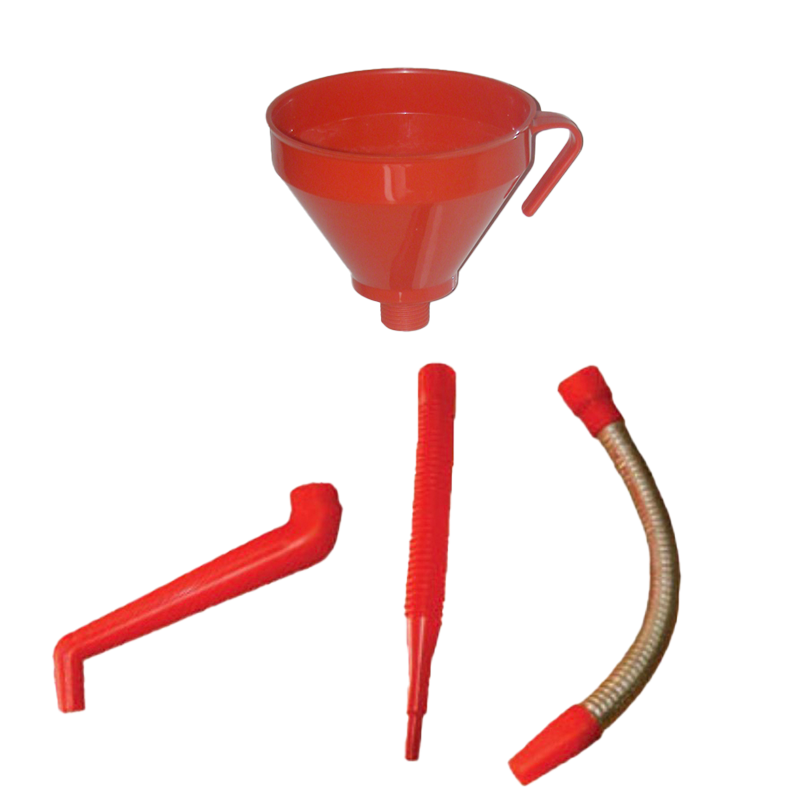
Specific design characteristics directly connect to measurable production improvements. These features drive substantial labor cost savings and increase overall equipment effectiveness. Upgrading a basic transfer point transforms the entire packaging workflow, turning a constant source of frustration into a reliable, hands-off process.
Optimized discharge angles prevent splashing in low-viscosity liquids. They also eliminate dusting in fine powders, which keeps the ambient air clean and protects operators. Protecting the container's sealing surface is crucial for product shelf life. Keeping neck-rims and foil seal zones free from splash contamination prevents cap leaks. It maintains vacuum and gas flush integrity while preserving final product aesthetics. Reducing product giveaway, package scrap rates, and rejected shipments yields massive financial impacts over a production quarter. A clean seal area means the induction sealer or capper works perfectly every time.
Geometry heavily affects high-viscosity liquids, sticky compounds, and irregular particulates. Surface finishes play a vital role in maintaining speed and preventing blockages. Electropolishing, Teflon coating, and hydrophobic treatments reduce friction on the interior walls. They prevent material hang-up and ensure consistent flow rates at scale. For highly viscous products like heavy creams or industrial adhesives, a standard mill finish creates too much drag, slowing the entire filling operation.
Cleaning traditional, bolted transfer equipment between batches consumes excessive labor and time. Sanitary, crevice-free designs built for Clean-in-Place (CIP) and Sterilize-in-Place (SIP) protocols offer massive efficiency gains. Tool-less, quick-clamp designs reduce operator fatigue. Sanitary tri-clamp and quick-release latch systems accelerate disassembly and reassembly workflows. Operators can strip down the transfer point, clean it, and reassemble it in minutes rather than hours.
Selecting the right equipment requires analyzing material state, target industry, and regulatory demands. A one-size-fits-all approach guarantees operational failure on the packaging line. Engineers must match the architecture to the specific material characteristics to ensure reliable performance.
Standard gravity systems differ vastly from those requiring mechanical assistance. Augers, vibratory feeders, and pneumatic agitation help move difficult materials that refuse to flow naturally. Selection depends on material flowability. Engineers evaluate the Carr Index for powders and assess viscosity and surface tension for liquids to determine if gravity alone is sufficient.
Assess the bulk density and flowability of the material under plant humidity conditions.
Determine if mechanical agitation will degrade or shear the product.
Select vibratory assistance for cohesive powders that tend to bridge.
Implement auger-driven systems for highly viscous pastes that resist gravity.
Pharmaceutical fill-finish operations increasingly adopt single-use technology (SUT) polymer systems. These eliminate cross-contamination and remove rigorous cleaning validation protocols. Conversely, 316L stainless steel offers unmatched durability and mechanical integrity. It provides long-term value in high-volume food, beverage, and chemical packaging where the equipment runs continuously for decades.
| Feature | Single-Use Polymer Systems | 316L Stainless Steel Systems |
|---|---|---|
| Primary Application | Pharmaceutical, Biologics | Food, Beverage, Industrial Chemicals |
| Cleaning Requirement | None (Dispose after use) | Rigorous CIP/SIP protocols |
| Cross-Contamination Risk | Virtually eliminated | Low, but requires validation |
| Durability | Low (Single batch use) | Extremely High (Decades of use) |
Powder operations often face flow failures like ratholing, arching, and bridging. Geometric solutions resolve these issues effectively without needing constant operator intervention. Asymmetrical cones, offset discharge openings, and mass-flow designs maintain movement. Steep, non-symmetrical wall angles prevent material stagnation and ensure continuous feeding into the dosing equipment.
Transfer components must fit into the broader ecosystem of automated manufacturing. They support long-term business scalability by ensuring the line can handle increased speeds. Seamless integration prevents mechanical wear and reduces maintenance overhead across the facility.
Mechanical and pneumatic integration connects a Filling Funnel with rotary fillers, inline multi-piston fillers, and net weigh scales. Standardized sanitary connections reduce integration friction. They ensure tight seals and prevent pressure leaks during high-speed operations, keeping the plant floor clean and safe.
Capacitive, ultrasonic, photoelectric, and load-cell sensors monitor real-time material levels inside the hopper. Automated feedback loops between the sensor and bulk supply prevent dry-running. They stop overfilling and eliminate inconsistent head-pressure that causes fill variances, ensuring the filler always has the exact amount of product it needs to dose accurately.
Physical footprint, height requirements, and vertical drop impact the overall packaging line layout. Retrofitting new equipment into space-constrained legacy production floors boosts throughput without expanding physical space. Modular systems feature interchangeable nozzles and adaptors. They accommodate changing container shapes, neck sizes, and production volume scaling, allowing the facility to adapt to new contracts quickly.
Upgrading transfer equipment carries inherent risks that can halt production if not managed. Identifying common pitfalls helps avoid costly downtime. Proper planning and testing ensure successful deployment on the first attempt.
Chemical incompatibility between the equipment material and the packaged product poses severe risks. Acidic liquids, abrasive powders, and volatile solvents degrade improper materials rapidly, leading to contamination. Mandate comprehensive material certification. Require FDA-compliant or USP Class VI ratings and chemical compatibility testing prior to procurement to ensure the equipment survives the production environment.
Theoretical flow rates often fail to match real-world production speeds. Ambient plant conditions cause unexpected issues that look fine on paper but fail on the floor. Humidity causes powder clumping, while temperature shifts alter liquid viscosity. Conduct pilot testing, environmental simulations, and material flow property analysis under actual plant conditions before finalizing geometry.
Custom-engineered or highly specialized sanitary equipment requires high initial capital expenditure. Calculate Return on Investment (ROI) carefully based on operational metrics. Factor in reduced labor hours and lower reject rates due to bad seals. Account for decreased product waste and increased throughput over the equipment's lifespan to justify the upgrade to management.
Transfer components are highly engineered, active interface components that dictate the efficiency, accuracy, and sealing quality of a packaging line. Prioritize material flow characteristics and container seal area protection when designing the system. Ensure regulatory compliance and demand modularity for future scale to keep the packaging line running at peak performance.
Conduct a comprehensive material flow analysis under real-world plant humidity and temperature conditions.
Audit current changeover and cleaning times to identify specific labor bottlenecks in the teardown process.
Examine reject rates caused by bad packaging seals and splash contamination to quantify lost revenue.
Consult with equipment engineers to specify exact geometric requirements and surface finishes for your process.
A: A standard industrial funnel relies on basic gravity and generic geometry. A precision filling funnel features engineered discharge angles, specialized surface finishes, and sanitary connections designed to match exact material flow properties and integrate seamlessly with automated dosing machinery.
A: Geometry dictates how powder moves under gravity. Asymmetrical cones, steep wall angles, and offset discharge openings prevent particles from interlocking. These mass-flow designs eliminate bridging, arching, and ratholing, ensuring continuous material feeding without mechanical agitation.
A: Pharmaceutical applications require highly inert materials. 316L stainless steel with electropolished finishes is standard for clean-in-place systems. Single-use polymers (USP Class VI certified) are increasingly preferred to eliminate cross-contamination and bypass cleaning validation entirely.
A: Optimized discharge angles and anti-splash designs keep the product strictly inside the container. Keeping the neck-rim and foil seal zones clean prevents cap leaks, ensures strong hermetic seals, and maintains a professional, clean package appearance on the retail shelf.
A: Yes. Modular funnels utilize standardized sanitary connections like tri-clamps. They feature interchangeable nozzles and adaptors, allowing them to retrofit into existing rotary or inline fillers without requiring major mechanical re-engineering of the primary line.
A: Single-use polymer funnels are discarded after one batch. This entirely eliminates the risk of cross-contamination between product runs. It also removes the labor, time, and water costs associated with rigorous cleaning and sterilization protocols.
A: Sensors monitor material levels in real-time and communicate with the bulk supply. This maintains a constant volume of material inside the funnel. Consistent volume creates stable head-pressure, which is critical for accurate, repeatable dosing by downstream fillers.


