+86-25-8470-5507


Views: 0 Author: Site Editor Publish Time: 2026-08-03 Origin: Site


A hand pump can improve water access in remote areas by providing a simple manual way to move water when electricity, compressed air or fixed pumping equipment is unavailable or unnecessary. In many field environments, users may not need a high-volume powered pump. They may only need a portable tool to transfer water from pails, drums, tanks or service containers.
In this article, remote water access refers to small-scale, portable and temporary water transfer in farms, field service locations, mobile workshops, outdoor maintenance sites and container-based applications. It does not refer to deep-well, borehole or municipal drinking water systems.
A Hand Pump can improve water access in remote areas when users need a portable manual tool for small-scale water transfer without electricity or compressed air.
For B2B buyers, this makes hand pumps useful for water, coolant, light maintenance fluids and general fluid transfer tasks in remote working environments.
A hand pump improves water access in remote areas by making small-scale water movement easier, especially when powered equipment is not practical.
Key points include:
A hand pump can operate without electricity.
It does not require compressed air.
It can support portable water transfer.
It can be used with pails, drums and service containers.
It helps in field maintenance, farms and temporary sites.
It can support emergency water movement.
It has lower setup requirements than powered equipment.
It is better for low-volume and temporary transfer tasks.
It should not be treated as a replacement for high-volume water systems.
Buyers should check hose length, container size, flow needs and use frequency before selection.
A hand pump is most valuable in remote areas when the job is manual, mobile, temporary and container-based.
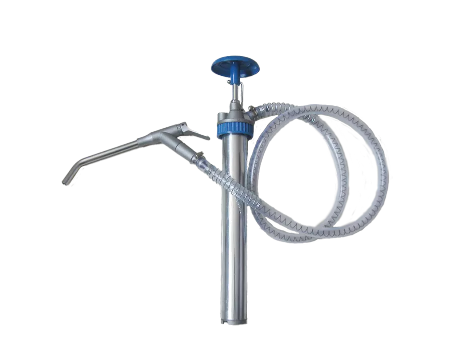
Remote areas often have limited access to power, compressed air, fixed water lines or large pumping systems. In these conditions, a simple water transfer tool can be more practical than a powered pump.
Common challenges include:
no nearby electricity supply;
no air compressor;
limited equipment storage;
outdoor working conditions;
temporary service locations;
mobile maintenance vehicles;
farm or field repair tasks;
emergency fluid movement;
limited installation space;
need for quick setup.
A hand pump does not solve every remote water access problem. However, it can help when users need to move water or light fluids from one container to another without installing a fixed pump system.
This is especially useful when the transfer volume is limited, the job site changes frequently or the user needs a low-setup tool for practical work.
A hand pump works through manual operation. The user operates a handle, lever, crank, tube or pump body to create suction and move fluid through a hose or outlet. This makes it useful in remote areas where powered equipment is difficult to use.
A simple working process can be shown as:
Remote Site → No Power or Limited Equipment → Manual Pumping → Water Transfer → Temporary Use or Maintenance Support
This process shows why a hand pump without electricity can be useful. The pump does not depend on batteries, wiring, fuel engines or air pressure. The operator supplies the pumping force manually.
For small-scale water transfer, this can reduce setup time and simplify the job. A user can connect the suction hose, place the outlet hose, operate the pump and move water to the required container or work area.
Portable water access does not always mean building a fixed water system. In many remote applications, it means having a practical way to move water when needed.
A portable hand pump for water can help users:
move water from one drum to another;
dispense water from storage containers;
support field cleaning tasks;
transfer water for equipment service;
handle small emergency water movement;
supply temporary maintenance work;
reduce manual lifting of heavy containers;
keep mobile service operations flexible.
Because the pump is manual and portable, users can carry it between different work sites. This is useful for farms, service trucks, remote workshops and outdoor maintenance teams.
Hand pumps are most useful in remote areas where water transfer is small-scale, mobile and practical rather than continuous and high-volume.
| Remote Area Scenario | How a Hand Pump Helps |
|---|---|
| Farm maintenance | Moves water or light fluids between containers |
| Field service | Works without electricity or compressed air |
| Outdoor repair site | Supports temporary water dispensing |
| Mobile workshop | Provides portable transfer in service vehicles |
| Emergency transfer | Helps move water when powered tools are unavailable |
| Temporary site work | Avoids fixed pump installation |
| Drum or pail storage | Supports container-to-container transfer |
| Agricultural equipment service | Helps with cleaning and maintenance fluids |
These scenarios show that a hand pump for remote areas is best understood as a practical field tool. It is not a deep-well water infrastructure product unless specifically designed for that purpose.
A hand pump offers several advantages for remote field use. The main value is not maximum output. The main value is convenience, portability and independence from power supply.
Practical advantages include:
no electricity required;
simple manual operation;
easy transport;
low setup requirement;
useful for pails and drums;
suitable for temporary work;
compact storage;
controlled water dispensing;
helpful for emergency use;
suitable for light fluid transfer.
In remote maintenance work, setup speed often matters. A powered pump may require cables, fuel, battery charging, air compressors or installation space. A hand pump can be easier to deploy for small jobs.
This is why hand pumps remain useful for field service, farms, outdoor repairs and mobile maintenance teams.
A realistic selection should also consider the limits of hand pumps. They are not designed for every water transfer task.
| Limitation | What It Means for Buyers |
|---|---|
| Manual effort required | Not ideal for long continuous pumping |
| Limited flow rate | Better for small-scale transfer |
| Suction height limits | Hose length and lift height should be checked |
| Not for deep wells unless designed | Avoid mismatched expectations |
| Compatibility required | Pump material should match fluid |
| Not for all water quality needs | Cleaning and hygiene requirements may apply |
| Accessory fit matters | Hose and container connection should be confirmed |
These limitations do not reduce the value of a hand pump. They define where it should be used. A hand pump improves remote water access for small-scale, portable and temporary transfer tasks. It should not be treated as a replacement for high-volume powered pumping systems.
Different pump types can support remote water transfer, depending on the working condition.
| Pump Type | Remote Water Transfer Fit |
|---|---|
| Siphon hand pump | Simple low-viscosity water movement |
| Lift-action pump | Direct transfer from pails or drums |
| Rotary hand pump | Steadier manual transfer when compatible |
| Lever hand pump | Controlled dispensing for maintenance use |
| Multi-purpose pump kit | Portable water, light fluid and emergency tasks |
| Manual pump kit | Field service package with hoses and accessories |
For remote field service, temporary water transfer, emergency fluid movement and light-duty maintenance tasks, a Multi-Purpose Pump Kit can provide a compact manual solution with hoses and accessories.
The right type depends on container size, hose requirement, transfer volume, material compatibility and how often the pump will be used.
Choosing a hand pump for remote water access should start with the actual job. Buyers should not choose only by product name or appearance.
Important selection factors include:
| Selection Factor | What to Check |
|---|---|
| Fluid type | Water, coolant, light fluid or maintenance liquid |
| Container size | Pail, drum, tank or portable service container |
| Suction hose | Length, flexibility and container reach |
| Outlet hose | Transfer distance and discharge control |
| Pump type | Siphon, lift-action, rotary, lever or kit |
| Flow need | Small manual transfer or faster dispensing |
| Material compatibility | Pump body, hose and seal suitability |
| Use location | Farm, field service, outdoor site or mobile workshop |
| Use frequency | Occasional, regular or repeated field use |
| Order needs | Packaging, accessories, labeling and quantity |
For remote water transfer, hose configuration is especially important. A pump body alone may not solve the problem if the suction hose is too short, the outlet hose is inconvenient or the connection does not fit the container.
B2B buyers should review both application requirements and supply details before ordering hand pumps in quantity.
Useful questions include:
What fluid will the pump transfer?
Is it water only or also coolant, oil or light maintenance fluid?
What container size will users work with?
What suction hose length is required?
What outlet hose length is needed?
What flow rate is acceptable?
Will the pump be used in farms, field service or mobile workshops?
Is the use occasional or frequent?
Does the pump need accessories?
Is retail packaging required?
Is private label supply needed?
What model mix is planned?
What order quantity is expected?
These questions help suppliers recommend a suitable remote water transfer pump configuration instead of offering one generic model for every use case.
JINLIN supports manual fluid transfer applications for workshop, agricultural, automotive, industrial and maintenance users. For remote water transfer, the selection can start from fluid type, container size, pump style, hose requirement, flow rate, use frequency and packaging needs.
JINLIN can help review:
water or fluid type;
container size;
pump style;
suction hose requirement;
outlet hose length;
target flow rate;
working environment;
use frequency;
accessory needs;
material compatibility;
packaging preference;
model mix;
order quantity.
For water, coolant, light maintenance fluids and emergency transfer tasks, JINLIN can help compare siphon, lift-action, rotary, lever and multi-purpose pump options before order confirmation.
A Hand Pump improves water access in remote areas by offering a portable, manually operated and low-setup transfer method when electricity, compressed air or fixed pumping equipment is unavailable or unnecessary. For JINLIN’s product direction, the most suitable focus is small-scale water transfer from pails, drums, tanks and service containers in field service, farms, mobile workshops and emergency fluid handling situations.
Hand pumps are useful because they are simple to carry, easy to operate and practical for temporary water dispensing. However, buyers should understand their limits. They are not intended for high-volume continuous water supply, municipal infrastructure or deep-well pumping unless specifically designed for that purpose.
Need help selecting a manual pump for remote water transfer, field service or container-based fluid handling? Contact JINLIN for remote water transfer hand pump selection with your fluid type, container size, hose requirement, target flow rate, use frequency and order quantity.
A hand pump improves water access by allowing users to move water manually when electricity, compressed air or fixed pumping equipment is unavailable or unnecessary.
Yes. A hand pump can be useful for remote field service because it is portable, manually operated and suitable for small-scale water or light fluid transfer.
Yes. A hand pump works through manual operation, so it does not require electricity, compressed air or a motor.
Only specialized products are suitable for deep wells. This article focuses on small-scale transfer from pails, drums, tanks and containers.
Common applications include farm maintenance, field service, mobile workshops, temporary site work, emergency water movement and outdoor equipment service.
Siphon pumps, lift-action pumps, rotary pumps, lever pumps and multi-purpose pump kits may be suitable depending on the fluid, container and transfer distance.
Buyers should check fluid type, container size, suction hose length, outlet hose requirement, flow rate, material compatibility and use frequency.
Not always. Pump body material, hose material and seal compatibility should be checked before one pump is used for multiple fluids.
Hand pumps require manual effort, have limited flow rate and are best for small-scale transfer rather than high-volume continuous water supply.
Yes. JINLIN can help review fluid type, container size, hose requirement, pump style, flow rate, use frequency, accessories and order quantity for remote water transfer hand pump selection.


