+86-25-8470-5507


Views: 0 Author: Site Editor Publish Time: 2026-08-04 Origin: Site


Inefficient material and fluid transfer creates hidden operational expenses that quietly erode manufacturing profitability. When production lines rely on inadequate transfer equipment, facilities experience frequent product loss, cross-contamination, and severe safety hazards. Powders bridge, viscous fluids aerate, and hazardous chemicals spill, forcing operators to intervene manually. These interruptions compromise batch integrity and expose workers to unnecessary ergonomic and chemical risks.
Off-the-shelf transfer equipment consistently fails when confronted with highly specific material viscosities, unique powder bulk densities, or strict spatial constraints on the production floor. Standard designs utilize generic slope angles and discharge diameters that rarely match the exact flow properties of specialized industrial materials. This mismatch leads to bottlenecks, material hang-ups, and extended cleaning times.
Customized engineered solutions directly address these flow bottlenecks by matching equipment geometry to specific material characteristics. By integrating purpose-built Funnels, facilities ensure chemical compatibility and seamless integration with existing infrastructure. These tailored designs eliminate manual handling, maintain sanitary compliance, and optimize fluid dynamics.
Custom-engineered funnels eliminate material bridging and rat-holing by matching discharge geometry to specific material flow properties.
Integrating a purpose-built Industrial Hopper Funnel reduces cross-contamination risks and ensures compliance with FDA, USDA, or ATEX standards.
While standard heavy-duty funnels offer convenience for basic transfers, custom solutions drastically lower long-term operational costs through reduced material waste, fewer spills, and minimized maintenance downtime in high-throughput lines.
Successful implementation requires rigorous flow testing and precise CAD modeling to mitigate integration risks with existing machinery.
Efficient material transfer requires a consistent flow rate, zero spillage, and ergonomic safety for operators. When transfer systems fail to meet these criteria, production lines suffer from unpredictable cycle times and increased labor requirements. Defining these success metrics allows engineering teams to evaluate the true impact of their fluid and powder handling systems. You need to measure throughput volume per minute, cleaning turnaround time, and operator intervention frequency to establish a baseline.
Standard utility equipment introduces multiple failure points into complex manufacturing environments. Improper slope angles frequently cause material hang-up. Operators must physically dislodge powders or wait for viscous fluids to drain. These generic designs often lack adequate chemical resistance. They degrade rapidly when exposed to aggressive solvents or extreme pH levels. Standard discharge spouts rarely mate perfectly with receiving vessels. This creates gaps that allow dust to escape and fluids to leak.
Lightweight, standard heavy-duty designs present significant vulnerabilities in rigorous industrial settings. They crack under mechanical stress and wear rapidly when handling abrasive slurries. Standard plastics lack proper grounding capabilities. This creates severe static discharge risks when transferring flammable solvents or combustible dusts. Using non-optimized equipment for hazardous or high-temperature fluids directly compromises facility safety and environmental compliance.
Evaluating transfer efficiency requires establishing clear, measurable baseline metrics. Facilities track throughput volume per minute to ensure transfer rates align with upstream and downstream processing speeds. Cleaning turnaround time serves as another critical metric. Complex or poorly designed equipment extends changeover durations between batches. Tracking operator intervention frequency highlights ergonomic failures and process instabilities. This provides a clear indicator of where custom engineering is necessary.
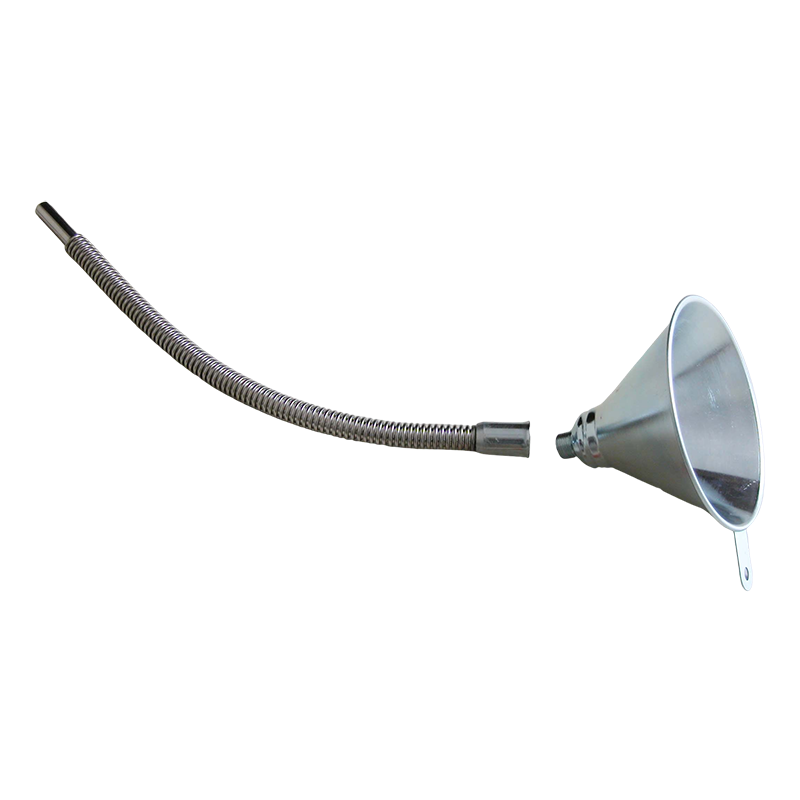
Custom manufacturing provides specific engineering benefits that mass-produced alternatives simply cannot replicate. By tailoring every dimensional and material aspect to the application, custom fabricators solve complex flow challenges and eliminate manual workarounds. We see this constantly in chemical processing and pharmaceutical manufacturing.
Custom slope angles and discharge diameters are calculated based on the specific angle of repose and bulk density of the handled material. This precision prevents powder bridging and fluid aeration. It ensures mass flow rather than problematic core flow. Asymmetrical designs direct material away from vessel walls or accommodate off-center receiving ports. This optimizes the discharge trajectory.
High-speed fluid transfers often suffer from vapor lock. This drastically reduces flow rates and causes dangerous splashing. Custom venting systems, including integrated breather tubes or external pressure equalization lines, prevent this phenomenon. These engineered vents allow displaced air to escape smoothly. They maintain a continuous, rapid fluid transfer without interrupting the liquid column.
Custom fabrication allows engineers to specify construction materials based on exact chemical resistance, abrasion, and thermal requirements. Options like 316L Stainless Steel provide excellent corrosion resistance for pharmaceutical applications. Hastelloy handles highly aggressive acidic environments. High-density polyethylene offers a durable, chemical-resistant alternative for specific industrial fluids where metal is unsuitable.
Standard lightweight, breakable plastics fail rapidly in abusive environments. Custom polymers and reinforced metals are designed specifically for impact resistance and heavy-duty service. These robust materials withstand accidental drops, heavy vibration from surrounding machinery, and the constant abrasive wear of dry bulk solids.
Surface finish plays a vital role in flow efficiency and sanitation. Custom surface treatments reduce friction and facilitate rapid cleaning. Electropolishing removes microscopic surface peaks in stainless steel. This drastically reduces bacterial adhesion. Teflon coatings provide a non-stick surface for highly viscous resins or sticky powders. They ensure complete discharge and minimize product loss.
Custom solutions are engineered to mate perfectly with specific infrastructure. Whether connecting to an intermediate bulk container, a specialized reactor vessel, or a proprietary mixing tank, the discharge geometry is matched exactly to the receiving port. This precise fit eliminates the need for duct tape, temporary clamps, or manual holding during transfer operations.
Transitioning from manual-hold utility tools to integrated systems significantly improves workplace safety. Custom mounting brackets, welded flanges, and sanitary tri-clamp fittings allow for hands-free operation. This integration eliminates ergonomic strain on operators. It reduces exposure to hazardous fumes and ensures a secure, leak-proof connection during high-pressure transfers.
Technical buyers must assess custom specifications against their facility's precise needs. Evaluating sizing, regulatory compliance, and structural durability ensures the final product delivers the expected operational improvements. You must look at the physical constraints of your production floor.
Calculating required volumetric capacity involves balancing desired flow rates against spatial constraints on the production line. Engineers determine the maximum surge volume the equipment will handle and design the upper cone accordingly. If overhead clearance is limited, the design must accommodate the necessary volume without exceeding height restrictions.
This requires navigating engineering trade-offs between steep conical designs and shallow profiles. Steep angles promote excellent mass flow and prevent material retention. They require significant vertical clearance. Shallow designs fit into tight spaces but increase the risk of material hang-up. They often require supplementary flow aids like pneumatic vibrators or fluidization pads.
Measure the maximum available vertical clearance above the receiving vessel.
Calculate the required surge volume based on batch sizes and feed rates.
Determine the material's angle of repose to establish the minimum required cone angle.
Select appropriate flow aids if spatial constraints force a sub-optimal shallow angle.
Custom designs address specific industry regulations that standard equipment ignores. Food processing and pharmaceutical applications require FDA-approved materials and sanitary welds to prevent bacterial growth. Handling explosive powders necessitates ATEX-compliant grounding lugs and conductive materials to safely dissipate static electricity.
For facilities utilizing Clean-In-Place and Sterilize-In-Place processes, crevice-free, continuous-weld construction is mandatory. Standard rolled edges or spot welds create dead zones where contaminants accumulate. Custom sanitary designs feature smooth, radiused corners and specific surface roughness values. This allows automated cleaning systems to effectively sanitize all internal surfaces.
Heavy-duty applications demand specific structural reinforcements. Custom designs incorporate thicker gauge metals to resist denting from heavy impacts or abrasive wear. Reinforced rims prevent deformation under heavy loads. Vibration-resistant mounts ensure the equipment remains securely attached to vibrating feeders or screens.
| Feature | Standard Off-the-Shelf | Custom Engineered |
|---|---|---|
| Material Options | Generic plastics, basic steel | 316L SS, Hastelloy, PTFE, HDPE |
| Discharge Geometry | Fixed, generic diameter | Precision-matched to receiving vessel |
| Mounting System | Manual hold, loose fit | Flanges, tri-clamps, custom brackets |
| Surface Finish | Mill finish, standard mold | Electropolished, Teflon-coated, specific Ra |
| Regulatory Compliance | Rarely certified | FDA, USDA, ATEX, cGMP compliant |
Investing in custom engineering requires analyzing the financial justification beyond the initial purchase. Evaluating long-term savings against upfront costs reveals the true value of optimized material handling equipment. You must look at the entire lifecycle of the equipment.
Custom fabrication involves initial CAD design, engineering consultations, and specialized manufacturing processes. This makes the upfront cost higher than standard alternatives. Standard equipment frequently requires recurring replacement due to rapid wear, chemical degradation, or mechanical failure. Custom equipment is built from superior materials with application-specific reinforcements. It offers a significantly longer service life and eliminates continuous replacement cycles.
The most substantial ROI generated by custom equipment comes from operational efficiencies. Eliminating product spills directly saves valuable raw materials. Reducing batch contamination prevents costly product recalls and rework. Custom designs facilitate rapid cleaning and seamless integration. They drastically accelerate changeover times between production runs, maximizing overall equipment effectiveness and facility output.
Deploying custom equipment introduces practical challenges that must be managed to ensure successful integration. Addressing prototyping and lead times prevents unexpected delays and operational disruptions. You need a solid plan before cutting any metal.
Theoretical flow calculations occasionally fail when exposed to real-world conditions. This happens especially with non-Newtonian fluids or highly cohesive powders. Environmental factors like ambient humidity or temperature fluctuations alter material behavior unexpectedly.
Engineering teams utilize 3D-printed prototyping and pilot testing with actual materials to mitigate this risk. Computational fluid dynamics modeling simulates flow patterns before fabrication. This identifies potential bottlenecks or turbulence. Testing physical prototypes ensures the final fabricated piece performs exactly as required on the production floor.
Custom fabrication inherently requires an extended procurement timeline compared to ordering off-the-shelf items. Design approval, material sourcing, and specialized welding all add to the delivery schedule. Facilities must plan accordingly to avoid stalling critical production upgrades.
Strategies for managing this include phasing installation during scheduled maintenance windows. Coordinating delivery with planned plant shutdowns prevents unplanned operational downtime. Clear communication with the fabricator regarding milestone dates ensures the equipment arrives exactly when the maintenance team is ready to install it.
To maximize the benefits of customized transfer equipment, facilities must take decisive action to evaluate their current processes.
Audit existing material transfer points to identify specific bottlenecks, frequent spill zones, and areas requiring excessive manual intervention.
Compile comprehensive material safety data sheets, required flow rates, and precise spatial dimensions for the targeted installation area.
Request a technical consultation and preliminary CAD mockup from a specialized industrial fabricator to visualize the proposed solution.
Conduct pilot testing with 3D-printed prototypes using actual production materials to validate flow dynamics before final fabrication.
A: A standard heavy-duty funnel is a standalone, mass-produced item meant for manual, intermittent use. An industrial hopper funnel is engineered for continuous-feed integration, featuring precise capacity calculations, specialized mounting flanges, thicker material gauges, and direct connections to automated processing equipment.
A: The slope angle is determined by calculating the material's angle of repose and wall friction angle. The cone angle must be steeper than these values to ensure mass flow, preventing the powder from bridging or rat-holing above the discharge spout.
A: For high chemical resistance and durability, 316L Stainless Steel and Hastelloy are excellent metal choices. For non-metallic requirements, high-performance polymers like PTFE or High-Density Polyethylene provide exceptional pH tolerance and impact resistance without shattering.
A: Yes. CIP compatibility requires continuous sanitary welds, radiused corners to eliminate crevices, and specific internal surface roughness finishes. Custom designs integrate dedicated spray balls or nozzles to ensure automated cleaning fluids reach all internal surfaces.
A: Timelines vary based on complexity, but a typical process takes 4 to 8 weeks. This includes the initial engineering consultation, CAD modeling and approval, material procurement, precision fabrication, and final quality testing before shipment.
A: Manufacturers require the material state, viscosity or bulk density, required throughput volume, ambient operating temperature, spatial constraints of the installation area, and exact specifications of the mating equipment.


