+86-25-8470-5507


Views: 0 Author: Site Editor Publish Time: 2026-08-10 Origin: Site


While often viewed as simple utility components, Funnels are critical bottlenecks in powder processing. A poorly specified funnel can halt production, cause material segregation, or compromise batch integrity. Transferring dry materials between vessels, packaging systems, or processing units introduces high risks of product spillage, cross-contamination, and flow disruptions like bridging or ratholing. These issues directly impact yield and operational efficiency. Selecting the correct Powder Processing Funnel requires a rigorous evaluation of flow dynamics, material compatibility, and sanitary design to ensure seamless integration into existing manufacturing or laboratory workflows. Operators must analyze the physical characteristics of the bulk material alongside the geometric constraints of the transfer point to maintain consistent volumetric discharge rates.
Flow Dynamics Dictate Design: Understanding the difference between mass flow and funnel flow is critical; improper funnel geometry leads to stagnant zones, erratic discharge, and flow stoppages.
Material Selection Impacts Compliance: The choice between high-grade stainless steel and specialized polymers (HDPE/PP) must align with regulatory requirements (e.g., FDA, cGMP) and sterilization needs.
Sanitary Design is Non-Negotiable: Crevice-free construction is essential for preventing cross-contamination and minimizing downtime during cleaning cycles.
Scalability Matters: Evaluation criteria must shift depending on whether the application involves precise laboratory transfers or high-volume industrial dispensing.
Establishing baseline metrics for successful powder transfer is the first step in optimizing any processing line. When bulk solids move through a system, any deviation from expected flow rates indicates a flaw in the transfer mechanism. Engineers measure success by tracking the time required to empty a container, the amount of residual material left behind, and the uniformity of the discharged powder. Meeting these criteria ensures that downstream equipment receives a steady, predictable supply of material. You cannot manage what you do not measure, so establishing these baselines is mandatory before specifying new equipment.
To properly evaluate a transfer operation, facilities should monitor specific performance indicators. These metrics provide a quantitative basis for equipment selection and process optimization.
Zero-loss transfer: Ensuring 100% of the weighed material reaches the destination vessel without fugitive dust escaping into the environment.
Minimal dust generation: Containing airborne particulates to protect operator respiratory health and reduce the load on HVAC filtration systems.
Consistent volumetric flow rates: Maintaining a steady discharge speed to prevent downstream equipment from starving or flooding.
Residue minimization: Achieving complete discharge without requiring operators to manually scrape or strike the equipment to dislodge stuck powder.
Funnels act as the critical bridge between bulk storage—such as drums, kegs, and intermediate bulk containers (IBCs)—and narrow-neck vessels, containers, or packaging systems. This interface must accommodate the physical dimensions of both the source and the destination. A mismatch in diameter or connection type leads to immediate operational bottlenecks. Proper integration requires evaluating the mounting mechanisms, structural support, and alignment tolerances to guarantee a secure, dust-tight connection during the transfer phase. If the connection is loose, vibration from surrounding machinery will cause powder to leak, creating a hazardous environment.
Consider a standard drum-to-hopper transfer. The operator must lift the drum, invert it, and align it with the receiving port. If the funnel is too tall, the lifting equipment may not have enough clearance. If the inlet is too narrow, the operator risks spilling material over the sides. Custom-engineered interfaces, such as tri-clamp fittings or flexible silicone boots, are often required to create a sealed system that accommodates slight misalignments while maintaining containment.
Product loss during transfer carries significant financial and safety impacts. Optimized funnel geometry contains hazardous or high-value powders during direct-from-container pouring. Spilled powder not only represents lost revenue but also creates slip hazards and increases airborne particulate levels. By matching the inlet diameter to the pouring container and ensuring the outlet fits securely into the receiving vessel, facilities drastically reduce the likelihood of fugitive dust and material waste. In pharmaceutical or specialty chemical manufacturing, even a 1% loss per batch translates to massive financial deficits over a fiscal year.
Spill mitigation also involves operator technique and equipment ergonomics. If a funnel is too heavy or awkwardly shaped, operators will struggle to position it correctly, increasing the risk of accidental drops or misaligned pours. Implementing lightweight materials or providing mechanical lifting assists can drastically reduce these incidents. Furthermore, incorporating dust extraction rings at the transfer point captures any fugitive emissions before they settle on surrounding surfaces.
Flow deviations occur frequently when handling different particle sizes. Adapting configurations to handle cohesive powders versus free-flowing granules is essential. Cohesive powders tend to agglomerate and require steeper wall angles and larger discharge openings to maintain flow. Conversely, free-flowing granules move easily but can cause excessive wear on the walls due to abrasion. Understanding the specific physical properties of the material—such as bulk density, moisture content, and particle size distribution—allows for accurate customization of the geometry.
| Material Type | Flow Characteristics | Primary Challenge | Recommended Funnel Design |
|---|---|---|---|
| Cohesive Powders (e.g., API, flour) | Poor flow, tends to clump and bridge | Ratholing and arching at the outlet | Steep wall angles (often >60 degrees), large outlet diameter, polished finish |
| Free-Flowing Granules (e.g., sugar, plastic pellets) | Excellent flow, moves predictably | Abrasive wear on equipment surfaces | Standard wall angles, abrasion-resistant materials (e.g., heavy-gauge stainless steel) |
| Hygroscopic Powders | Absorbs moisture, becomes sticky | Adhesion to walls, severe blockages | Heated jackets, ultra-smooth finishes, integrated vibration or aeration pads |
Funnel flow occurs when powder flows only through the center of the vessel, leaving stagnant material at the walls. This phenomenon is detrimental to batch consistency because the first material in is often the last material out. The stagnant zones can degrade over time, leading to spoilage or contamination. Funnel flow typically happens when the wall friction is too high or the converging angle is too shallow, forcing the material to shear against itself rather than sliding along the equipment walls. In industries requiring strict batch traceability, this flow pattern is entirely unacceptable.
When material shears against itself, it creates a central channel. As the channel empties, the surrounding stagnant powder may collapse inward unpredictably, causing sudden surges in discharge rate. This erratic flow makes it impossible to accurately dose material into downstream packaging equipment. To correct this, engineers must calculate the exact wall friction angle of the specific powder against the chosen construction material and design the equipment to exceed that angle, forcing mass flow.
Evaluating the root causes of common flow problems, including bridging (arching) and ratholing, is vital for maintaining continuous operation. Bridging occurs when particles interlock over the outlet, forming a stable arch that halts all discharge. Ratholing happens when a central flow channel empties out, leaving a stable pipe of stagnant material surrounding it. The angle and outlet dimension directly influence these issues. A wider outlet and a steeper wall angle generally reduce the risk of both bridging and ratholing.
When an obstruction occurs, operators need a standardized procedure to clear it safely without damaging the equipment or compromising the batch.
Stop downstream equipment immediately to prevent dry-running or inaccurate dosing.
Apply localized, controlled vibration to the lower section of the cone to break the interlocking particles.
If vibration fails, introduce low-pressure aeration (fluidization) near the outlet to reduce bulk density and encourage flow.
As a last resort, manually break the arch using a dedicated, sanitized rodding tool, ensuring no foreign debris enters the product stream.
Analyzing the operational and financial consequences of complete blockage and stable arching reveals the high cost of improper design. A no-flow situation stops production entirely, requiring immediate mechanical or geometric remediation protocols. Operators often resort to hammering the equipment, which causes structural damage, creates dents that further impede flow, and exacerbates compaction. Long-term solutions require redesigning the geometry to ensure reliable discharge without manual intervention. Relying on operators to physically strike equipment is a failure of engineering.
Engineers must assess the trade-offs between modifying the physical properties of the powder and engineering the physical geometry. Powder modifications might include drying the material, adding glidants (like silicon dioxide), or altering the particle size to improve flowability. However, these changes can alter the final product's characteristics, requiring extensive regulatory re-validation. Adjusting the physical design—such as changing the wall angle or increasing the outlet diameter—provides a mechanical solution that achieves reliable mass flow without compromising the material's chemical or physical integrity.
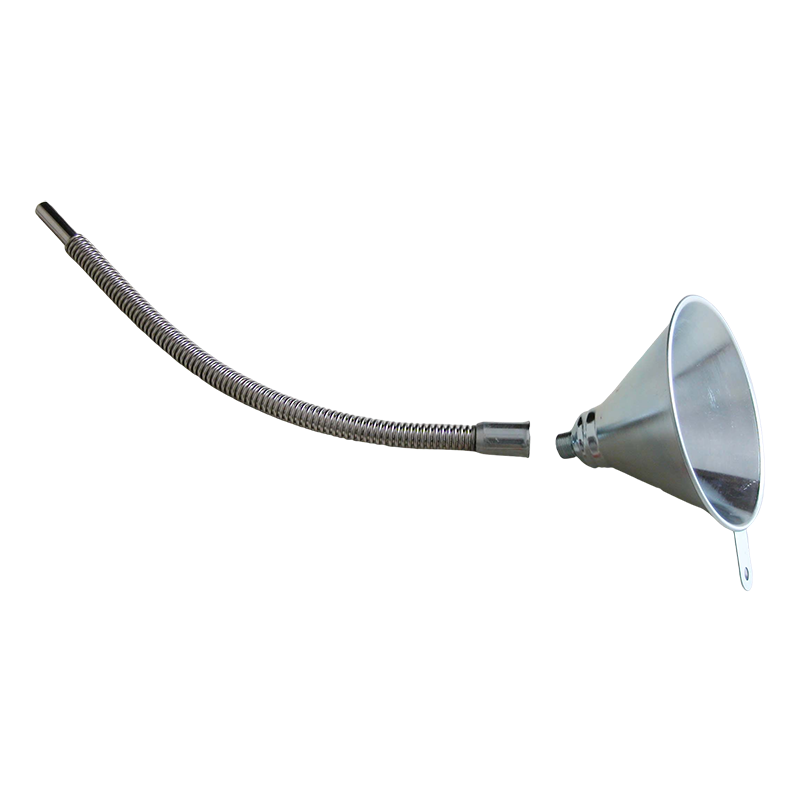
High-grade stainless steel (typically 304 or 316L) remains a standard for demanding industrial applications. The primary advantages include high durability, excellent grounding capabilities for static dissipation, and compatibility with aggressive chemical cleaning protocols. Stainless steel resists corrosion and withstands extreme temperatures, making it suitable for rigorous sterilization via autoclave or steam-in-place (SIP) systems. The trade-offs involve higher initial capital expenditure and heavier weight, which can impact operator ergonomics during manual handling and assembly.
When specifying stainless steel, the surface finish is just as important as the alloy grade. A standard mill finish contains microscopic peaks and valleys that trap fine powders. For cohesive materials, a mechanical polish followed by electropolishing is required to achieve a mirror-like surface (often specified as an Ra value of less than 0.4 micrometers). This ultra-smooth finish drastically reduces wall friction, promoting mass flow and simplifying the cleaning process.
Specialized polymers like High-Density Polyethylene (HDPE) and Polypropylene (PP) offer distinct benefits. These materials are lightweight, cost-effective, and possess high chemical resistance. They readily meet food-grade and FDA compliance standards. Furthermore, they are available in sterile, single-use formats to eliminate cross-contamination risks entirely. The main trade-offs include a potential for static build-up and lower thermal resistance compared to steel, which limits their use in high-temperature environments.
In laboratory and cleanroom settings, the shift towards single-use polymers is driven by the massive cost of cleaning validation. Proving that a reusable steel component is 100% free of active pharmaceutical ingredients (APIs) requires swabbing, HPLC analysis, and extensive documentation. A pre-sterilized, single-use polymer component bypasses this entirely. Once the transfer is complete, the unit is disposed of, guaranteeing zero cross-contamination for the next batch.
The critical importance of seamless, crevice-free construction cannot be overstated. In sanitary applications, any scratch, weld seam, or sharp internal corner can harbor residual powder and promote microbial growth. A smooth internal finish facilitates rapid QA/QC validation and significantly reduces cleaning validation times. Equipment must be designed for clean-in-place (CIP) or easily dismantled for out-of-place cleaning, ensuring that no cross-contamination occurs between different product batches.
Welding techniques play a major role in sanitary design. Standard MIG or TIG welds often leave a rough bead. For sanitary applications, welds must be ground flush and polished to match the surrounding base metal. Any overlapping joints or threaded connections inside the product contact zone are strictly prohibited under cGMP guidelines. Instead, sanitary tri-clamp connections with flush-mounted gaskets should be used to join components.
Matching capacity and throat diameter to the required discharge rate requires a structured framework. From micro-dosing in analytical labs to bulk dispensing in manufacturing plants, the volumetric throughput dictates the physical dimensions. An undersized unit causes backups and spills, while an oversized unit may be difficult to integrate into tight spatial constraints. Calculating the required mass flow rate ensures the selected equipment can handle the production volume without becoming a bottleneck.
To determine the correct size, engineers must calculate the required discharge rate based on the downstream equipment's capacity. If a packaging machine requires 50 kilograms per minute, the outlet diameter must be sized to allow that specific volume of powder to pass through under gravity alone. This calculation requires knowing the powder's bulk density and its flow function coefficient. Guessing the outlet size based on visual estimation inevitably leads to flow stoppages or flooding.
Decoupling dedicated powder handling designs from liquid-transfer funnels is necessary for efficient operation. Powder designs are characterized by wide, short stems designed to prevent clogging and bridging. In contrast, liquid-transfer or filtration-support funnels feature narrow, long stems designed to hold filter media and direct fluid flow. Using a liquid funnel for dry powders inevitably leads to blockages at the narrowest point of the stem.
The transition angle from the cone to the stem is also critical. A sharp, abrupt transition creates a ledge where powder will accumulate and compact. A smooth, radiused transition encourages continuous flow and prevents the formation of stable arches. When handling highly cohesive materials, some designs eliminate the stem entirely, utilizing a simple conical shape that discharges directly into the receiving vessel.
Evaluating equipment through the lens of industry compliance ensures safe and legal operation. Materials must meet food-grade, FDA, or pharmaceutical cGMP standards depending on the application. Documentation, such as material test reports and certificates of conformity, verifies that the construction materials will not leach contaminants into the product. Compliance extends beyond material selection to include the physical design, ensuring it meets strict hygienic standards.
For facilities operating under ATEX or NFPA guidelines for combustible dusts, compliance also involves electrical grounding. Any equipment handling dry powders must be fully bonded and grounded to prevent static discharge. This requires specific design features, such as welded grounding lugs on stainless steel units or the use of specialized conductive polymers for plastic units.
Determining when to invest in autoclavable reusable equipment versus pre-sterilized, single-use options depends on the facility's operational model. Cleanroom environments often benefit from single-use polymers that eliminate the need for costly and time-consuming cleaning validations. Conversely, high-volume processes handling non-sterile bulk materials typically achieve better long-term value using durable, reusable stainless steel components.
| Application Type | Recommended Material | Primary Benefit | Key Consideration |
|---|---|---|---|
| High-Volume Non-Sterile | 304 Stainless Steel | Maximum durability, lowest long-term cost | Requires manual cleaning and drying between batches |
| Sterile API Transfer | Single-Use HDPE | Zero cleaning validation, guaranteed sterility | Ongoing consumable costs, waste disposal management |
| Multi-Product Cleanroom | 316L Stainless Steel (Electropolished) | Autoclavable, highly resistant to harsh CIP chemicals | Heavy weight requires ergonomic handling procedures |
Strategies for mitigating static charge accumulation during powder transfer are critical for safety and efficiency. Static electricity can cause powder to adhere stubbornly to walls, reducing yield and complicating cleaning. In combustible dust environments, static discharge creates severe explosion hazards. Using conductive materials like stainless steel and ensuring proper grounding of all equipment components effectively dissipates static charges before they reach dangerous levels.
When using non-conductive polymers, static management becomes more complex. Operators may need to employ active static elimination devices, such as ionizing bars or air nozzles, to neutralize the charge on the powder as it flows. Additionally, controlling the ambient humidity in the processing area can help dissipate static, though this must be balanced against the risk of the powder absorbing moisture and clumping.
Assessing the physical integration into manual transfer processes prevents operator fatigue and ensures safe handling. Heavy or hazardous materials require careful ergonomic planning. Equipment should be positioned at comfortable working heights, and lifting aids should be utilized for heavy stainless steel units. Designing the transfer station to minimize awkward reaching or heavy lifting protects the workforce and reduces the likelihood of accidental spills.
Consider the physical strain of holding a heavy steel component while simultaneously pouring a 25-kilogram bag of powder. This is a recipe for musculoskeletal injuries and product spills. Facilities must implement fixed mounting brackets or articulated arms to hold the equipment securely in place, allowing the operator to use both hands to manage the powder container safely.
Checking compatibility with automated packaging systems, vibratory feeders, and dust extraction units ensures seamless operation within the larger process. The equipment must not interfere with sensors or mechanical linkages. Proper venting is necessary to allow displaced air to escape from the receiving vessel; otherwise, air pressure will push the powder back up, causing dust clouds and erratic flow.
When powder drops into a closed vessel, it displaces an equal volume of air. If that air has no dedicated exhaust path, it will rush up through the descending powder stream. This counter-current airflow drastically reduces the discharge rate and blows fine particulates into the surrounding environment. Integrating a dedicated vent line or using a concentric tube design allows the displaced air to escape without disrupting the powder flow.
Conduct powder flow testing to determine the exact wall friction angles required for your specific materials before finalizing any equipment geometry.
Request comprehensive material certificates and surface finish documentation from vendors to guarantee regulatory compliance and cleanability.
Implement dedicated grounding protocols and static mitigation strategies, especially when handling combustible dusts or highly insulative powders.
Trial prototypes in the actual production environment to validate volumetric flow rates and ergonomic integration before committing to full-scale procurement.
A: It is a specialized transfer component designed specifically for moving dry bulk solids and powders between containers or processing equipment. It features wide, short stems and steep wall angles to facilitate consistent flow and prevent blockages.
A: Liquid funnels typically have long, narrow stems to direct fluid and hold filter paper. Powder funnels utilize wide, short stems and steeper converging angles to prevent dry materials from bridging or clogging at the discharge point.
A: Yes, they can handle granules. However, the geometry must be evaluated to ensure the outlet diameter is large enough to prevent mechanical interlocking of the larger granule particles during discharge.
A: Sticking is prevented by selecting a material with a low wall friction angle, ensuring a highly polished or smooth internal surface, and properly grounding the equipment to eliminate static electricity buildup.
A: In mass flow, all material is in motion simultaneously, ensuring a first-in, first-out discharge. In funnel flow, material moves only through a central channel, leaving stagnant powder against the walls, which can lead to spoilage and erratic flow.


