+86-25-8470-5507


Views: 0 Author: Site Editor Publish Time: 2026-07-03 Origin: Site


Selecting a liquid transfer tool is rarely a generic choice. Using the wrong material can result in sample contamination, rapid equipment degradation, or severe workplace safety hazards. You must consider the exact application context before procuring new supplies. Laboratory filtration demands distinct physical properties compared to high-volume industrial transfer operations or commercial food preparation workflows. The specific substances you handle strictly dictate the necessary material traits. This guide evaluates the most common materials based on chemical compatibility, thermal resistance, and operational durability. We aim to help buyers make an evidence-based selection for their unique workflow. You will learn how to align material capabilities with your daily operational risks. We will outline actionable frameworks to prevent expensive process failures. By understanding specific degradation triggers, you can confidently source reliable components.
Glass (specifically borosilicate) remains the standard for chemical resistance and high-visibility laboratory applications, though it presents shatter risks under mechanical stress.
Plastics (Polypropylene, PTFE, HDPE) offer shatterproof, cost-effective versatility, but require strict vetting against solvent degradation and heat limitations.
Metal funnels (typically 304/316 stainless steel) provide unmatched durability and thermal tolerance for heavy-duty industrial, automotive, and high-heat commercial uses.
The final purchasing decision must align the material's specific failure points with the intended use case (e.g., vacuum filtration vs. basic liquid transfer).
Poor material selection often carries hidden business costs. When operations teams choose incorrectly, they risk ruining entire chemical batches. They might compromise rigid food safety compliance standards. Frequent replacement cycles also drain operational budgets. Procuring appropriate Funnels requires careful alignment between material properties and daily workflows. Every environment presents specific risks demanding targeted material solutions.
You must match the material directly to the processed substance. Highly concentrated acids and strong bases destroy incompatible surfaces quickly. Aggressive organic solvents easily dissolve inferior plastics. Reactive compounds demand completely inert transfer vessels. Material degradation during liquid transfer introduces dangerous impurities into the final product. Always cross-reference your specific chemicals against established material resistance databases.
Temperature fluctuations expose hidden material weaknesses. Operations frequently require handlers to pour high-temperature liquids safely. Medical and laboratory environments rely on repeated autoclaving processes for sterilization. Extreme thermal shock causes sudden failures in standard brittle materials. You must assess both the continuous operating temperature and potential sudden spikes. Ensure the selected material handles these extremes effortlessly.
Environmental risks dictate required physical strength. High-impact industrial settings feature heavy machinery and rough handling. Dropped equipment is inevitable on busy production floors. Conversely, controlled laboratory benchtop operations present minimal physical impact risks. You should evaluate the likelihood of physical trauma in your specific workspace. Prioritize shatterproof materials if your environment experiences constant high-stress activity.
| Selection Criteria | Primary Consideration | Common Failure Mode |
|---|---|---|
| Chemical Compatibility | Solvent and acid interactions | Leaching, melting, or cross-contamination |
| Thermal Tolerance | Sterilization and hot liquids | Warping, thermal shock shattering |
| Mechanical Durability | Drop risks and blunt impacts | Cracking, denting, structural fracture |
Laboratories historically rely on glass to maintain absolute sample integrity. The industry focuses heavily on borosilicate glass for serious analytical tasks. Manufacturers sell this specific variant under familiar brand names like Pyrex. Borosilicate dominates because it withstands rapid temperature shifts beautifully. Standard flint glass handles low-grade classroom tasks efficiently. However, flint glass fails quickly under serious professional demands.
Chemists utilize glass extensively for separatory funnels during extraction procedures. Analytical filtration protocols depend on glass to avoid contamination. Technicians use it when handling highly reactive or exceptionally pure substances. Specialized vacuum processes require thick-walled glass structures. These applications demand absolute clarity and inertness.
Glass provides unique operational advantages for precise scientific work. These traits make it irreplaceable in modern laboratories.
Near-universal chemical inertness: It safely handles almost all aggressive chemicals. Hydrofluoric acid remains the primary notable exception.
Zero risk of leaching: Glass contains no plasticizers. It will never introduce foreign chemical agents into your pure samples.
Complete transparency: Operators can precisely monitor liquid flow rates. Clear visibility is critical for accurate phase-separation tasks.
Despite its purity, glass presents distinct physical vulnerabilities. Susceptibility to mechanical breakage ranks as the top concern. Dropping a glass vessel creates immediate safety hazards. Sharp shards and spilled chemicals require specialized cleanup protocols. Thermal shock failure occurs frequently if staff mistakenly use standard flint glass instead of proper borosilicate. You must verify the exact glass type before applying heat.
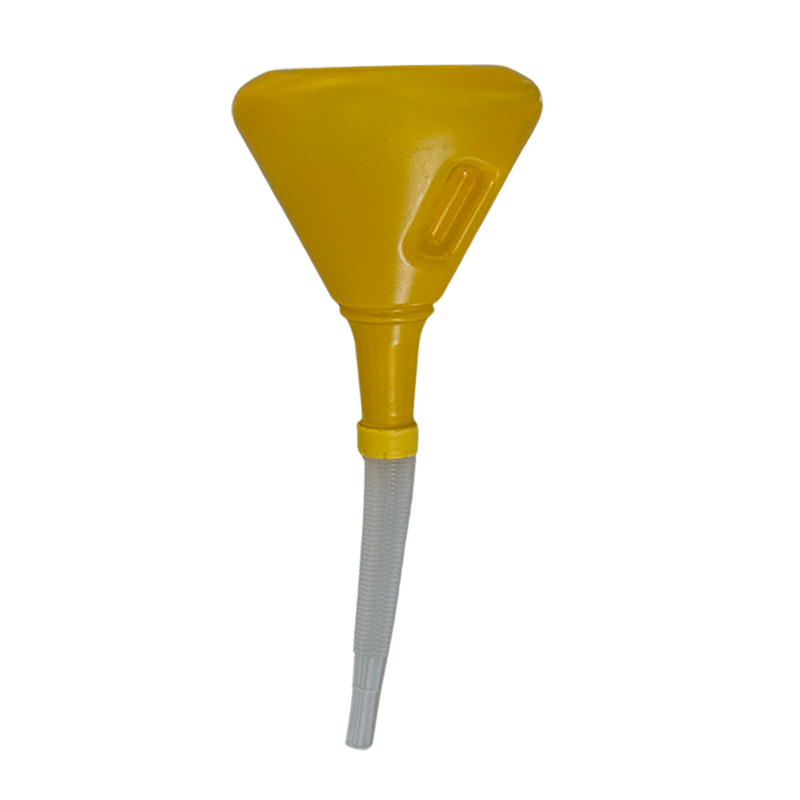
Polymer engineering provides excellent alternatives for many transfer tasks. Polypropylene (PP) dominates general use cases. High-Density Polyethylene (HDPE) offers slightly different chemical resistances. Polytetrafluoroethylene (PTFE), commonly known as Teflon, handles extreme scenarios. These materials effectively bridge the gap between fragile glass and heavy metals. They provide adaptable solutions across diverse industries.
Plastics excel during dry powder transfer tasks. Powders rarely stick to smooth polymer surfaces. Facilities use them constantly for general non-reactive liquid handling. Single-use clinical environments rely on cheap plastics to maintain sterility. Technicians choose them specifically when handling substances prone to reacting negatively against glass surfaces. They serve perfectly as disposable daily tools.
Polymers offer compelling economic and practical benefits for modern facilities. They resolve many physical risks associated with brittle alternatives.
High impact resistance: They are entirely shatterproof. Dropping them rarely causes functional damage.
Lightweight profile: Staff handle them easily during repetitive tasks. They are highly scalable for high-volume corporate procurement.
Extreme chemical resistance (PTFE): PTFE uniquely rivals glass regarding inertness. It handles most harsh solvents safely.
Buyers must strictly monitor plastic deployment. Incompatibility with specific organic solvents causes severe issues. Aggressive chemicals cause melting, structural warping, or severe surface degradation. Inferior plastics leach harmful plasticizers directly into your solvent streams. Furthermore, plastics possess much lower temperature thresholds. Most standard plastics cannot be repeatedly autoclaved without degrading structurally. You must check polymer ratings diligently.
Certain heavy industries destroy fragile equipment instantly. These environments demand rigid metallic solutions. Choosing a Metal Funnel ensures long-term operational survival. Manufacturers primarily utilize 304 and 316-grade stainless steel. They also employ lightweight aluminum and durable galvanized steel. Metals provide absolute structural confidence where softer materials routinely fail.
Industrial fluid transfer operations rely exclusively on metallic tools. High-heat commercial food processing requires food-grade steel continually. Automotive shops use them for heavy lubricant handling. Manufacturing plants employ them for heavy powder dispensing workflows. Any scenario involving intense heat or blunt force demands a metallic approach.
Metallic tools bring distinct heavy-duty advantages to commercial operations. They excel exactly where alternative materials break down.
Exceptional thermal resistance: They will never melt or warp under extreme high heat.
Maximum mechanical durability: They withstand crushing impacts effortlessly. They remain ideal for heavy commercial use.
Easy sterilization: The non-porous surface is easy to clean. Stainless variants support rigorous sanitation protocols.
Metals are not universally invincible. Corrosion or reactivity remains a significant threat. Exposure to strong acids or concentrated saline solutions causes rapid degradation. You must use 316-grade stainless steel to resist strong chlorides effectively. Aluminum pits heavily upon contacting alkaline substances. Additionally, metal provides zero visibility. Operators cannot monitor the liquid flow rate inside the opaque stem. This makes precise volume control challenging.
Making the final procurement decision requires logical elimination. You must review your daily operational constraints carefully. Buyers should follow straightforward default rules for distinct facility types. Adhering to these guidelines minimizes costly purchasing errors.
Default strictly to Borosilicate Glass or PTFE. Your primary priorities are chemical inertness and maximum visibility. Impact resistance matters far less than analytical purity. Glass allows technicians to monitor phase separations accurately. PTFE handles specialized acidic tasks safely. Never compromise analytical integrity for minor cost savings.
Default heavily to Polypropylene (PP). You must prioritize overall cost-efficiency and basic shatterproof safety. This choice assumes your handled solvents are entirely non-reactive. PP serves perfectly for moving water, basic buffers, and dry powders. Buying PP in bulk reduces overhead substantially.
Default immediately to metallic solutions. Prioritize robust structural integrity and extreme heat resistance. Ensure the specific metal grade strongly aligns with your compliance standards. Food processing demands FDA food-grade stainless steel exclusively. Automotive applications can tolerate basic galvanized steel safely. Match the alloy to the regulatory requirement.
We highly recommend buyers audit their primary chemical inventories. Review your Material Safety Data Sheets (MSDS) thoroughly. Identify your highest required operating temperatures. Compile this data before you ever review commercial supplier catalogs. This preparatory step prevents inappropriate material implementation completely.
No single material serves as a universally optimal solution. Glass reliably provides supreme analytical purity and visual clarity. Plastic offers highly economical durability for daily handling tasks. Metal firmly delivers extreme physical resilience against intense heat and blunt impacts. You must respect these fundamental differences.
Decision-makers should constantly prioritize failure-state safety during procurement. Ask yourself what happens if the component fails during a critical transfer. You must calculate the exact cost of the resulting spill or contamination incident. Choose the specific material mitigating your most critical operational risk.
Audit your facility requirements today. Explore technical specification sheets detailing exact chemical resistances. Contact a specialized supplier to source tools officially rated for your specific operational criteria.
A: Generally no, unless it is a specialized polymer like PTFE. Standard PP or HDPE will warp, melt, or leach plasticizers into the solvent.
A: Stainless steel (especially 316 grade) is highly non-reactive and food-safe, whereas aluminum can react with acidic or highly alkaline substances, causing pitting.
A: Metal or borosilicate glass. Plastics should be avoided for high heat unless specifically rated for high-temperature autoclaving.
A: Flush with appropriate solvents immediately after use; avoid mechanical scrubbing that can damage the porous frit. Use chemical cleaning baths for severe clogs, keeping safety protocols in mind.


