+86-25-8470-5507


Views: 0 Author: Site Editor Publish Time: 2026-08-13 Origin: Site


Manual fluid transfer remains a necessary operation in industrial, agricultural, and emergency contexts. Operators rely on manual mechanisms to dispense hazardous chemicals on factory floors. They also use them for off-grid water sourcing where powered infrastructure is unavailable, impractical, or unsafe. Deploying an incorrect pump mechanism for a specific fluid causes severe operational problems. It leads to rapid seal degradation, cross-contamination, operator fatigue, or catastrophic failure when handling hazardous materials. Navigating the procurement of a Liquid Transfer Hand Pump requires moving beyond basic flow rates. You must evaluate internal mechanisms, suction lift capabilities, material compatibility, and long-term maintenance realities. We will break down the exact technical specifications needed to match the right manual pump to your fluid transfer application.
Mechanism Dictates Application: Reciprocating (piston) pumps excel at high-pressure delivery, while rotary pumps provide continuous flow for medium-viscosity fluids.
Material Compatibility is Non-Negotiable: The fluid’s chemical profile must dictate the pump's construction materials (e.g., PTFE/Stainless Steel for corrosives, Cast Iron for heavy oils).
Safety and Compliance: Transferring flammable or combustible liquids requires specific grounding capabilities and ATEX-certified manual pumps to mitigate static discharge risks.
Suction Lift and Priming Matter: Not all manual pumps can pull fluid from deep drums or shallow streams without manual priming; selecting self-priming models prevents dry-running damage.
Total Cost of Ownership: Upfront savings on polymer siphon pumps are frequently negated by replacement costs; rebuildable metal or high-grade composite pumps offer better long-term ROI for continuous use.
Selecting the correct manual pump begins with a strict evaluation of the fluid properties and the operational environment. You cannot evaluate a pump design without first defining the exact physical constraints of the transfer task.
Establish the baseline resistance of your fluid before evaluating pump mechanics. Viscosity measures a fluid's resistance to flow. We typically rate this in centipoise (cP) or centistokes (cSt). High-viscosity fluids like heavy gear oils, resins, or molasses require entirely different internal pump clearances than water or light solvents. Thick fluids create massive internal shear resistance. If you use a standard tight-tolerance piston pump for heavy gear oil, the operator will face severe physical resistance. The suction stroke may even cavitate. This means it pulls a vacuum without actually moving the fluid. Specific gravity also impacts performance. Fluids significantly heavier than water require more mechanical force to lift vertically. You must match the pump's mechanical advantage to the fluid's density.
| Fluid Type | Approximate Viscosity (cP) | Recommended Pump Mechanism |
|---|---|---|
| Water / Light Solvents | 1 - 5 | Piston, Siphon, Diaphragm |
| Diesel Fuel / Light Oils | 10 - 50 | Rotary, Piston |
| Motor Oil (SAE 30) | 200 - 400 | Rotary, Lever-Action Piston |
| Heavy Gear Oil (SAE 90) | 1,000 - 2,000 | Heavy-Duty Rotary, Progressive Cavity |
| Resins / Syrups | 5,000+ | Progressive Cavity, Specialized Diaphragm |
Matching wetted parts to the fluid's chemical makeup prevents swelling, melting, or toxic leaching. Wetted parts include the pump housing, internal shafts, O-rings, gaskets, and check valves. If you pump aggressive solvents using standard Buna-N rubber seals, the seals will swell and seize the pump within hours. Corrosive acids will rapidly dissolve standard aluminum or cast-iron housings. Operating temperatures further complicate compatibility. A polymer pump might handle a specific chemical at room temperature but warp or degrade if that same chemical reaches elevated temperatures. You must cross-reference the fluid's Safety Data Sheet (SDS) with the pump manufacturer's chemical resistance charts.
Define operational success in terms of manual output expectations. Manufacturers rate manual pumps by strokes per gallon or rotations per liter. You must establish realistic expectations for sustained manual operator output. A pump delivering 10 ounces per stroke requires nearly 13 strokes to fill a single gallon. This works fine for filling small quart bottles. However, transferring 50 gallons from a drum using that same pump causes severe operator fatigue. For bulk transfers, you need high-volume displacement mechanisms. For precise dosing, you need lower-volume, highly controllable strokes.
Evaluate the vertical distance from the fluid surface to the pump head. This vertical distance dictates your suction lift requirements. Atmospheric pressure pushes fluid up the suction tube when the pump mechanism creates a vacuum. Applications vary wildly. Pumping from a shallow stream requires minimal vertical lift. Drawing fluid from the bottom of a 55-gallon drum or an underground tank requires high suction lift capabilities. You must also determine if the application requires self-priming capabilities. Self-priming pumps evacuate air from the suction line automatically. Non-self-priming pumps require you to manually fill the housing with fluid before they can draw a vacuum.
Determine the physical deployment strategy for the equipment. Some operations require permanently mounting the pump to a specific drum using a threaded bung adapter. Fixed installations benefit from heavy-duty, rigid pump designs. Other scenarios require extreme portability. Operators might frequently move the pump between varying container sizes, from 5-gallon pails to 275-gallon IBC totes. Portable applications demand lightweight materials, adjustable suction tubes, and quick-disconnect fittings. Off-grid water sourcing often utilizes fixed pitcher pumps bolted to concrete pads over shallow wells.
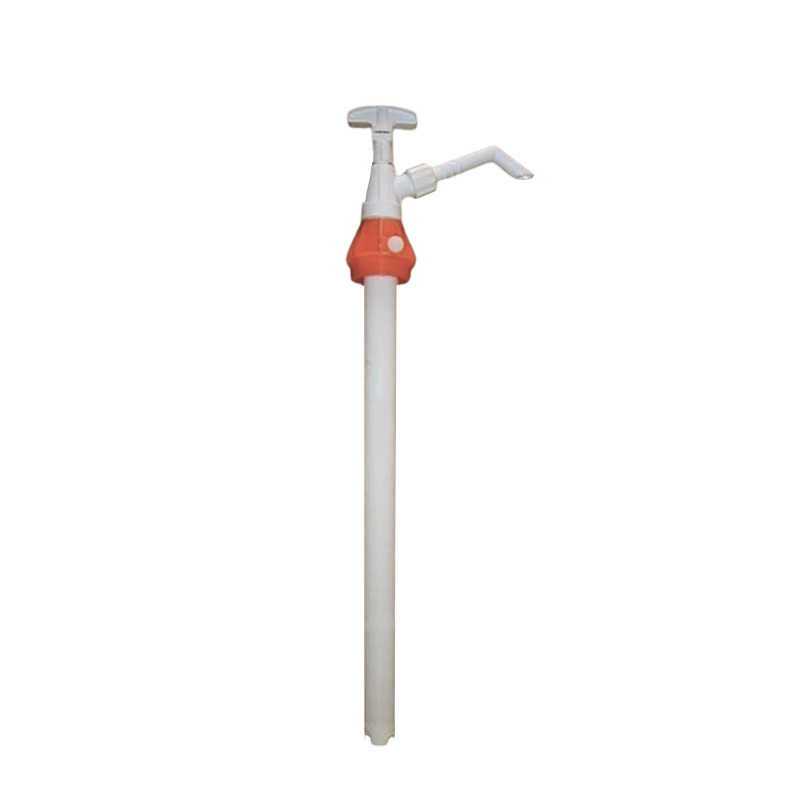
Engineers design different internal mechanisms to solve specific fluid dynamics challenges. Understanding how each pump type displaces fluid allows you to match the hardware to your operational criteria.
Reciprocating pumps utilize a linear stroke displacement method. The operator pulls a lever or handle upward, creating a vacuum inside a cylindrical chamber. This upstroke draws fluid past a one-way inlet check valve. On the downstroke, the inlet valve closes, and a discharge valve opens. The piston forces the trapped fluid out through the discharge spout. Plunger pumps operate similarly but use a solid plunger moving through a stationary seal.
These mechanisms handle high-pressure requirements easily. They move low-to-medium viscosity fluids exceptionally well, including water, light oils, alcohols, and antifreeze. The tight internal seals generate strong suction lift, making them excellent for drawing from deep drums.
The primary limitation is the pulsating flow. Fluid only exits the spout during the discharge stroke. Furthermore, the tight internal tolerances between the piston and the cylinder wall make them susceptible to scoring. If the fluid contains abrasive particulates like sand or metal shavings, these particles will scratch the cylinder, destroying the vacuum seal.
Rotary pumps discard linear levers in favor of a hand crank. Inside the housing, meshing gears, rotating vanes, or progressive cavities rotate to create a continuous vacuum. As the operator turns the crank, the internal components trap fluid at the inlet, carry it around the outer casing, and force it out the discharge port. Semi-rotary pumps use a wing-shaped internal flap that oscillates back and forth as the operator moves a handle left and right.
These pumps provide continuous, smooth flow without the pulsation of a piston pump. They are the superior choice for transferring medium-viscosity fluids. Operators frequently use them for lubricating oils, diesel fuel, machine coolants, and hydraulic fluids. The continuous rotational motion allows operators to sustain high transfer volumes with less biomechanical fatigue.
However, rotary mechanisms have strict limitations. Some configurations require manual priming before they can pull a draft. The internal gears or vanes rely on the fluid itself for lubrication. Running them dry causes rapid friction damage. Like piston pumps, their tight internal tolerances make them highly vulnerable to suspended solids and abrasives.
Diaphragm pumps utilize a flexible membrane displacement system. The mechanism completely isolates the fluid from the mechanical linkages. When the operator moves the handle, a rod pulls the flexible diaphragm outward, expanding the pump chamber and drawing fluid in. Pushing the handle compresses the diaphragm, forcing the fluid out. One-way flapper or ball valves control the direction of flow.
This design is the absolute standard for handling abrasive slurries, heavily contaminated water, and aggressive chemicals. Because the fluid only touches the inside of the chamber and the diaphragm, there are no internal sliding parts to wear down. Abrasive particles pass through without scoring any metal surfaces. You can pump mud, wastewater, and chemical sludge efficiently.
The trade-off is a lower maximum pressure output compared to piston pumps. The flexible membrane absorbs some of the mechanical force. Additionally, the diaphragm material is the primary point of failure. Repeated flexing eventually causes the membrane to tear, requiring a replacement kit.
Siphon pumps rely on gravity-assisted vacuum transfer. The operator squeezes a flexible bulb or pumps a simple cylindrical piston a few times to initiate the flow. Once the fluid crests the highest point of the tube, gravity pulls it down into the receiving container, creating a continuous siphon effect. Simple bilge pumps use a basic piston inside a PVC or plastic tube to manually push water up and out through a corrugated discharge hose.
These are built for emergency dewatering, infrequent small-batch transfers, and highly portable applications. They excel in off-grid scenarios, such as transferring water from a shallow stream into a filtration bucket or draining a flooded utility trench. They are lightweight, inexpensive, and require zero setup time.
Limitations are severe. Siphons are strictly for low-viscosity fluids like water or light fuels. They absolutely require the source container to be elevated above the receiving receptacle. They also lack precision control. Stopping a siphon quickly can be messy and difficult, often requiring the operator to pull the intake tube completely out of the source fluid to break the vacuum.
Pitcher pumps feature the traditional cast-iron lever-action design seen in historical well systems. They utilize a plunger equipped with a leather or synthetic cup seal and a simple check valve system. The operator pumps the heavy iron lever up and down to lift water from a subterranean source.
Engineers design these specifically for agricultural use, off-grid water sourcing, and drawing water from shallow wells or cisterns. They provide immense mechanical advantage, allowing users to lift water from depths of 15 to 25 feet depending on the exact cylinder design. The leather cup seals require soaking in water before initial use to swell and create a proper vacuum against the iron cylinder walls.
These units are heavy, non-portable, and strictly limited to water transfer. They are also vulnerable to freezing. If water remains inside the cast-iron housing during freezing temperatures, the expanding ice will crack the metal body. Operators must properly drain them before winter by lifting the handle to its highest position, which opens the check valve and allows the water column to drop back into the well.
Choosing the right Hand Pump requires analyzing the construction materials and the ergonomic design. These technical dimensions directly impact pump lifespan and operator safety.
The wetted materials determine what fluids the pump can safely handle. Polypropylene offers excellent resistance to many acids and alkalis, making it a standard for general chemical transfer. Ryton (Polyphenylene Sulfide) withstands highly aggressive solvents and elevated temperatures better than standard plastics. PTFE (Teflon) provides near-universal chemical resistance, often used for internal seals and diaphragms handling ultra-pure or highly corrosive fluids. Stainless Steel (specifically 316 grade) resists corrosion, handles high pressures, and is easy to sanitize. Cast Iron is rugged and durable, ideal for non-corrosive heavy oils and fuels, but it will rust if exposed to water.
| Pump Material | Best Suited Fluids | Fluids to Avoid | Common Applications |
|---|---|---|---|
| Polypropylene | Light acids, alkalis, water, DEF | Strong solvents, concentrated nitric acid | Agricultural chemicals, water treatment |
| Stainless Steel (316) | Aggressive solvents, food-grade liquids | Hydrochloric acid, high-chloride fluids | Pharmaceuticals, food processing |
| Cast Iron | Motor oil, hydraulic fluid, diesel | Water, water-based chemicals, acids | Automotive shops, heavy machinery |
| PTFE (Seals/Diaphragms) | Nearly all chemicals, high-purity fluids | Liquid alkali metals, fluorine gas | Laboratory transfer, aggressive corrosives |
Regulatory compliance dictates material choices in controlled environments. FDA or Food-grade compliance requires specific stainless steel finishes and food-safe elastomers to prevent contamination of potable water and consumables. In hazardous industrial environments, ATEX ratings are mandatory. ATEX-certified pumps use conductive materials to prevent static electricity buildup when transferring highly flammable solvents.
The actuation method directly influences operator fatigue and transfer speed. Lever-action pumps provide excellent mechanical advantage for high-pressure applications or thick fluids. However, the repetitive push-pull motion fatigues the shoulders and back during high-volume transfers. A continuous rotary crank is superior for moving large volumes of medium-viscosity fluid. Turning a crank utilizes different muscle groups and allows for sustained momentum. Foot-pedal pumps are necessary for hands-free liquid transfer. They allow the operator to hold a directional hose with both hands. This is necessary when dispensing hazardous chemicals into small openings.
Handle leverage ratios also impact performance. A longer handle decreases the physical force required to move a viscous fluid, but it increases the distance the operator must move their arm. You must evaluate this trade-off based on the fluid's specific gravity.
Mounting adapters ensure stability. Standardized bung adapters (e.g., 2-inch NPT) lock the pump securely into a drum lid. Telescoping suction tubes allow a single pump to adapt to varying drum depths, from short 15-gallon barrels to tall 55-gallon drums, ensuring you extract fluid from the very bottom of the container.
Procurement decisions must look beyond the initial purchase price. The true value of a manual pump depends on its durability, serviceability, and application alignment.
Disposable or cheap plastic transfer pumps offer low initial capital requirements. They are suitable for infrequent, light-duty tasks or single-use chemical applications where cleaning is impossible. However, they degrade quickly under heavy use. Heavy-duty metal variants or high-grade composite pumps require a higher upfront investment but deliver superior lifecycle durability. For daily industrial use, investing in a robust metal pump prevents the constant replacement cycles associated with cheaper plastic models.
Assess the trade-off between complex and simple mechanisms. Complex rotary pumps require specific lubrication protocols and occasional internal seal replacements. You must disassemble the housing to access the vanes or gears. This process often requires specialized puller tools and a clean workbench to prevent introducing contaminants into the tight gear clearances. Simple diaphragm pumps require only basic membrane swaps. You unbolt the outer housing, remove the torn diaphragm, and bolt in a new one directly in the field. Rebuildable pumps offer significant long-term value. Purchasing a replacement seal kit to restore a stainless steel pump is highly efficient compared to buying an entirely new unit. Establish a preventative maintenance schedule based on the number of strokes or gallons transferred, rather than waiting for a catastrophic seal failure.
Contrast pumps designed for exact volumetric dosing against those built for rapid bulk transfer. If you need to dispense exactly 500ml of a concentrated chemical into a mixing vat, you need a precision piston pump with a calibrated stroke length. Using a high-volume rotary pump for this task will result in over-pouring and chemical waste. Conversely, if you need to empty a 55-gallon drum of hydraulic oil into a machine reservoir, a calibrated dosing pump will take hours. You need a high-volume rotary or large-diaphragm pump to move the bulk fluid rapidly.
Manual fluid transfer involves inherent physical and chemical risks. Implementing strict operational protocols prevents equipment damage and ensures operator safety.
Dry Running Damage: Operating a pump without fluid inside creates severe friction heat. This heat melts polymer seals, warps plastic housings, and scores metal cylinders. Select self-priming designs that pull a vacuum immediately. Ensure operators are trained on proper manual priming protocols. Instruct them to pour a small amount of the target fluid into the pump head before actuation to lubricate the internal seals.
Cross-Contamination: Using the same pump for incompatible fluids causes dangerous chemical reactions or ruins expensive batches of product. A pump used for waste oil cannot be used for fresh hydraulic fluid. Implement dedicated pumps for specific chemical classes. Color-code the pump handles to match specific fluid drums. Prioritize easy-strip pump designs that allow operators to quickly disassemble and thoroughly clean the internal chambers between batches.
Static Discharge and Fire Hazards: Pumping non-conductive flammable liquids generates static electricity through fluid friction. A static spark can ignite the chemical vapors. Mandate the use of conductive pump materials. Use anti-static dispensing hoses. Most importantly, mandate proper grounding and bonding wires. Connect a bonding wire from the pump to the source drum, and another from the drum to the receiving container, tying the entire system to a known earth ground.
Over-Pressurization: Forcing fluid into a closed system or a blocked hose causes pressure spikes. This can rupture the pump housing or blow out the internal seals. Install pressure relief valves on the discharge side if pumping into closed loops. Train operators to verify all downstream valves are open before actuating the pump handle.
Audit your facility's container sizes to ensure you select pumps with the correct telescoping suction tubes and bung thread adapters.
Consult the specific Safety Data Sheets (SDS) for every fluid you intend to pump to verify chemical compatibility with the pump's wetted materials.
Implement a strict grounding and bonding protocol using conductive wires if you handle any fluids with a flashpoint below 100°F (37.8°C).
Review manufacturer rebuild kit availability to ensure you can maintain the equipment locally rather than replacing entire units upon seal failure.
A: The most reliable option is a diaphragm pump constructed with PTFE (Teflon) or highly resistant polymers like Ryton. Diaphragm pumps isolate the fluid from internal moving parts, preventing corrosion of mechanical linkages. Specialized piston pumps made entirely of 316 Stainless Steel with PTFE seals also work well for aggressive solvents.
A: A rotary pump uses a hand crank to turn internal gears or vanes, providing a continuous, smooth flow of fluid. A piston pump uses a lever to drive a plunger up and down, creating a pulsating flow that only discharges on one half of the stroke cycle. Rotary pumps excel at bulk transfer, while piston pumps excel at high-pressure delivery.
A: Yes, but you must select the right mechanism. Standard tight-tolerance piston pumps struggle with thick fluids due to immense manual leverage requirements. Heavy-duty rotary gear pumps or specialized progressive cavity pumps are required for high-viscosity oils, as they mechanically force the thick fluid through the housing without relying on simple suction.
A: Not all of them. Diaphragm pumps and tight-tolerance piston pumps naturally create a strong vacuum and are generally self-priming. Many rotary pumps and centrifugal designs require manual priming, meaning you must pour fluid into the pump housing to create an initial seal before they can draw fluid up the suction tube.
A: Absolutely. Hand bilge pumps, traditional cast-iron pitcher pumps, and simple siphons are highly viable for emergency and off-grid water transfer. Pitcher pumps are best for fixed shallow wells, while portable bilge pumps are ideal for rapidly moving water from streams into filtration containers.
A: Foot pumps are essential when you require hands-free operation. This includes precise directional dispensing where you must hold a hose or nozzle with both hands. They are also necessary in medical or laboratory settings where the operator must maintain a sterile field and cannot touch a pump handle with gloved hands.


