+86-25-8470-5507


Views: 0 Author: Site Editor Publish Time: 2026-08-05 Origin: Site


Hand pumps are still used for water supply solutions because they are simple, portable and manually operated. In many small-scale applications, users do not need a powered pump, fixed installation or complex fluid handling system. They need a practical way to move water from one container to another when electricity or compressed air is not available or not necessary.
In this article, water supply solutions refer to small-scale, portable and temporary water transfer needs in workshops, farms, field service, maintenance sites and container-to-container dispensing tasks. The focus is not deep-well pumping or municipal water supply systems.
A Hand Pump is still useful for small-scale water transfer when users need a portable manual solution without electricity or compressed air.
For B2B buyers, this makes hand pumps relevant for water, coolant, light maintenance fluids and general transfer tasks where controlled manual operation is more practical than powered equipment.
Hand pumps remain useful for water transfer because they solve practical problems in simple working conditions.
Key points include:
A hand pump can work without electricity or compressed air.
It is suitable for small-scale water transfer.
It can be used for temporary water dispensing.
It is portable and easy to store.
It can support field service and maintenance tasks.
It can help move water from pails, drums or containers.
It is useful for emergency fluid movement.
It does not require fixed installation.
It is not designed to replace high-volume powered water pumps.
Buyers should check fluid type, container size, hose length, flow rate and use frequency before selection.
A hand pump is most useful when the water transfer task is manual, temporary, mobile or low-volume.
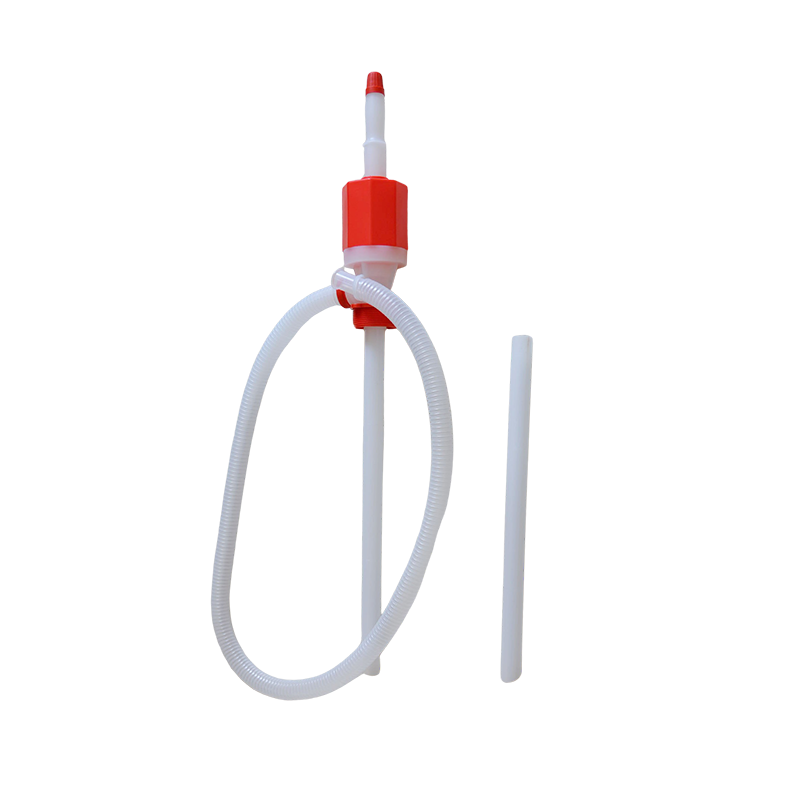
Powered pumps are useful for high-volume water systems, but not every job requires power. In many daily service environments, users only need to move a limited amount of water or light fluid from one container to another.
A hand pump can support these small transfer needs with basic manual operation. It does not require wiring, battery charging, air compressor setup or fixed piping. This makes it useful for locations where powered tools are inconvenient.
Typical small-scale water transfer situations include:
filling or emptying service containers;
moving water between pails or drums;
transferring water for cleaning support;
handling temporary site water needs;
field service fluid movement;
emergency container transfer;
workshop water dispensing;
agricultural maintenance tasks.
In these conditions, simple operation is often more important than high flow capacity.
A hand pump works through manual force. The user operates a handle, lever, tube or pump body to create suction and move water through a hose or outlet.
A simple process can be shown as:
No Power Source → Manual Operation → Water Intake → Controlled Transfer → Temporary or Field Use
This process explains why hand pumps remain practical. They allow users to transfer water even when electrical power is unavailable, unsafe, unnecessary or too inconvenient for the job.
A hand pump without electricity can be useful in:
outdoor work areas;
mobile maintenance vehicles;
temporary service sites;
agricultural fields;
workshops without fixed water lines;
emergency transfer situations;
storage areas with drums or pails.
For light transfer tasks, this manual approach may be faster to set up than powered equipment.
Hand pumps are not limited to one water transfer scenario. They can be used in different maintenance and service environments where portability matters.
| Water Transfer Scenario | Why a Hand Pump Still Helps |
|---|---|
| Field maintenance | No power supply may be available |
| Workshop cleaning support | Simple controlled water dispensing |
| Agricultural service | Portable transfer between containers |
| Emergency water movement | Manual use when powered equipment is unavailable |
| Temporary site work | No fixed pump installation needed |
| Drum or pail dispensing | Easy transfer from storage containers |
| Vehicle or equipment service | Useful for cleaning or maintenance fluids |
| Outdoor mobile service | Lightweight and easy to carry |
These examples show that hand pumps are most relevant for small-volume and practical transfer work. They are not intended to replace municipal systems, deep-well pumps or large irrigation pumps.
A water transfer hand pump offers several practical advantages in temporary or mobile use.
Main advantages include:
no electricity required;
no compressed air required;
simple manual operation;
easy transport;
low setup requirement;
suitable for pails and drums;
controlled dispensing;
easy storage;
low maintenance;
useful for emergency use.
For many users, the biggest advantage is setup simplicity. Instead of connecting power, hoses and fixed pumping equipment, the user can install or hold the hand pump and start transferring water manually.
This makes hand pumps suitable for small workshops, service trucks, farms, garages and temporary maintenance areas.
A hand pump is useful, but it has limits. A realistic article should explain where hand pumps are suitable and where they are not.
Hand pump limitations include:
limited flow rate compared with powered pumps;
manual effort required;
not suitable for high-volume continuous water supply;
not suitable for deep wells unless specifically designed for that use;
not intended for municipal water supply systems;
suction height and hose length can affect performance;
user fatigue may matter during repeated use;
material compatibility still needs checking;
water quality and cleaning requirements should be considered.
A hand pump is best for small-scale water transfer, temporary water movement and portable water dispensing. If the application requires continuous high-volume pumping, long-distance delivery or deep water lifting, powered or specialized equipment may be more suitable.
Different hand pump types may be used for water and light fluid transfer, depending on the task.
| Pump Type | Water Transfer Fit |
|---|---|
| Siphon hand pump | Simple low-viscosity water transfer |
| Multi-purpose pump kit | Water, light fluid transfer and emergency use |
| Lift-action pump | Drum or pail dispensing |
| Rotary hand pump | More steady manual transfer depending on compatibility |
| Manual pump kit | Field or mobile service package |
A siphon hand pump for water may be useful for simple low-viscosity transfer. A lift-action pump can support direct drum or pail dispensing. A manual pump kit can provide hoses and accessories for field use.
For light-duty water transfer, emergency fluid movement, oil change and small inflation tasks, a Multi-Purpose Pump Kit can provide a compact manual solution with hoses and accessories.
The right type depends on container size, transfer distance, flow expectation and use frequency.
Buyers should select a hand pump according to the actual transfer condition. Choosing only by product name may lead to poor fit, slow flow or unsuitable accessories.
Important selection factors include:
| Selection Factor | What to Check |
|---|---|
| Fluid type | Water, coolant, light fluid or maintenance liquid |
| Container size | Pail, drum, tank or portable container |
| Suction hose | Length, flexibility and container reach |
| Outlet hose | Transfer distance and discharge control |
| Flow rate | Small transfer or faster manual dispensing |
| Pump type | Siphon, lift-action, rotary, lever or kit |
| Material compatibility | Pump body, hose and seal suitability |
| Use frequency | Occasional, regular or field-service use |
| Portability | Weight, storage and carrying convenience |
| Order needs | Packaging, accessories and bulk quantity |
For water transfer, buyers should also consider whether the pump will be used only with clean water or also with coolant, cleaning fluid or light maintenance chemicals. If multiple fluids are involved, material compatibility becomes more important.
B2B buyers should confirm both technical use and commercial supply details before bulk ordering hand pumps.
Useful questions include:
What fluid will the pump transfer?
Is it water only or also coolant, oil or light maintenance fluid?
What container size will users work with?
What suction hose length is needed?
What outlet hose or nozzle is required?
What flow rate is acceptable?
Will the pump be used indoors or outdoors?
Is the use occasional or frequent?
Does the product need retail packaging?
Are accessories required in the kit?
Is private label supply needed?
What order quantity is planned?
These questions help buyers choose a more suitable pump configuration and reduce mismatch risk.
JINLIN supports manual fluid transfer applications for workshop, industrial, agricultural, automotive and maintenance users. For water transfer and related light fluid handling needs, the selection can start from fluid type, container size, pump type, hose requirement, flow rate and use frequency.
JINLIN can help review:
water or fluid type;
container size;
suction hose length;
outlet hose requirement;
pump style;
flow rate target;
use environment;
material compatibility;
accessory needs;
packaging preference;
model mix;
order quantity.
For water, coolant, light maintenance fluids and general transfer tasks, JINLIN can help compare siphon, lift-action, rotary, lever and multi-purpose pump options before order confirmation.
Hand pumps are still used for small-scale water supply and water transfer because they are portable, simple, manually operated and useful when electricity, compressed air or powered pump systems are unavailable or unnecessary. For JINLIN’s product direction, the most suitable focus is water transfer from pails, drums, containers and field-service situations rather than deep-well or municipal water systems.
A hand pump is practical for temporary water dispensing, workshop cleaning support, agricultural maintenance, mobile service and emergency fluid movement. However, buyers should understand its limits. It is not intended for high-volume continuous water supply or deep-well pumping unless the product is specifically designed for that purpose.
Need help choosing a manual pump for water, coolant, light fluids or maintenance transfer? Contact JINLIN for water transfer hand pump selection with your fluid type, container size, hose requirement, target flow rate, use frequency and order quantity.
Hand pumps are still used because they are simple, portable and manually operated. They are useful for small-scale water transfer when electricity or powered equipment is not necessary.
Yes. A hand pump can move water manually without electricity, compressed air or a motor.
Only specialized hand pumps are suitable for deep wells. This article focuses on small-scale water transfer from pails, drums and containers.
A water transfer hand pump is used for manual water dispensing, container-to-container transfer, field service, workshop maintenance and emergency fluid movement.
Siphon pumps, lift-action pumps, rotary pumps, lever pumps and multi-purpose pump kits may be suitable depending on container size, flow needs and compatibility.
Yes. Hand pumps can be useful in emergency transfer tasks because they are portable and do not depend on power supply.
Buyers should check container size, suction hose length, outlet hose, flow rate, pump material, use frequency and whether other fluids will also be transferred.
Not always. Pump body material, hose material and seal compatibility should be checked before using one pump for multiple fluids.
Hand pumps have limited flow rate and require manual effort. They are not ideal for high-volume continuous water supply or deep-well pumping unless specifically designed for that use.
Yes. JINLIN can help review fluid type, container size, hose requirement, pump style, flow rate, use frequency and order quantity for water transfer hand pump selection.


